About Agrimony
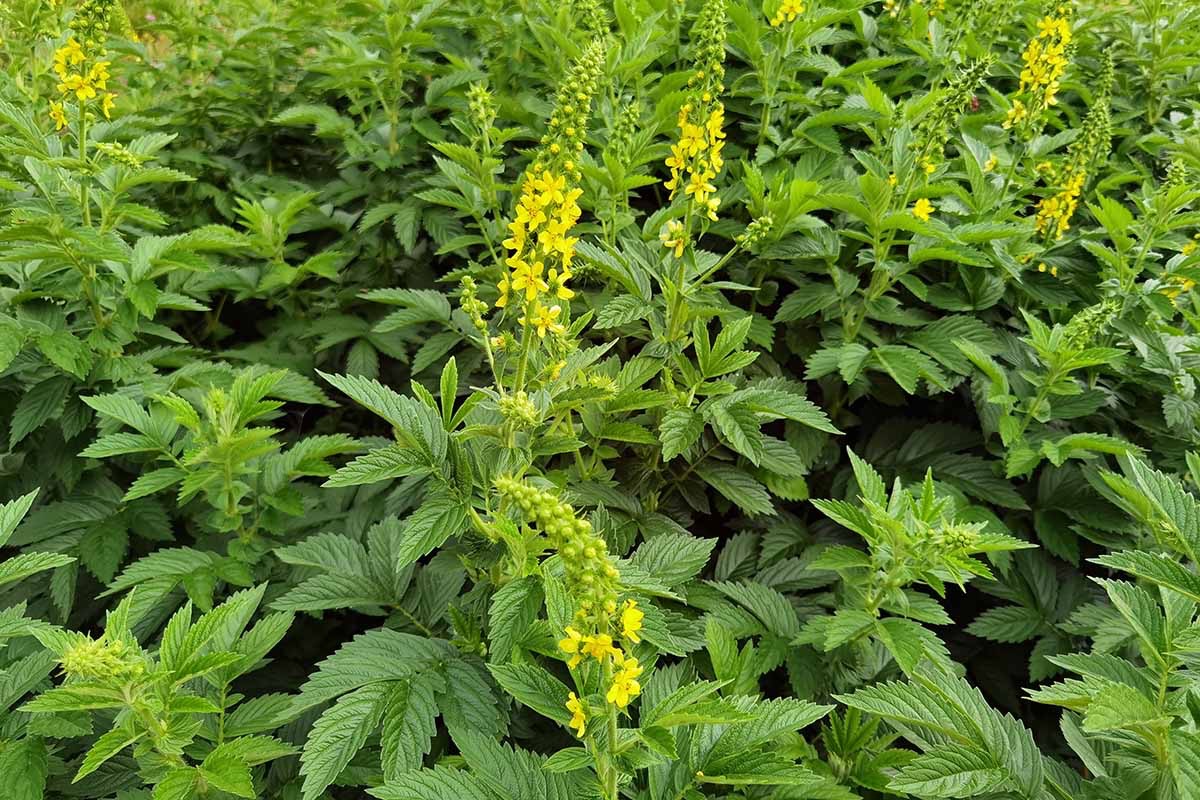
Agrimony is one of those quiet, unassuming herbs that rewards a closer look. It sends up slender spires of small yellow flowers through the summer, opening slowly from the bottom of the spike upwards, so a single stem seems to flower for weeks. The soft, grey-green leaves are gently hairy and faintly apricot-scented when warmed by the sun.
It has a long and rather charming history. The Anglo-Saxons knew it as garclive and used it in wound salves, and by the Middle Ages it was a fixture of country medicine. Its old name, church steeples, comes from those upright flowering spikes, while the little burred seed heads that follow hitch a ride home on socks and sleeves.
Agrimony stands up well to the Canterbury wind, and draws bees and hoverflies all summer.
Uses & Benefits
Culinary
Agrimony is first and foremost a tea herb, and a very pleasant one. The dried leaves and flowers make a mild, golden infusion with a faintly apricot, slightly astringent flavour that is lovely on its own or softened with a little honey. I usually blend it with lemon balm, mint or chamomile for a gentler cup, and a spoonful added to a pot of ordinary tea gives it a subtle country character. The flowering tops can also be steeped in a light syrup for fruit puddings, and the flowers have long been used to tint home-brewed country wines.
Medicinal
Traditionally, agrimony was valued as a gentle astringent and was one of the trusted herbs found in many country homes. A cooled infusion can still be used as a soothing gargle for sore throats, as a gentle mouth rinse or applied to minor grazes on a clean cloth. It has a long-standing reputation as a calming herb — Culpepper recommended it for those who felt out of sorts, and it still turns up in modern relaxing tea blends. Today, agrimony is most often enjoyed as a gentle digestive tea or included in relaxing herbal blends.
Growing & Harvesting
Growing
Agrimony is wonderfully easy-going. Give it full sun or a little afternoon shade in reasonably drained soil and it will look after itself, coping happily with dry spells once its deep roots are down. Sow seed in autumn or early spring — a spell of cold helps germination — or divide an established clump in spring and replant the pieces about 40 cm apart. Here at The Herbal Garden I cut the flowering stems back once they finish, and we are often rewarded with a second, smaller flush. It self-seeds gently, so a few new plants each year are easy to move or pass on.
Harvesting
We usually harvest the whole flowering top just as the lowest flowers on the spike open, through midsummer, cutting the stem about a third of the way down the plant. Pick in the morning once the dew has lifted, when the scent is at its best. Hang small bunches upside down, or spread the stems on a drying rack in a warm, airy place out of direct sun until they are completely crisp. Once dry, strip the leaves and flowers from the stems and store them in an airtight glass jar, or in paper bags inside an airtight container, as we do at The Herbal Garden. Kept dark and cool they hold their colour and flavour for a good year.
Cautions
Agrimony is generally considered a gentle herb when enjoyed in moderation. As with many traditional herbal remedies, there has been little research into its use during pregnancy and breastfeeding, so it is best avoided during these times unless advised by a qualified healthcare professional. If you have an ongoing medical condition or take prescribed medication, seek professional advice before using it regularly. This information is intended for educational purposes and is not a substitute for medical advice.