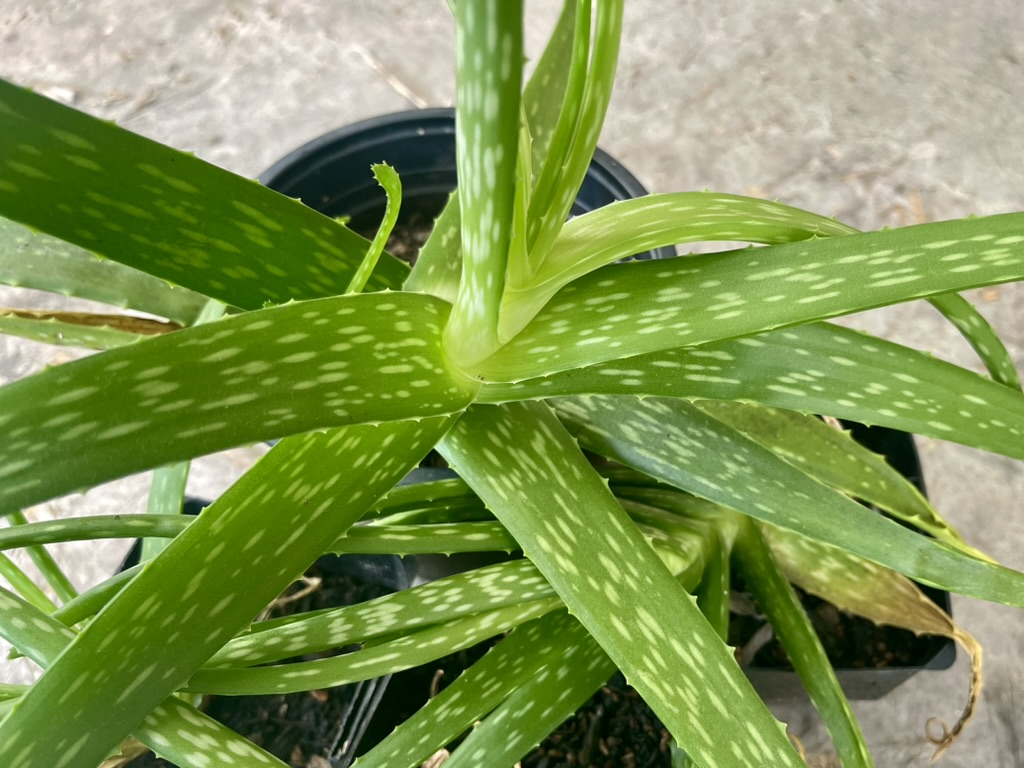
About Aloe Vera
Aloe vera is one of those plants that almost everyone recognises, and with good reason — it has been treasured for thousands of years. The ancient Egyptians called it the "plant of immortality" and buried it with their pharaohs, while across the Mediterranean and Asia it was kept close at hand for burns, rashes and all manner of everyday skin troubles. Few herbs can claim such a long and continuous history of human friendship.
What makes aloe vera so useful is hidden inside its thick, fleshy leaves. Snap a leaf and it reveals two things: a clear gel and a yellow sap, known as latex, that sits just beneath the leaf's skin. The clear gel is the gentle, cooling part that has been used to soothe skin for centuries.
At The Herbal Garden aloe vera grows happily in pots, where it enjoys the sun and drains freely — which, as any aloe will tell you, is exactly how it likes it.
Uses & Benefits
Household & Skin Care
Aloe vera is grown primarily as a medicinal and practical household plant rather than a culinary herb. At The Herbal Garden we value it mainly for its soothing gel and skin-care uses. The fresh gel, scooped straight from a leaf, is a lovely first port of call for minor burns, sunburn and everyday skin irritation — I keep a pot near the kitchen door for just that reason. It is equally welcome in simple homemade skin preparations, from soothing gels to light face masks.
Medicinal
Although the inner gel is used in some foods and drinks around the world, here we reach for aloe vera chiefly for its cooling, calming effect on the skin. A little fresh gel on a clean cloth can take the heat out of a mild burn almost at once, and it is gentle enough for children's skin. The gel is also widely used to ease dryness and irritation. Only the clear inner gel should be used — the bitter yellow sap that drains from a freshly cut leaf is a different matter altogether, and is explained in the cautions below.
Growing & Harvesting
Growing
Aloe vera is a tender succulent, so in New Zealand it does best in a warm, sheltered spot and needs protection from frost. It relishes free-draining soil — a good cactus or succulent mix is ideal — and far prefers to be left a little dry than overwatered, which is the most common way to lose a plant. Here at The Herbal Garden we grow it in pots, which makes it easy to move under cover through the colder months and ensures the roots never sit in wet soil. A terra-cotta pot with a drainage hole is hard to beat. Mature plants produce small offsets, known as pups, at the base, which can be gently separated and potted on to share with friends.
Harvesting
When you need a leaf, choose a thick, mature one from the outside of the plant and cut it close to the base with a clean knife. Stand it upright for a few minutes to allow the bitter yellow sap to drain away before using the clear inner gel. Then slice the leaf open and scoop out the fresh gel. The gel is best used immediately, although it will keep for a day or two in the refrigerator in an airtight container. Here at The Herbal Garden we find a single mature leaf is usually more than enough for a household need, so one plant goes a long way.
Cautions
Only the clear inner gel should be used on the skin. The bitter yellow sap that drains from a freshly cut leaf has a strong laxative effect and is not intended for internal use. The fresh gel is generally well tolerated, although it is always sensible to test a small amount first if you have sensitive skin. If you are pregnant, breastfeeding, or taking medication, seek professional advice before using aloe vera internally. This information is provided for educational purposes and is not a substitute for medical advice.