About Angelica
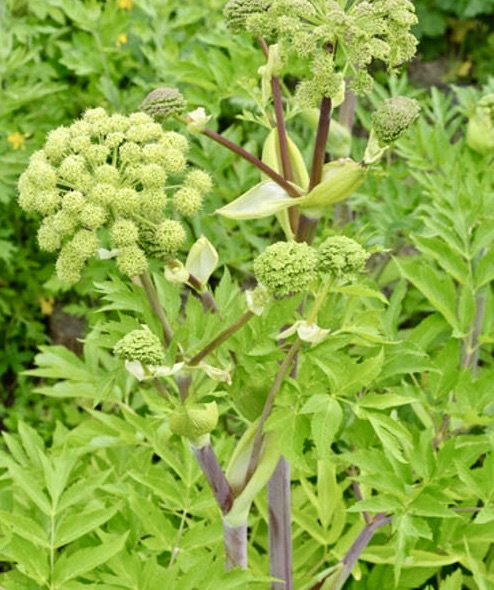
Angelica is one of the most statuesque herbs in the garden. It is a biennial, which means it spends its first year as a great rosette of divided leaves close to the ground, then in its second summer sends up a thick, hollow, slightly purple stem that can reach well over head height, topped by umbrella-like globes of pale green flowers. Rub a leaf or stem gently between your fingers and you'll notice its warm, aromatic scent lingering long afterwards.
Few herbs carry as much folklore. Its very name is said to come from the Archangel Michael, who, according to medieval legend, revealed the plant to humankind as a protection against plague and witchcraft. Because it flowered around the feast of the Apparition in May, angelica became known as the "herb of the angels", and for centuries it was gathered with quiet ceremony and hung above doorways for protection.
Uses & Benefits
Culinary
Angelica is perhaps best known for its stems, which can be crystallised into the familiar bright green candied decorations used on cakes and puddings. The young stems have a pleasant, slightly celery-like flavour and can also be stewed with rhubarb or apples to sweeten the fruit naturally. Young leaves add a gentle aromatic note to salads, soups and custards when used sparingly, while the ripe seeds flavour liqueurs such as gin and chartreuse, and the roots have long been steeped to make a warming, bittersweet tonic drink.
Medicinal
Angelica has a long history in herbal medicine, particularly as a warming herb for the digestion. A gentle tea can be made from either fresh or dried leaves, as well as from the seeds or roots where appropriate, and was traditionally taken to ease indigestion, bloating and poor appetite, valued for its comforting, settling character through the colder months. These uses reflect tradition rather than modern clinical evidence, and angelica is most often enjoyed today as an occasional, pleasant digestive tea.
Growing & Harvesting
Growing
Angelica is happiest in a sheltered spot with rich soil, and although it is often described as a plant of cool, damp places, I have found it grows very happily in full sun and reasonably dry soil here in New Zealand, so long as it is not left to parch in the height of summer. Sow fresh seed in late summer or early autumn, as angelica seed loses its vigour quickly once stored, and barely cover it, as light helps germination. Thin the young plants to about a metre apart, giving each one room to reach its full, architectural size. After flowering in the second year the plant usually dies, but it often self-seeds generously, so a few seedlings will carry on the line.
Harvesting
Harvest the young stems in late spring or early summer before they become woody if you plan to candy them — cut them close to the base and peel away any tough outer strings before use. The leaves are best picked young and used fresh, while the seed heads are gathered just as they turn from green to pale brown, then dried on a tray for sowing or flavouring. The roots of a second-year plant can be lifted in autumn, washed and dried slowly for use through the winter.
Cautions
Angelica contains natural compounds that may make the skin more sensitive to sunlight, so it is sensible to wash your hands after handling the fresh plant and to take care with large or prolonged use. There has been little research into its safety during pregnancy, so it is generally best avoided then unless advised by a qualified healthcare professional. If you have an ongoing medical condition or take prescribed medication, seek professional advice before using it regularly. This information is provided for educational purposes and is not a substitute for medical advice.