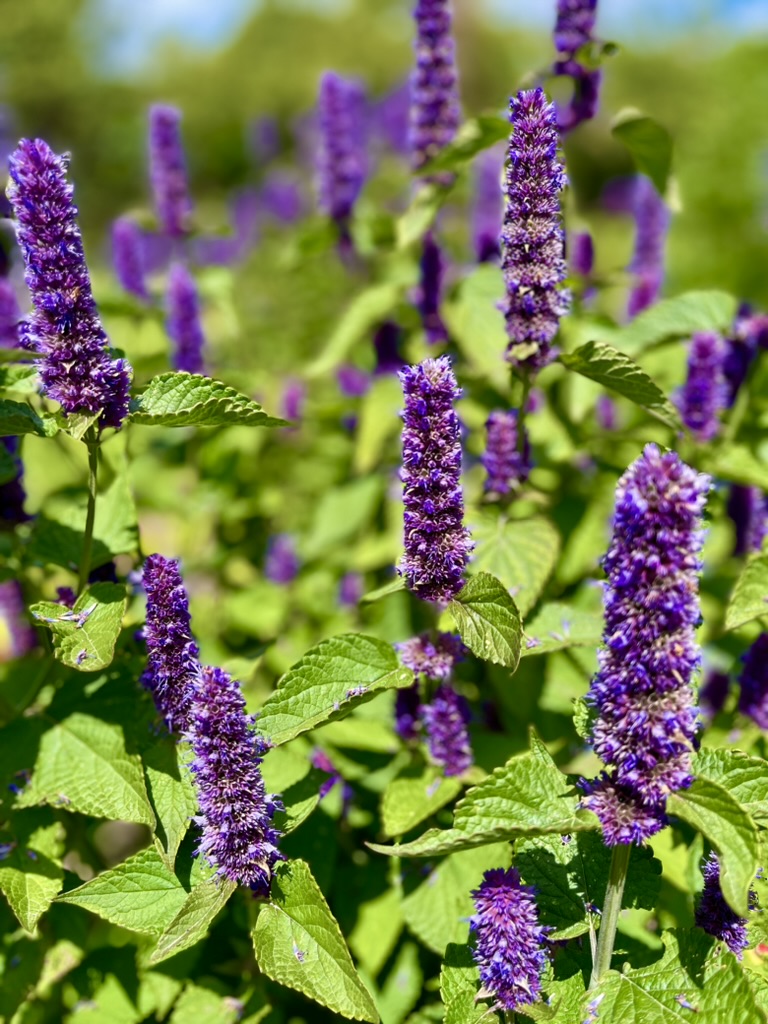
About Anise Hyssop
Anise hyssop is one of the most rewarding herbs you can grow. From midsummer onwards it sends up tall, slender spikes of white and soft lavender-blue flowers that keep coming for weeks, while the leaves carry a wonderfully clean, sweet liquorice scent with a hint of anise. Rub a leaf gently between your fingers and the fragrance lingers long afterwards, warm and faintly spicy.
Although the lavender-blue form is the best known, beautiful white-flowered varieties are also available and are equally attractive to bees and other pollinators.
Despite the name, it is not a true hyssop and is unrelated to anise, but it shares something of each. It belongs to the mint family and hails from the prairies of North America, where it was long valued by Indigenous peoples as a tea and medicinal plant. Settlers soon took to it as well, and it has been a quiet favourite in cottage and herb gardens ever since.
What really sets anise hyssop apart is its pull for pollinators. On a warm afternoon the flower spikes hum with bees, and butterflies and hoverflies soon follow. It stands up well to the Canterbury wind and keeps flowering through dry spells once its roots are down.
Uses & Benefits
Culinary
The leaves and flowers are both edible, and the sweet anise flavour is a lovely thing to have in the kitchen. A few young leaves scattered over a summer salad, or layered into a sandwich, give a fresh, liquorice note, and the flowers make a delicate, edible garnish over puddings and fruit. Anise hyssop is above all one of the finest herbs for tea — steep a small handful of fresh or dried leaves for a clear, fragrant cup that needs no sweetening. I often add a sprig to lemon balm or mint for a cooler, greener blend. One of my favourite ways to enjoy anise hyssop is blended with Lemon Verbena or Pineapple Sage. Together they make a wonderfully fragrant herbal tea with a fresh, uplifting flavour.
Medicinal
Traditionally, anise hyssop was taken as a warming tea to settle the digestion and ease coughs and chesty colds, and it was also made into gentle infusions for soothing the throat. Like many mint-family herbs it has a long folk history, and it still turns up in modern relaxing and respiratory tea blends. At The Herbal Garden we most often enjoy it as a soothing herbal tea. I frequently blend it with fresh thyme and a spoonful of honey for a dry, tickly cough, and it makes a wonderfully comforting drink during the colder months. It is best seen as a flavoursome tea herb rather than a medicine.
Growing & Harvesting
Growing
Anise hyssop is easy and generous in a New Zealand garden. Give it a sunny spot in reasonably well-drained soil and it will thrive, coping well with summer heat and dry spells once established. Sow seed in spring into trays or modules, barely covering them, and plant out once the danger of frost has passed, spacing them about 40 cm apart. Established clumps can be divided in early spring, and it self-seeds gently where it is happy, so a few new plants appear each year and are easy to move or pass on. At The Herbal Garden I give it a light trim after the first flush to encourage a second show of flowers through late summer.
Harvesting
For fresh use, pick the young leaves and flowering tops at any time — the scent is at its best in the morning once the dew has lifted. For drying, we harvest the flowering stems just as the first flowers begin to open. Once indoors, I strip the leaves from the stems and dry only the leaves in a warm, airy place out of direct sunlight. Once completely dry they are stored in airtight glass jars, where they retain their wonderful fragrance for many months.
Cautions
Anise hyssop is generally considered a gentle and safe herb when enjoyed in moderation as a tea or culinary flavouring. As with many traditional herbs, there has been little research into its use during pregnancy and breastfeeding, so it is best kept to small culinary amounts during these times unless advised by a qualified healthcare professional. If you have an ongoing medical condition or take prescribed medication, seek professional advice before using it regularly. This information is intended for educational purposes and is not a substitute for medical advice.