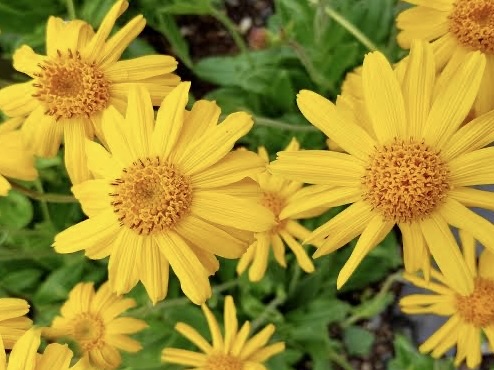
About Arnica
Arnica is one of Europe's best-known medicinal wildflowers. Its cheerful golden flowers, rather like small single daisies, nod above low rosettes of soft green leaves and catch the eye from a distance across a summer meadow. It is a true mountain plant, at home on alpine grasslands and the sunny margins of upland pastures, where the air is bright and the soil is lean and free-draining.
For centuries the flowers have been gathered from those high meadows and infused into oil to make the soothing preparations valued in country medicine. Despite its delicate appearance arnica is a surprisingly tough perennial once it is settled into the right conditions, surviving cold winters and poor soil far more readily than heavy, wet ground.
At The Herbal Garden, arnica is grown for its beautiful flowers and its long tradition in herbal medicine.
Uses & Benefits
Household & Herbal Preparations
The flowers are traditionally infused into oil before being made into creams, balms and ointments, and this infused oil remains the foundation of nearly every home arnica preparation. A jar of arnica-infused oil has long been valued for massage oils and soothing rubs for everyday bumps, bruises and tired muscles. The flowers are not normally used fresh — they are dried first, then steeped in a good quality carrier oil over several weeks before being strained and stored ready to use.
Traditional Medicinal Uses
Arnica has been one of Europe's best-known traditional herbs for bruising, muscular aches and minor sprains for centuries, and the infused oil or balm is still the way most people meet it today. These are traditional uses rather than modern clinical claims, kept alive by generations of gardeners and country households rather than by formal medicine, but they remain the reason arnica is so widely grown and so fondly remembered.
Growing & Harvesting
Growing
Arnica asks for three things above all: full sun, excellent drainage and a slightly acidic, sandy soil. It dislikes heavy wet soils and will not forgive winter water logging, so a raised bed, a free-draining slope or a large pot of gritty compost suits it far better than rich border soil. It can be grown successfully in Canterbury if the drainage is good, although it is not the easiest herb to establish — a young plant sulks for a season before it settles, and seed is slow and patchy to germinate. Once it takes, though, it is remarkably hardy and will return year after year with very little attention.
Harvesting
Pick the flower heads on a dry morning just as they begin to open, when their colour is brightest and the petals are fresh. If you are using a drying rack harvest only the flower heads, if you are hanging them to dry pick the flowers leaving them on the stems so you can hang them up. Handle them gently as the petals bruise easily. Spread the flowers in a single layer on a drying rack in a warm, airy place out of direct sunlight until they are completely dry and crisp. Once fully dried, transfer them to paper bags, and then into an airtight plastic container where they can remain until you are ready to use them. Keep them in a cool, dark place. If you have hung the flower heads to dry, take off the stem and use the same process for storing or you could put into an airtight jar. The dried flower heads are then ready for infusing into carrier oils to make arnica oils, balms and salves.
Cautions
Arnica is intended for external use only unless prescribed by a suitably qualified healthcare professional. Fresh arnica can irritate the skin in some people, and herbal preparations should not be applied to broken skin or open wounds. As with many traditional herbal remedies, there is limited research into its use during pregnancy and breastfeeding, so professional advice should be sought before using herbal arnica preparations at these times. Always test a small amount on the skin first if you are using arnica for the first time. This information is provided for educational purposes and is not a substitute for medical advice.