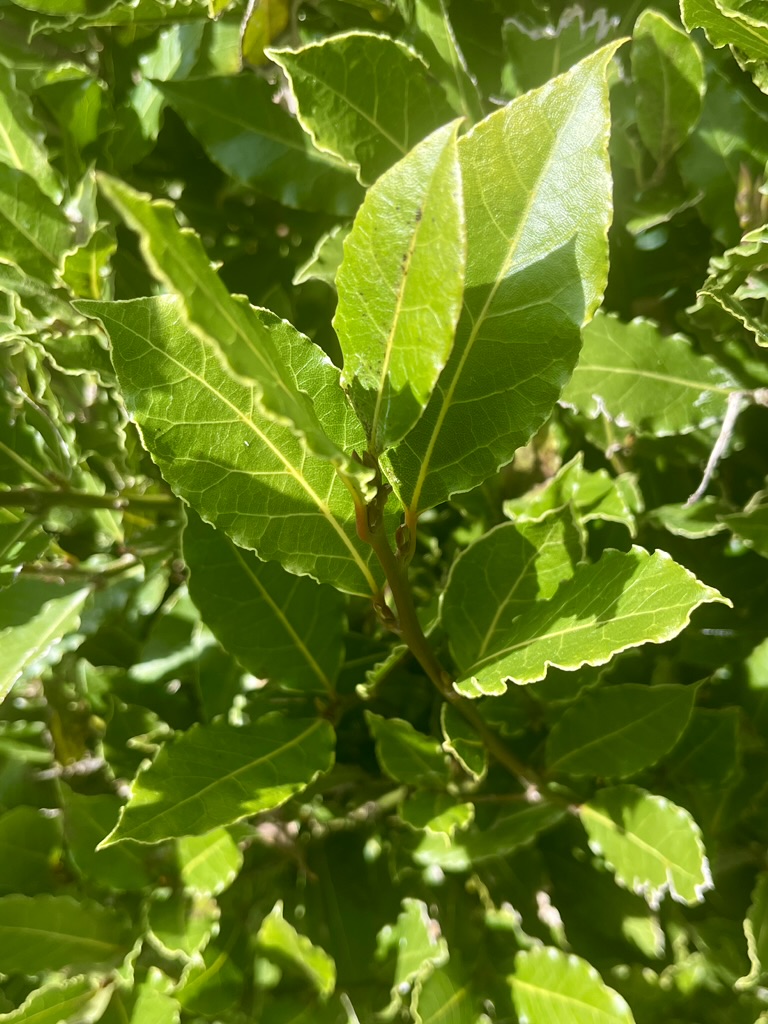
About Bay
Bay (Laurus nobilis) is one of the oldest culinary herbs still in everyday use, having flavoured dishes for more than two thousand years. In ancient Greece and Rome it was regarded as a symbol of wisdom, honour and victory, with poets, scholars and champions crowned with wreaths of its glossy evergreen leaves.
Today, bay remains just as valued in the kitchen, where its rich, aromatic leaves gently enhance soups, casseroles and slow-cooked dishes without overpowering other flavours.
Although often grown as a shrub, bay responds beautifully to pruning and can be clipped into attractive standards, cones or hedges. Slow growing and long-lived, it is equally at home in the garden or in a large container.
Uses & Benefits
Bay has long been appreciated for both its flavour and its traditional herbal uses. The aromatic leaves are rich in essential oils and have traditionally been used to support healthy digestion. Today, bay is best known as a versatile culinary herb that adds depth and warmth to slow-cooked dishes without overpowering other flavours.
Culinary Uses
Bay leaves are commonly added to soups, casseroles, stews, stocks and sauces, where they gently infuse dishes with their distinctive aroma. They pair particularly well with beef, lamb, chicken and legumes. The leaves are usually removed before serving, as they remain firm even after long cooking. Fresh leaves have a milder flavour, while dried leaves develop a richer, more concentrated aroma.
Medicinal Uses
Traditionally, bay has been used to support digestion and was often prepared as a herbal infusion or included in traditional remedies. Its aromatic oils have also been valued for their warming properties. While bay has a long history in traditional herbal medicine, it is now enjoyed primarily as a culinary herb.
Growing & Harvesting
Growing
Bay thrives in a sunny or lightly shaded position in well-drained soil. Once established it is remarkably hardy and requires very little attention beyond occasional watering during prolonged dry periods. Regular pruning encourages a dense, attractive shape, making bay an excellent feature plant for both gardens and containers.
Harvesting
Bay leaves can be picked throughout the year as required, although their flavour is often strongest from mature leaves. For drying, harvest healthy leaves and lay them in a single layer on drying racks in a warm, airy place away from direct sunlight. Once fully dry, place the leaves in a paper bag for a short time to ensure any remaining traces of moisture have disappeared before transferring them to an airtight plastic container and storing them in a cool, dark cupboard.
Cautions
Bay is considered a safe culinary herb when used in cooking. Always remove whole leaves before serving, as their tough texture can present a choking hazard. As with all herbs, seek professional advice before using bay medicinally during pregnancy or if you have specific health concerns. This information is intended for educational purposes and is not a substitute for medical advice.