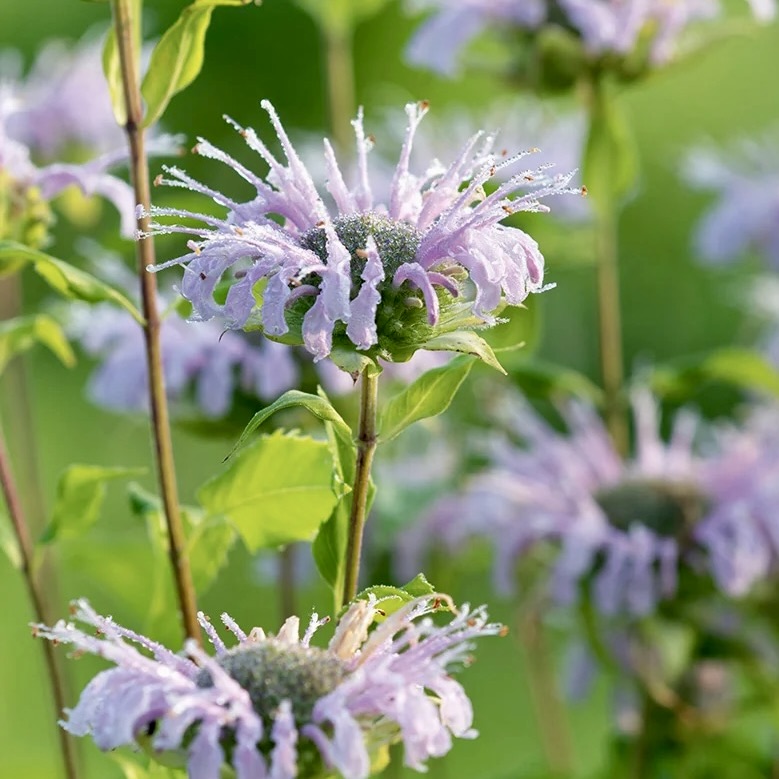
About Bergamot Lemon
Bergamot Lemon (Monarda citriodora), sometimes called Lemon Bee Balm or Lemon Mint, is native to the southern United States and northern Mexico. Unlike the perennial Bee Balm (Monarda didyma), this is an annual species with a fresh citrus fragrance and elegant tiers of lavender-pink flowers.
For generations it has been valued both as an ornamental and as a useful household herb. Its lemon-scented leaves were traditionally brewed into refreshing herbal teas, while its nectar-rich flowers have long attracted bees, butterflies and other beneficial insects.
At The Herbal Garden, Bergamot Lemon is one of my favourite summer flowers. Its soft lavender blooms attract bees and butterflies for months, while the lemon-scented foliage releases a beautiful citrus fragrance whenever it is brushed.
Uses & Benefits
Bergamot Lemon has long been appreciated as both a culinary and traditional herbal plant. Its fragrant leaves are commonly enjoyed as a refreshing herbal tea, while the flowers provide valuable nectar for bees and butterflies. Today it is valued equally for its beauty in the garden, its refreshing herbal tea and the abundance of pollinators it attracts throughout summer.
Culinary Uses
The young leaves make a refreshing lemon-flavoured herbal tea and can also be added sparingly to fruit drinks, salads and herb butters. The colourful flowers are edible and make an attractive garnish for desserts, summer drinks and salads.
Medicinal Uses
Traditionally, Bergamot Lemon has been enjoyed as a soothing herbal tea to support digestion and general wellbeing. Today it is best appreciated as a pleasant herbal infusion with a long history of traditional use rather than as a substitute for medical treatment.
Growing & Harvesting
Growing
Bergamot Lemon prefers a warm, sunny position in fertile, well-drained soil. Sow seed in spring after the danger of frost has passed. Deadheading encourages a longer flowering season, although I like to leave a few flower heads at the end of the season so they can self-seed naturally and continue providing valuable food for bees and other pollinating insects.
Harvesting
Harvest young leaves regularly throughout summer for fresh use or drying. Pick flowers as they open for teas or edible garnishes. Dry leaves and flowers separately on drying racks in a warm, airy place away from direct sunlight. Once completely dry, place them in a paper bag for a short time to ensure any remaining traces of moisture have disappeared before transferring them to an airtight plastic container and storing them in a cool, dark cupboard.
Cautions
Bergamot Lemon is generally considered safe when enjoyed as a culinary herb or herbal tea. As with all herbs, anyone who is pregnant, breastfeeding, taking prescribed medication or managing a medical condition should seek professional advice before using it regularly in larger amounts.