About Black Cumin
Black Cumin (Nigella sativa) has been cultivated for more than 2,000 years and was so highly valued that seeds were discovered in the tomb of Tutankhamun. It is a herb with a remarkable history, woven through the kitchens, gardens and healing traditions of the ancient world.
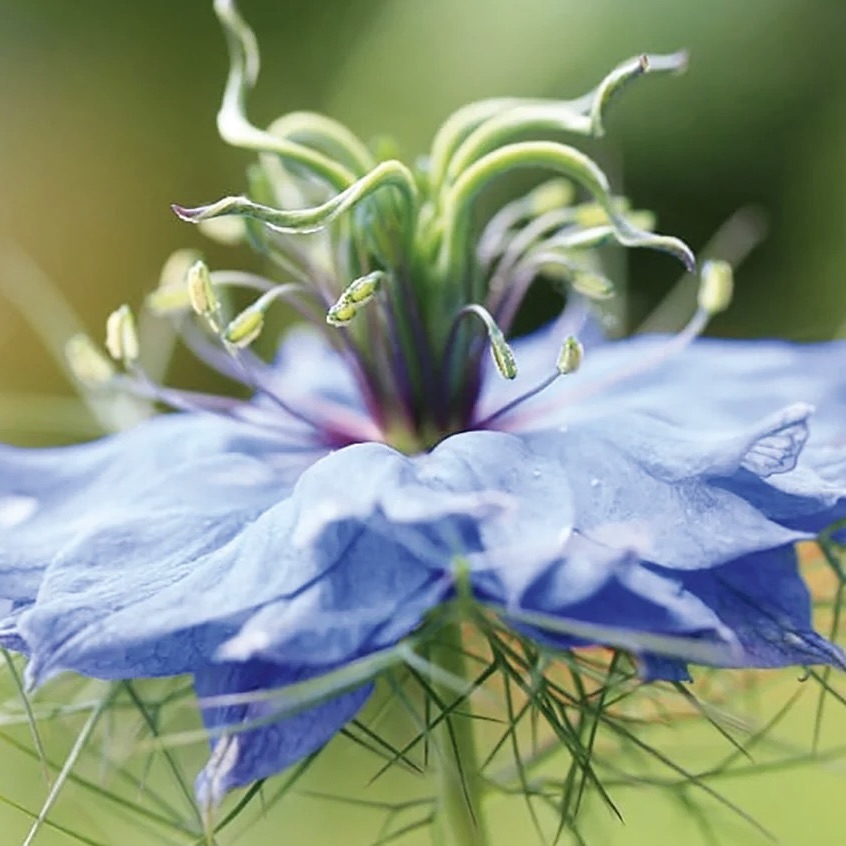
Despite its common name, Black Cumin is not related to true cumin but belongs to the buttercup family (Ranunculaceae). Its delicate, feathery foliage and soft blue flowers make it just as ornamental in the garden as it is useful in the kitchen.
These delicate blue flowers are followed by attractive seed pods containing the aromatic black seeds that have been treasured in Middle Eastern, Indian and North African cooking for centuries. A single plant offers beauty in flower, interest in seed and flavour in the kitchen, which is a rare and pleasing combination in any herb garden.
Uses & Benefits
Black Cumin is a traditional culinary and medicinal herb, valued for its distinctive flavour and its long history of use. Today it is appreciated both as a spice and as an attractive annual in the herb garden.
Culinary Uses
The seeds have a warm, nutty flavour with hints of onion, oregano and pepper. They are commonly sprinkled over breads, used in curries, pickles, vegetable dishes and spice blends, and are best lightly toasted before use to release their full aroma.
Medicinal Uses
Black Cumin has a long history in traditional Middle Eastern and Ayurvedic herbal practice and has traditionally been used to support digestion and general wellbeing. Modern research continues into its constituents, but it is best appreciated as a herb with a long history of traditional use rather than as a substitute for medical treatment.
Growing & Harvesting
Growing
Black Cumin is an easy annual that prefers full sun and well-drained soil. Sow directly in spring where it is to flower, as it dislikes root disturbance. The delicate blue flowers attract bees and other pollinating insects before developing the beautiful seed pods that are harvested for their aromatic black seeds.
Harvesting
Harvest the seed heads once they have turned brown and begun to dry on the plant. Cut the stems and hang them upside down in a warm, airy place over a paper bag to catch the ripening seeds. Once completely dry, store the cleaned seeds in an airtight container in a cool, dark cupboard.
Cautions
Black Cumin is generally safe when used in normal culinary amounts. Anyone who is pregnant, breastfeeding, taking prescribed medication or managing a medical condition should seek professional advice before using it regularly in medicinal quantities.