About Calendula
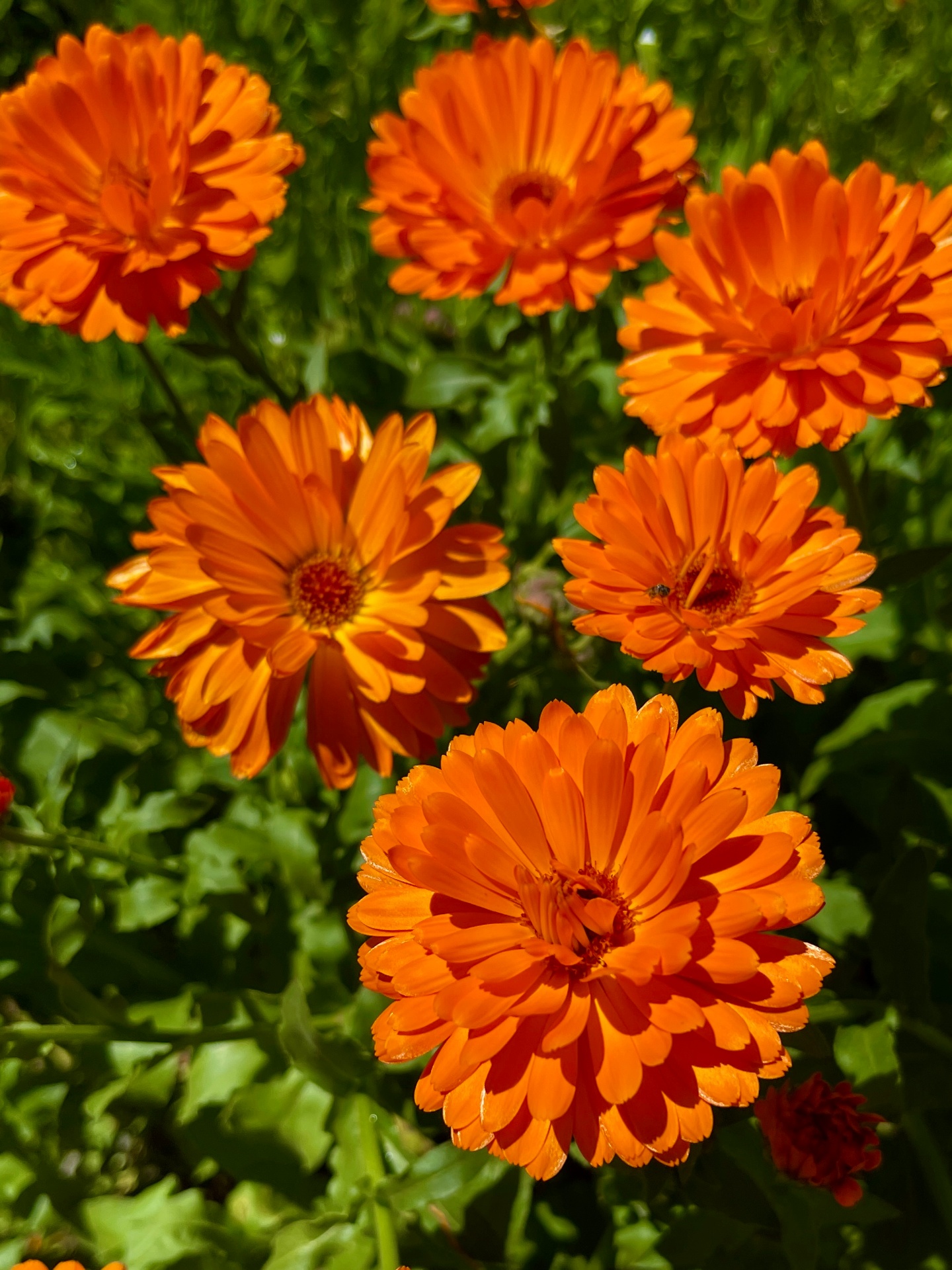
Calendula (Calendula officinalis), commonly known as Pot Marigold, is one of the oldest cultivated flowers, with a history stretching back to Roman times. Native to the Mediterranean and a member of the daisy (Asteraceae) family, it has long been treasured for both its beauty and its usefulness. It should not be confused with French or African marigolds, which are different plants and are not generally used in the same way.
Its cheerful golden and rich orange flowers brighten the garden from spring until the first frosts. The deep orange varieties have traditionally been favoured by herbalists. Few herbs are as generous as Calendula. The edible petals bring colour to the kitchen, the flowers are loved by bees and other pollinators, and the blooms have been used for centuries in traditional herbal preparations. It is one of those remarkable plants that is equally at home in the flower border, the vegetable garden and the herb garden.
At The Herbal Garden, Calendula is one of the first herbs I recommend to anyone beginning their herbal journey. It asks for very little yet gives so much in return. Whether I'm picking fresh petals for salads, harvesting flowers for infused oils and salves, or simply enjoying the colour it brings to the garden, it is a herb I would never want to be without.
Uses & Benefits
Calendula has been valued for generations as both a cheerful ornamental and a practical kitchen and skin-care herb. Today it is appreciated just as much for its beauty and pollinator value as for its long tradition of gentle use.
Culinary Uses
The petals have a mild, slightly peppery flavour and a beautiful saffron-like colour, making them a lovely addition to salads, soups, rice dishes and butter. Scatter them over summer salads for a splash of gold, infuse them into vinegar or oil, or stir them into cake batters and custards for a gentle colour and flavour. Always use the petals only, never the bitter green base of the flower head.
Medicinal Uses
Calendula has traditionally been used in European herbal practice to soothe and calm the skin, and it remains one of the most popular herbs for gentle, home-made salves and infused oils. A cooled infusion of the petals makes a soothing eyewash or skin rinse. These uses reflect long-standing traditional practice and should not be regarded as a substitute for professional medical advice.
Growing & Harvesting
Growing
Calendula is an easy annual that thrives in full sun and any reasonably fertile, well-drained soil. Sow directly where it is to grow in spring, scattering the seed thinly and lightly covering with soil. It will germinate quickly and begin flowering within a couple of months. Regular deadheading keeps the plants tidy and encourages wave after wave of new blooms right through to autumn. Once established in the garden, Calendula self-seeds readily, often appearing in new spots each year with very little effort.
Harvesting
Pick the flower heads on a dry morning once they are fully open, when the petals are at their brightest and the medicinal properties are strongest. Snip the whole head from the stem and dry them in a single layer on drying racks in a warm, airy place out of direct sunlight, turning occasionally until completely dry. Once fully dry, the petals can be rubbed from the heads, or the whole flower heads can be kept intact. Store either in airtight containers in a cool, dark cupboard.
Cautions
Calendula is generally safe when used occasionally as a culinary herb or in gentle, traditional skin preparations. Some people with sensitivities to plants in the daisy (Asteraceae) family may experience a mild skin reaction, so it is wise to try a small amount first. Anyone who is pregnant, breastfeeding or considering medicinal use should seek professional advice before use.