About Caraway
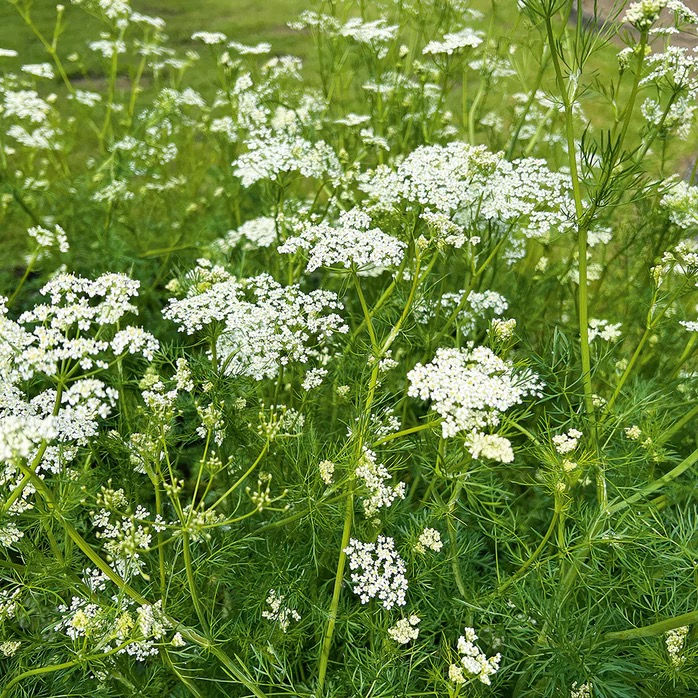
Caraway (Carum carvi) is a traditional biennial herb with finely divided, feathery leaves and delicate umbels of small white flowers that open through early summer. It has been grown in European kitchen gardens for centuries, prized above all for its warm, aromatic seeds and their long place in breads, cheeses and country cooking.
Both the leaves and the seeds are useful. The young foliage has a gentle, savoury flavour, while the seeds carry the herb's true character — warm, slightly sweet, with hints of anise and citrus. In its second summer the plant sends up tall, slender stems topped with lacy white flower heads that hum with bees and other pollinators.
At The Herbal Garden, Caraway is one of those quiet, old-fashioned herbs that earns its place through sheer usefulness. It asks for very little, gives generously to bees and beneficial insects, and carries the scent of northern European kitchens and country traditions into the modern garden.
Uses & Benefits
Caraway has been valued for generations as both a kitchen herb and a gentle digestive aid. Its seeds bring a warm, distinctive flavour to a wide range of traditional dishes, while its long history in herbal practice speaks to a quiet, everyday usefulness that is still appreciated today.
Culinary Uses
Caraway seed has a warm, slightly sweet flavour with hints of anise and citrus, and it is a traditional seasoning in many European kitchens. It is the familiar spice in rye breads and seed cakes, and is just as at home in biscuits, cheeses and savoury baking. Stirred into sauerkraut, cabbage dishes, soups and stews, it deepens the flavour and helps to balance richer foods. The young leaves can also be used sparingly in salads and with new potatoes for a gentle, aromatic note.
Medicinal Uses
Caraway has traditionally been used to support healthy digestion, particularly after rich or heavy meals. It has long been valued in European herbal practice for helping to ease wind and bloating, and the seeds are often taken as a gentle warming tea or chewed after eating. These uses are rooted in a long tradition of everyday herbal practice rather than modern medical evidence, and Caraway should not be regarded as a substitute for professional medical advice.
Growing & Harvesting
Growing
Caraway is usually grown as a biennial, and it is happiest in full sun and well-drained soil. In its first year it forms a low, leafy rosette of feathery foliage, settling in quietly through the seasons before sending up tall flowering stems in its second year. The lacy white umbels open in early summer and are attractive to bees and other beneficial insects, making Caraway as worthwhile in the ornamental border as in the herb bed.
Harvesting
The leaves may be picked when young, while the seed heads are best harvested once they begin to turn brown. Cut the stems on a dry day, then hang them upside down in paper bags or over a tray to catch the ripening seeds as they fall. Once the seeds are fully dry, transfer them to airtight containers and store them in a cool, dark cupboard, where they will keep their warm fragrance for many months.
Cautions
Caraway is generally safe when used in everyday cooking quantities, which is how most of us enjoy it. The seeds have a long tradition of gentle digestive use, but anyone who is pregnant, breastfeeding, taking medication or considering medicinal use should seek professional advice first. Caraway should be enjoyed as part of a varied diet rather than relied upon as a treatment, and it is not a substitute for professional medical care.