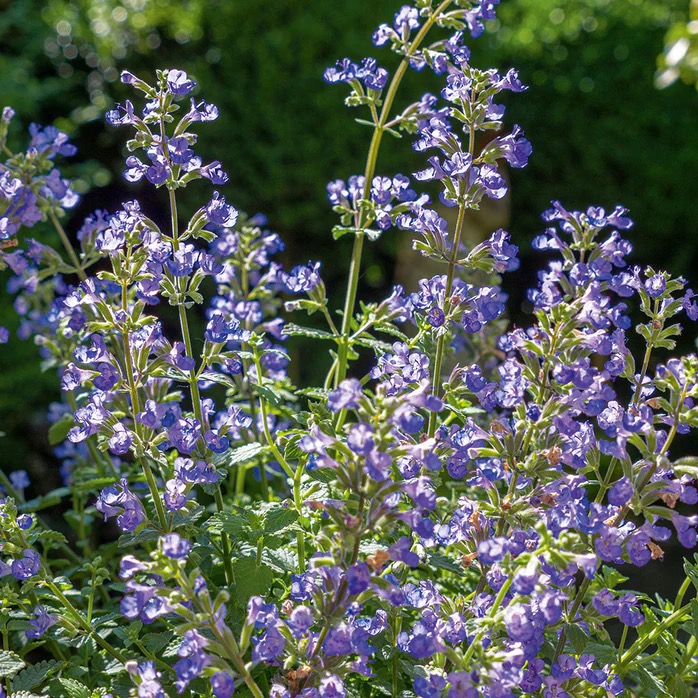
About Catmint
Catmint (Nepeta × faassenii) is one of the most reliable and rewarding border plants, equally at home in herb gardens, cottage gardens and mixed perennial borders. Belonging to the ancient Nepeta genus, which is native to parts of Europe, Asia and North Africa, it has long been valued for its aromatic foliage and masses of nectar-rich flowers. It forms neat, rounded clumps of soft grey-green leaves, above which rise airy spikes of lavender-blue blooms that open from early summer and continue for months if the plant is trimmed back between flushes.
Although Catmint belongs to the mint family, it is quite different from the culinary mints. It does not spread with the same runaway enthusiasm, and its leaves carry a strong, pungent fragrance rather than a cool, sweet one. It is grown mainly for its ornamental qualities, where its long flowering season, drought tolerance and ability to attract bees, butterflies and other beneficial insects make it a genuinely useful as well as a beautiful plant.
Uses & Benefits
Catmint is valued chiefly as an ornamental herb and a generous pollinator plant rather than as a kitchen herb. Its long season of lavender-blue flowers draws bees and butterflies in great numbers, it makes an excellent companion plant in the border, and it carries a quiet history in traditional herbal practice. Few herbs give so much colour and life to the garden for so little effort.
Culinary Uses
Catmint is not commonly used in cooking, as its strong aromatic flavour makes it less appealing in the kitchen than its close relatives. The young leaves have occasionally been used in small quantities to flavour herbal teas, but on the whole Catmint is a plant for the border and the bees rather than the table.
Medicinal Uses
Catmint has traditionally been used in herbal medicine in a similar way to its close relative Catnip, particularly as a gentle calming herb and a mild digestive aid. It is grown today mainly as an ornamental and pollinator-friendly plant, and these traditional uses are rooted in everyday herbal practice rather than modern medical evidence. Catmint should not be regarded as a substitute for professional medical advice.
Growing & Harvesting
Growing
Catmint thrives in full sun and well-drained soil, and it tolerates dry conditions beautifully once established. It forms neat, attractive clumps that rarely need staking, and a trim back after the first flush of flowers encourages a fresh crop of blooms to carry the display on through the season. New plants are easily raised from cuttings or by dividing established clumps in spring, so a thriving patch is never far away.
Harvesting
Leaves and flowering stems may be gathered during the flowering season if they are required for herbal use. Cut them on a dry morning once any dew has lifted, and spread them on drying racks in a warm, airy place out of direct sunlight. Once they are completely dry and crisp, transfer them to airtight containers and store them in a cool, dark cupboard, where they will keep their gentle aroma for many months.
Cautions
Catmint is generally regarded as safe and is not commonly used as a medicinal herb today. Anyone considering medicinal use during pregnancy, breastfeeding or alongside medication should seek professional advice first. Catmint should not be regarded as a substitute for professional medical care, and it is best enjoyed for the colour, fragrance and life it brings to the garden.