About Catnip
Catnip (Nepeta cataria) is a traditional herb with a long history of use in both herbal medicine and cottage gardens. Native to Europe and parts of Asia and belonging to the mint family, it has been cultivated for centuries — not only for its gentle herbal virtues but for its famous effect on cats, who are irresistibly attracted to the plant by the naturally occurring compound nepetalactone. Not every cat responds, but those that do will roll, purr and play among the leaves with obvious delight.
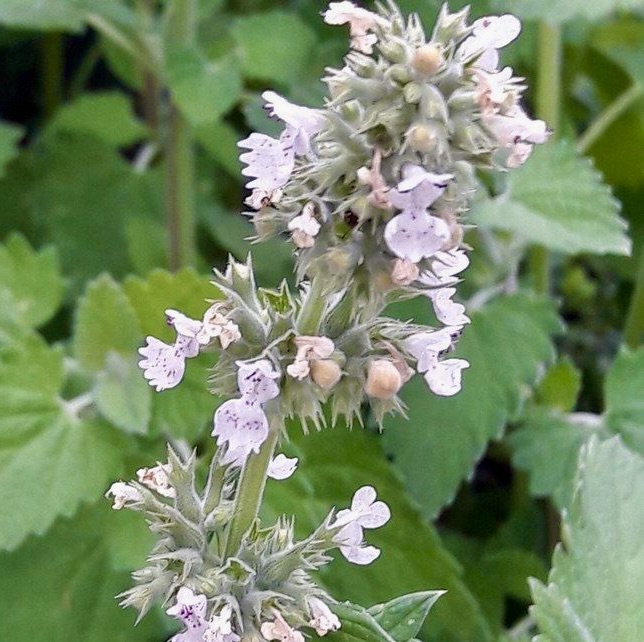
The plant itself is quietly handsome. Catnip forms upright, branching stems clothed in soft grey-green aromatic leaves, with a texture that is gently downy to the touch. Through the height of summer it carries loose clusters of small white flowers delicately marked with purple, which are highly attractive to bees and other pollinators. It is a relaxed, informal plant that sits comfortably among other herbs, filling the garden with fragrance on a warm day.
Despite its name, Catnip has always been far more than a curiosity for cats. It has long been valued as a useful herb for people, gathered from cottage gardens and hedgerows for gentle teas and traditional remedies. Today it remains a rewarding plant to grow—easy, generous and full of character. In my own garden I often find honeybees and bumblebees resting among the flowers for so long they appear to have fallen asleep, a reminder of just how valuable this herb is to our pollinators.
Uses & Benefits
Catnip has traditionally been appreciated as a calming herb, a pollinator-friendly garden plant and, of course, as an enrichment plant for cats. Its long season of pale flowers draws bees and other beneficial insects, its aromatic foliage carries a gentle herbal scent, and a small sprig given to a favourite cat is one of the simplest of garden pleasures.
Culinary Uses
The young leaves may be used sparingly to make a mild herbal tea with a gentle minty flavour, but Catnip is rarely used as a culinary herb today. Its taste is subtler and less pungent than the culinary mints, and on the whole it is grown for the garden, the bees and the cats rather than for the kitchen.
Medicinal Uses
Catnip has traditionally been used as a gentle relaxing herb, often enjoyed as a calming tea and sometimes used to support healthy digestion and encourage restful sleep. These uses are rooted in long-standing herbal practice rather than modern medical evidence, and Catnip should not be regarded as a substitute for professional medical advice.
Growing & Harvesting
Growing
Catnip is an easy, hardy perennial that thrives in full sun or partial shade in well-drained soil. It grows vigorously and benefits from a trim back after flowering to encourage fresh, bushy growth. It self-seeds readily, so a patch once established tends to return year after year — sometimes in new corners of the garden. If you are growing Catnip for ornamental purposes, it is wise to protect young plants, as visiting cats may roll on or flatten them before they have a chance to settle in.
Harvesting
Leaves and flowering stems are best harvested just before or as the flowers begin to open, when the plant's essential oils are at their peak. Cut them on a dry morning once any dew has lifted, and dry them on racks in a warm, airy place out of direct sunlight. Once they are completely dry and crisp, transfer them to airtight containers and store them in a cool, dark cupboard, where they will keep their gentle aroma for many months.
Cautions
Catnip is generally regarded as safe when used occasionally as a herbal tea, but anyone who is pregnant, breastfeeding or taking medication should seek professional advice before using it medicinally. Catnip should not be regarded as a substitute for professional medical care, and it is best enjoyed in moderation as part of a traditional herbal practice rather than a treatment in its own right.