About Chicory
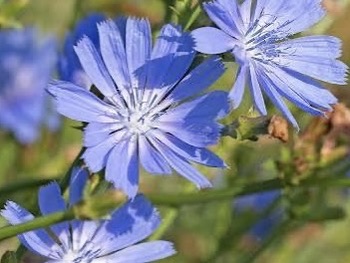
Chicory (Cichorium intybus) is a hardy perennial native to Europe, western Asia and North Africa, most easily recognised by its striking sky-blue flowers. They open with the morning sunshine and often close again by the afternoon, so the plant seems to change through the course of a single day.
It has been cultivated since ancient Egyptian, Greek and Roman times as both a food and a medicinal plant, gathered from field margins and grown in gardens for its leaves and its root. Roasted Chicory root later became a popular coffee substitute, particularly during times when coffee was scarce or expensive, and it is still enjoyed in parts of Europe today, either on its own or blended with ground coffee.
Chicory develops a deep taproot and sends up tall, slender stems studded with brilliant sky-blue daisy-like flowers through the warm months. Those flowers are of real value to bees and other pollinating insects, which visit them steadily from early morning while the blooms are fully open. Both graceful and resilient, Chicory is equally at home in herb gardens, cottage gardens and naturalistic plantings.
Uses & Benefits
Chicory has long been valued as both a useful food plant and a medicinal herb, with different parts of the plant traditionally put to different purposes — the leaves gathered for the table and the deep root lifted for roasting and for herbal use.
Culinary Uses
Young Chicory leaves can be added to salads, where their slight bitterness is welcome, although they become more pleasantly bitter as they mature. The leaves may also be lightly cooked, much like other bitter greens. The root can be roasted and ground to make a caffeine-free coffee substitute with a deep, mellow flavour, used on its own or blended with coffee. Chicory belongs to the same broader family as endive and radicchio, which explains the familiar bitter character of its leaves.
Medicinal Uses
Chicory root has traditionally been used to support healthy digestion and liver function. The root is naturally rich in inulin, a prebiotic fibre that supports beneficial gut bacteria. These traditional uses are based on long-standing herbal practice rather than modern medical evidence, and Chicory should not be regarded as a substitute for professional medical advice.
Growing & Harvesting
Growing
Chicory prefers full sun and well-drained soil, and asks very little once it is settled. It develops a deep taproot that makes it notably drought tolerant, though young plants appreciate regular watering while they establish. It is an attractive and long-lived perennial that fits well into herb gardens, cottage gardens and naturalistic plantings, and if you wish to encourage pollinators simply allow the plants to flower rather than cutting them back.
Harvesting
Young leaves are best picked before flowering while they are still tender, taking a few from each plant rather than stripping it. Roots are usually lifted in autumn for drying or roasting, when they have had a full season to swell. The flowers may also be picked fresh for decorative or culinary use if desired, though they are fleeting and best gathered in the morning while fully open.
Cautions
Chicory is generally regarded as safe both as a food and as a traditional herbal plant. People with allergies to members of the daisy (Asteraceae) family should use caution, as Chicory belongs to the same family and may cause a reaction in those who are sensitive. Because the root is rich in inulin, some people find large amounts cause mild digestive discomfort at first, so it is sensible to start with small quantities. Medicinal use should not replace professional healthcare advice, and anyone who is pregnant, breastfeeding or taking medication should seek guidance before using Chicory medicinally.