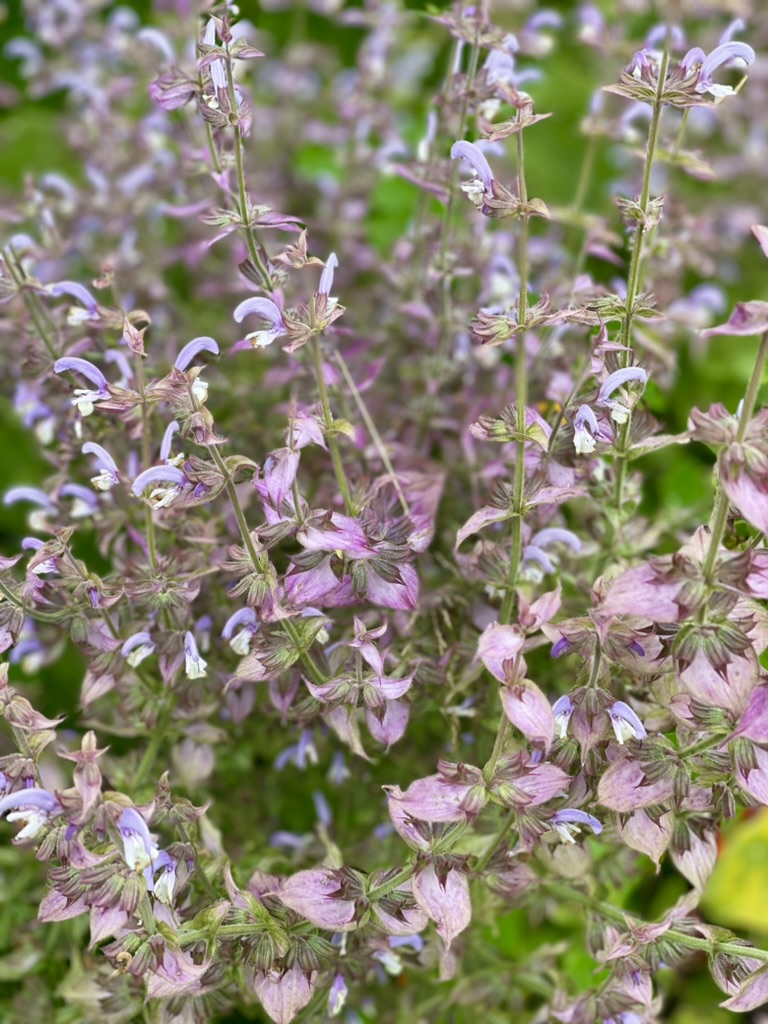
About Clary Sage
Clary sage is one of the oldest cultivated sages, native to the Mediterranean region and grown in gardens for well over a thousand years. It is a wonderfully architectural plant, sending up tall branching stems above large, softly textured leaves, and carrying impressive spikes of pink, lilac and white flowers that seem to glow in the summer light.
For centuries it was valued in monastery and physic gardens, where it was grown alongside the other great healing herbs of the age. It was traditionally known as "clear eye", because the seeds were once used to help remove a speck of dust from the eye — a practice that gave the plant its common name, but one that is certainly no longer recommended.
Its musky, sweet fragrance has also made clary sage an important plant in the perfume industry, where the scent of its leaves and flowers has long been prized. At The Herbal Garden, Clary Sage grows both among the flower borders and around the vegetable beds, where its tall flower spikes, soft fragrance and constant stream of visiting bees make it one of the highlights of summer.
Uses & Benefits
Clary sage is grown both as an ornamental and as a traditional medicinal herb. Its flowering spires draw bees and other pollinators for weeks on end, while the aromatic leaves and flowers have been valued for their fragrance for generations.
Culinary
Unlike common culinary sage, clary sage is only occasionally used in the kitchen. Traditionally the young leaves were sometimes dipped in a light batter and fried as fritters, and the flowers may be used sparingly as an edible garnish on salads or puddings. Today it is grown far more for its beauty and fragrance than for cooking, and that is very much how we treat it here.
Medicinal
In traditional herbal practice clary sage was regarded as a calming and relaxing herb, particularly associated with women's wellbeing and with easing nervous tension. The essential oil distilled from the flowering tops has long been used in aromatherapy for its warm, musky, softly sweet scent. We share this as garden history and tradition rather than as medical advice.
Growing & Harvesting
Growing
Clary sage grows happily in a sunny, well-drained position and copes with Canterbury's dry summers very well once it is established. In its first season it forms a handsome clump of broad, softly textured foliage, then sends up its tall flowering spikes the following summer. It will readily self-seed if you let it, which we rather enjoy — and any unwanted seedlings are easy enough to lift out while they are still small.
Harvesting
We mainly grow clary sage for its spectacular flowers and its fragrance rather than for regular harvesting. Now and then we pick a few flowering stems to enjoy indoors or to use in floral arrangements, where they last beautifully. Most of the flowers are left standing in the garden for the bees and the other pollinating insects that work them from morning until evening.
Cautions
Clary sage has a long history of traditional use, but large medicinal quantities and the concentrated essential oil are a different matter altogether and should only be used with appropriate professional guidance. Everything shared here is offered for interest and education, not as medical advice.