About Comfrey
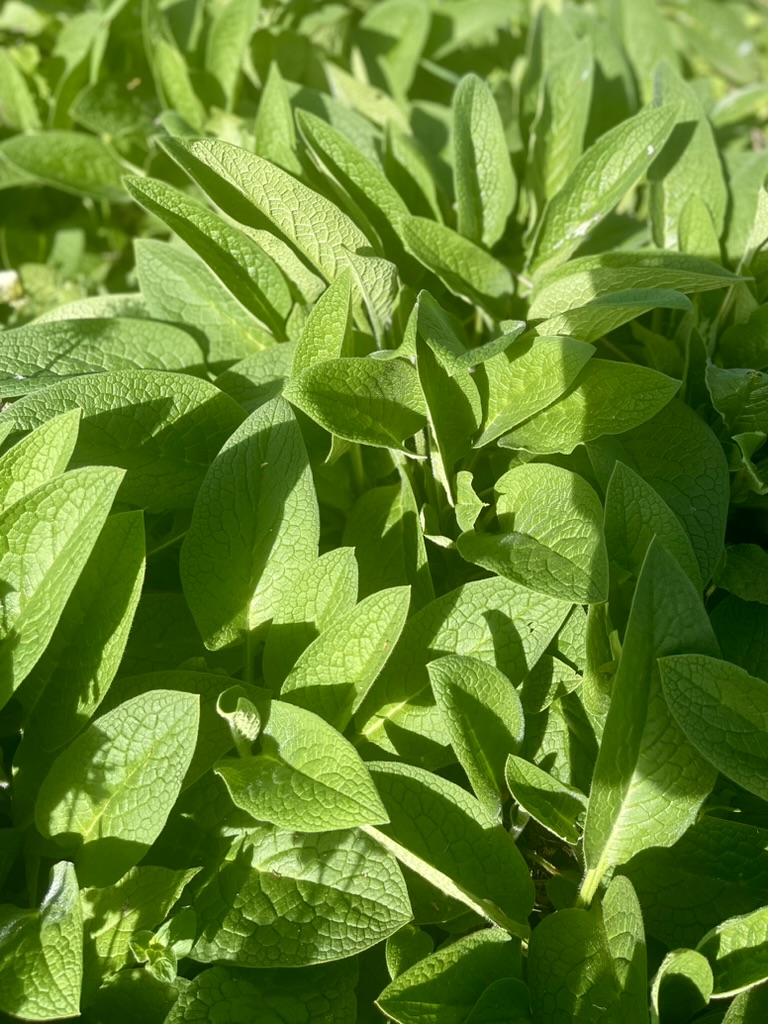
Comfrey (Symphytum officinale) is a robust perennial of the borage family, native to Europe and western Asia, where it grows naturally beside streams, in damp meadows and along hedgerows. Its broad, hairy leaves form generous clumps and, through the summer, tall stems carry clusters of drooping, bell-shaped flowers in shades of cream, pink and violet. Few herbs are quite so handsome in flower, and few provide such a rich source of nectar for bees, bumblebees and other pollinating insects throughout the summer.
Comfrey has been cultivated and gathered for centuries. Its common name of “knitbone” speaks to a long tradition of external use, the leaves and roots having been applied in poultices and ointments intended to support the healing of bones, bruises and soft tissue. The botanical name Symphytum comes from the Greek symphis, meaning “to unite”, a further echo of this reputation.
Beyond its herbal history, Comfrey has earned an honoured place in the organic garden. The leaves are exceptionally rich in nutrients and break down quickly, making them ideal for soaking into a liquid plant feed or layering into the compost heap as an activator. A single established plant will yield cuttings again and again through the season, which is why Comfrey is often described as one of the most useful plants a gardener can grow.
Uses & Benefits
Comfrey is unusual among herbs in being valued almost as much in the garden as in the apothecary. The same generous leaves that nourish the compost heap have a long tradition of external use, while the plant’s deep roots draw up minerals from far below the surface and store them in the foliage. These mineral-rich leaves are one reason Comfrey has become such an indispensable plant in organic and permaculture gardening.
Culinary Uses
Comfrey is not generally regarded as a culinary herb. Young leaves were once eaten in small quantities and occasionally cooked like spinach, but their rough, hairy texture and the presence of naturally occurring compounds make internal use inadvisable. Today Comfrey is far more valued in the garden than in the kitchen, where its role is to feed other plants rather than to appear on the plate.
Medicinal Uses
Comfrey has a centuries-old reputation as a traditional remedy for external use. Poultices, salves and oils made from the leaves and roots were applied to bruises, sprains and aching joints, reflecting the “knitbone” name and its association with supporting the healing of bones and soft tissue. These uses are based on long-standing herbal tradition rather than modern medical evidence, and Comfrey should not be regarded as a substitute for professional medical advice.
Growing & Harvesting
Growing
Comfrey is a vigorous perennial with a deep root system, and once planted it is not easily moved, so choose its position with care and plant it where it can remain permanently. It is unfussy about soil but does best in a moist, fertile spot in full sun or light shade, and the roots will reach far down to find what they need. Given room to settle, a single plant will expand into a substantial clump and return reliably year after year.
Harvesting
Leaves can be cut several times during the growing season, each plant recovering quickly to produce a fresh flush. Cut the foliage down to a few centimetres above the crown, then gather the leaves for making liquid fertiliser, adding to the compost heap, or drying for later external herbal preparations. If you wish to store them, the leaves dry well spread on racks in a warm, airy place before being kept in sealed containers. The roots may also be lifted and dried in autumn, traditionally the part used for external preparations.
Cautions
Modern research has shown that Comfrey contains naturally occurring pyrrolizidine alkaloids, which is why internal use is no longer recommended except under the guidance of a qualified professional. Externally, the plant has a lengthy history of use in traditional herbal preparations, and salves, ointments and poultices made from the leaves and roots remain a familiar part of herbal practice. As with any medicinal herb, Comfrey should not replace professional healthcare advice, and anyone who is pregnant, breastfeeding or taking medication should seek guidance before use.