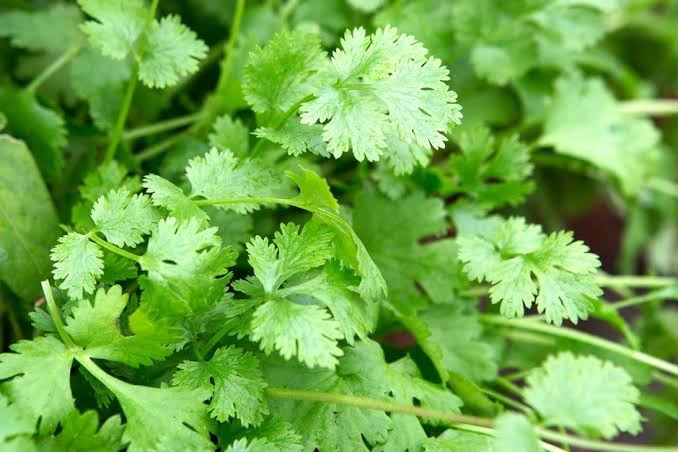
About Coriander
Coriander (Coriandrum sativum) is one of the oldest culinary herbs in the world, native to southern Europe, North Africa and western Asia. It has been cultivated for thousands of years and was known to the Ancient Egyptians, Greeks and Romans, who valued both the fresh leaves and the aromatic seeds. Strikingly, the two parts of the plant have distinctly different flavours, and in many traditions they are treated almost as separate herbs.
A member of the carrot family, Coriander carries delicate, fern-like foliage on slender stems, followed through the warm months by airy umbels of tiny white or pale pink flowers and rounded, pale seed heads. Those flowers are excellent for attracting bees, hoverflies and other beneficial insects, making Coriander just as valuable in the vegetable garden as it is in the herb border.
Uses & Benefits
Coriander is unusual because almost every part of the plant can be used. The leaves, seeds and even the roots are valued in different cuisines, while the flowers support pollinators and beneficial insects throughout the growing season.
Culinary Uses
The fresh leaves are widely used in Asian, Middle Eastern and Latin American cooking, where their bright, citrussy flavour brings salsas, curries, salads and soups to life. The seeds have a warm, citrusy flavour with gentle spice and are widely used in curries, spice blends, baking, pickles and sausages. In some Thai dishes even the roots are used, lending a deep, savoury aroma to pastes and broths.
Medicinal Uses
Coriander seeds have traditionally been used to support healthy digestion and to help ease occasional bloating after meals. They have also been valued in traditional herbal medicine as a gentle warming herb, often taken as a soothing infusion. These uses are based on long-standing herbal practice and should not replace professional medical advice.
Growing & Harvesting
Growing
Coriander is an easy annual that prefers full sun or light shade and fertile, well-drained soil. It grows best in the cooler weather of spring and autumn, and can bolt quickly to seed in hot, dry conditions. The secret to a steady supply of fresh leaves is to sow little and often—a short row every few weeks—so that as one batch finishes another is always coming into leaf.
Harvesting
Pick the leaves regularly while they are young and tender, taking a few from each plant rather than stripping it bare. For seeds, wait until the heads turn brown, then cut the whole seed heads on a dry day and allow them to finish drying in paper bags. Once fully dry, clean away the chaff and store the seeds in airtight containers in a cool, dark cupboard, where they will keep their warm, citrus fragrance for many months.
Cautions
Coriander is generally regarded as safe as both a culinary and traditional herbal plant. As with any medicinal herb, anyone who is pregnant, breastfeeding or taking medication should seek professional advice before using it medicinally.