About Cumin
Cumin (Cuminum cyminum) is one of the world's oldest cultivated spices, native to the eastern Mediterranean and western Asia. It has been gathered and grown for thousands of years, with seeds found in ancient Egyptian tombs and records of its use stretching back through the great civilisations of the region.
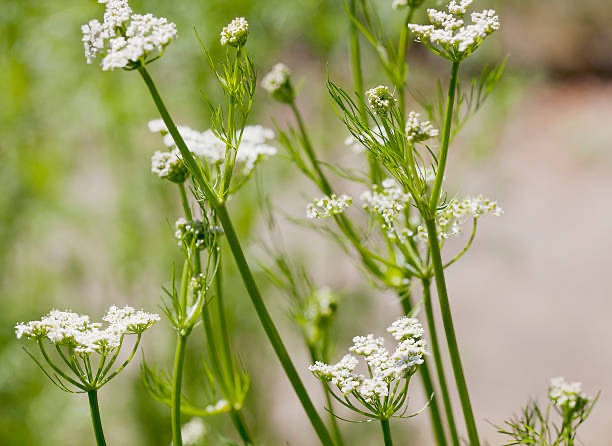
A member of the carrot family, Cumin carries delicate, feathery foliage on slender stems, followed through the warm months by small umbels of white or pale pink flowers and aromatic, ridged seed heads. Those flowers are a draw for bees and other beneficial insects, and the seeds that follow are quietly beautiful, arranged in neat paired clusters along the ripening head.
Although it is often called an herb, Cumin is primarily grown for its seeds, which are harvested once fully mature and dried. Its long history runs through Egyptian, Middle Eastern, Indian and Mediterranean cooking, where the same warm, earthy seed has flavoured breads, stews, spice blends and pickles for countless generations.
Uses & Benefits
Cumin has been valued for thousands of years both as a spice and as a traditional digestive herb. Its distinctive warm, earthy aroma is instantly recognisable, and it remains an essential ingredient in cuisines around the world, from the souks of the Middle East to the home kitchens of India, Mexico and the Mediterranean.
Culinary Uses
The dried seeds are used whole or ground in curries, spice blends, soups, breads, roasted vegetables and hearty meat dishes. Their warm, earthy flavour deepens and rounds out a dish rather than dominating it, and they pair beautifully with lentils, chickpeas and root vegetables. Lightly toasting the seeds in a dry pan before use draws out their essential oils and noticeably enhances their aroma and flavour.
Medicinal Uses
Cumin seeds have traditionally been used to support healthy digestion, ease bloating and encourage appetite. They were often taken as a gentle warming infusion after meals, a practice still common in many parts of the world. These are traditional herbal uses rather than a substitute for professional medical advice.
Growing & Harvesting
Growing
Cumin prefers full sun, fertile, well-drained soil and warm conditions. It is grown as an annual and requires a long, warm season to ripen its seed heads successfully. In cooler parts of New Zealand it is often best started under cover in spring and planted out once the soil has warmed, giving the plants the longest possible growing season to ripen their seed. Give it a sheltered, open spot, keep the soil weed-free while the slender seedlings establish, and avoid rich, damp ground that can encourage it to grow lush and leafy at the expense of seed.
Harvesting
The seed heads are harvested once they turn brown and begin to dry. Cut the stems and either hang them upside down or place them in paper bags to finish drying in a warm, airy place. Once the heads are fully dry, rub them gently to release the seeds, separate them from the chaff and store them in airtight containers in a cool, dark cupboard, where they will keep their warm, earthy fragrance for many months.
Cautions
Cumin is generally regarded as safe as a culinary spice. As with all herbs used medicinally, anyone who is pregnant, breastfeeding or taking medication should seek professional advice before using it medicinally.