About Curry Plant
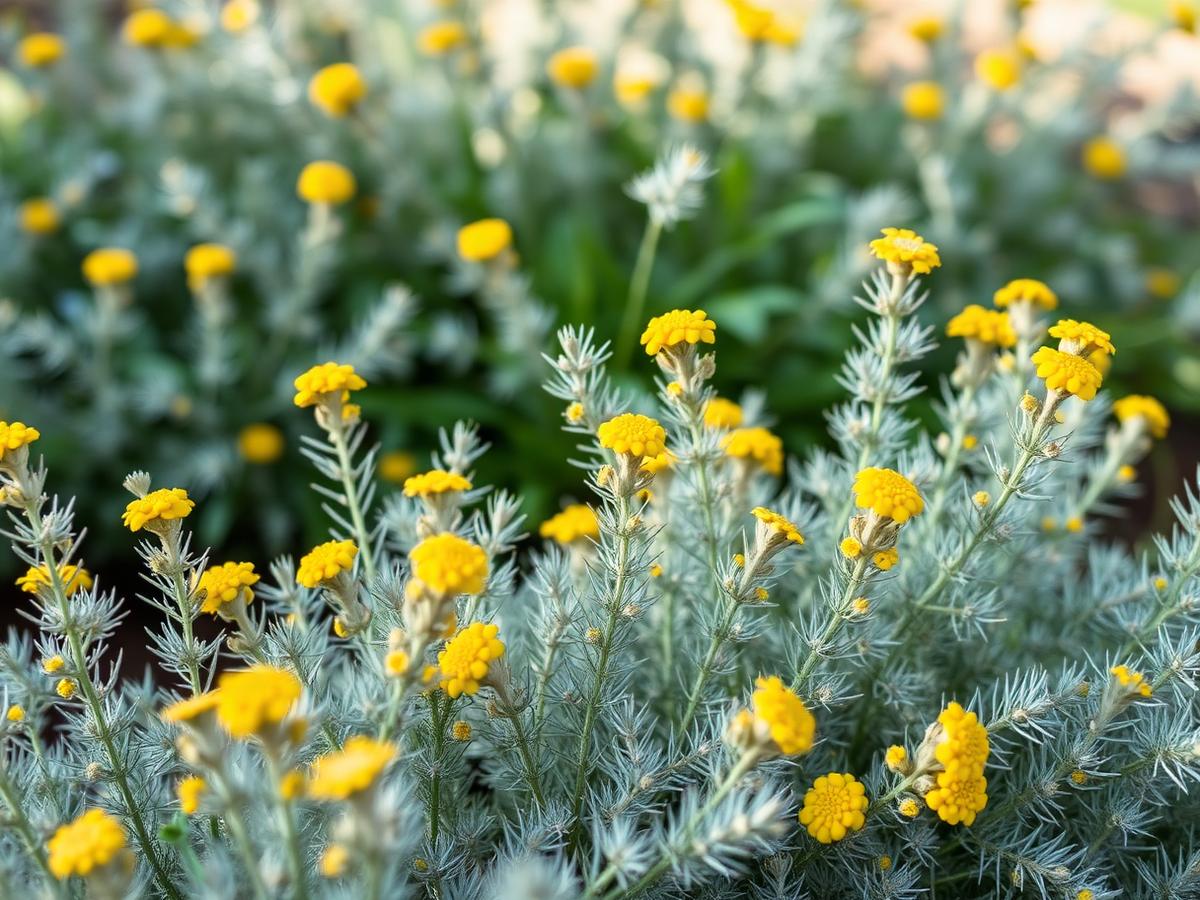
Curry Plant (Helichrysum italicum) is a Mediterranean perennial recognised for its fine silver-grey foliage and clusters of golden-yellow flowers. When brushed, the narrow, needle-like leaves release a warm curry-like fragrance, giving the plant its common name.
Despite its name, Curry Plant is not related to the Curry Leaf Tree (Murraya koenigii) used in Indian cooking. It is grown primarily for its aromatic foliage, ornamental beauty and value in dry gardens, where its soft silvery mounds bring light and contrast to the herb border.
Through the warm months the plant carries clusters of bright golden flowers that attract bees and other beneficial insects, while its silvery foliage provides year-round structure and contrast in the herb garden, holding its shape long after the summer display has faded.
Uses & Benefits
Curry Plant is valued as much for its ornamental qualities as for its aromatic foliage. Its silver-grey mounds hold their shape through the seasons, while the golden summer flowers feed bees and other pollinators. It is drought tolerant, pollinator friendly and an excellent companion in Mediterranean-style gardens, where it thrives alongside rosemary, lavender and thyme in the driest, sunniest spots.
Culinary Uses
The leaves have a strong curry-like aroma but should be used sparingly, because their flavour can become bitter. Whole sprigs may be added to casseroles, soups, rice dishes or infused into oils and vinegars, then removed before serving, much like a bay leaf. It is worth remembering that Curry Plant is not the ingredient used to make curry powder, which is a blend of ground spices such as coriander, cumin, turmeric and fenugreek.
Medicinal Uses
Curry Plant has a history of traditional use in Mediterranean herbal practice. The essential oil has been valued in aromatherapy and natural skincare, where it is appreciated for its distinctive aroma. These are traditional uses and should not replace professional medical advice.
Growing & Harvesting
Growing
Curry Plant thrives in full sun and well-drained soil, preferring dry conditions once established. It dislikes wet winter soils far more than cold, so a gravel bed, a sunny bank or a raised border all suit it well. A light pruning after flowering helps to maintain a compact, bushy shape and keeps the silvery mounds from becoming woody and open. It performs particularly well in Canterbury's dry summers, where the long, warm days and free-draining ground are exactly to its liking.
Harvesting
Leafy stems may be picked throughout the growing season whenever they are needed. For drying, harvest stems before or just as the flowers begin to open, when their colour and scent are at their strongest, and hang them in small bunches in a warm, airy place out of direct sunlight. Once completely dry, strip the leaves from the stems if required and store them, or the whole dried stems, in airtight containers in a cool, dark cupboard where they will retain both their fragrance and silvery colour for many months.
Cautions
Curry Plant is generally regarded as safe when used in small culinary quantities. As with all herbs used medicinally, anyone who is pregnant, breastfeeding or taking medication should seek professional advice before using it therapeutically.