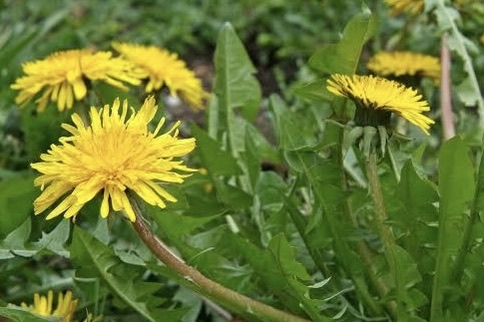
About Dandelion
Dandelion (Taraxacum officinale) is one of the world's best-known wild herbs, instantly recognised by its bright golden flowers, deeply toothed leaves and the familiar clock-like seed heads that follow. Its very name comes from the French dent-de-lion, "lion's tooth," a nod to those jagged green leaves that form a neat rosette close to the ground.
Native to Europe and western Asia, dandelion has travelled with people for centuries and is now naturalised throughout much of the world, including New Zealand. Although many people consider it a weed, it has been valued for centuries as both a nutritious food plant and an important medicinal herb, and every part of it — leaves, flowers and roots — has traditional culinary and herbal uses. Few wild herbs offer such a generous harvest.
At The Herbal Garden, dandelion is appreciated for its remarkable herbal qualities, although, like many gardeners, we don't necessarily encourage it to spread throughout every corner of the garden. Its early flowers provide an important source of nectar and pollen for bees and other beneficial insects emerging in spring, when few other blooms are open, and we find their cheerful golden faces a welcome sight after a long winter.
Uses & Benefits
Dandelion is appreciated as a nutritious edible plant, an important traditional medicinal herb and a valuable wildlife plant. It is rich in vitamins and minerals, and its early flowers provide one of the first food sources of the year for bees and other pollinating insects, making it an important part of a healthy garden ecosystem.
Culinary Uses
Young spring leaves can be enjoyed fresh in salads, while they are still tender and before they become more bitter; as the season turns, the older leaves may be cooked like spinach or added to soups and stews. The golden flowers have a long tradition of use in fritters, syrups, jellies and country wine, and the long taproot, once washed, roasted and ground, makes a caffeine-free coffee substitute with a deep, earthy flavour. The unopened flower buds can also be pickled and used in much the same way as capers, adding another traditional use for this remarkably versatile plant. Always harvest plants only from clean areas that have not been sprayed and are well away from roadsides or places where pets may have fouled the ground.
Medicinal Uses
Dandelion has been used for centuries in traditional Western herbal medicine. The leaves have traditionally been used to support healthy fluid balance, while the roots have traditionally been valued for supporting digestion, stimulating the appetite and supporting healthy liver function. These are traditional herbal uses rather than modern medical advice, and they should not replace professional healthcare.
Growing & Harvesting
Growing
Dandelion is a hardy perennial that grows well throughout New Zealand in full sun or partial shade and thrives in most well-drained soils. Its deep taproot anchors it firmly and stores energy through winter, and it readily self-seeds if allowed to flower. Although it is rarely planted deliberately, it can simply be allowed to grow naturally where it appears and harvested as needed — a few plants left to set seed will happily maintain a patch from year to year.
Harvesting
Young leaves are best harvested in spring, before the plant flowers, when they are at their most tender and least bitter. Harvest the flowers on a dry day once they have fully opened, using them as fresh as possible to enjoy their best flavour and colour. The roots are traditionally lifted in autumn, when the plant has drawn its energy below ground and they contain the greatest concentration of stored nutrients. Wash the roots thoroughly, slice larger roots if required, and dry them on drying racks until they are completely dry. Once fully dried, transfer them to a paper bag for a short time to ensure any remaining moisture has disappeared before storing them in an airtight container in a cool, dark cupboard, where they will keep their flavour for many months.
Cautions
Some people may experience allergic reactions to dandelion, particularly those sensitive to plants in the daisy family (Asteraceae). Always harvest only from clean, unsprayed areas well away from roadsides or areas that may have been treated with herbicides or pesticides. We recommend seeking advice from a qualified healthcare professional before using dandelion medicinally during pregnancy, breastfeeding, or when taking medication.