About Dill
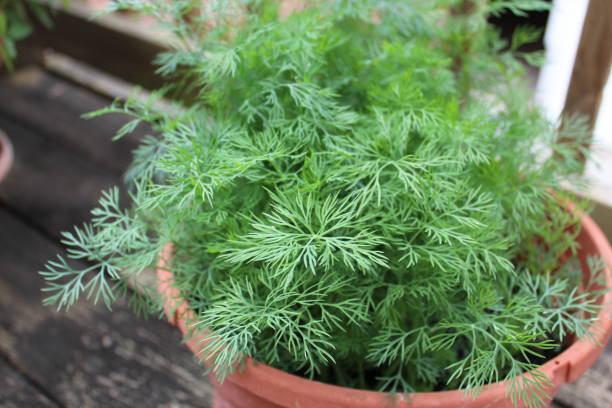
Dill (Anethum graveolens) is a graceful annual with delicate, feathery blue-green foliage held on slender stems, followed through the warm months by airy, yellow, umbrella-shaped flowers. Few herbs are so lovely in full growth, when a stand of dill seems to float above the vegetable beds, catching every breath of wind.
Although it grows for just one season, dill readily self-seeds and often returns year after year if a few plants are left to flower.
It is native to the Mediterranean region and western Asia, and it has a long history of use in both the kitchen and the herb garden. The same plant gives us two quite different harvests: the fresh leaves, often called "dill weed," which carry a soft, green aroma, and the seeds, which are warmer, sharper and more pungent. Each has its own distinctive flavour, and each belongs in a different part of the cook's repertoire.
Dill is also one of the best herbs for attracting bees, hoverflies and other beneficial insects into the garden. Its broad umbels offer a generous landing platform, and from early morning the flowers hum with pollinators. A patch of dill in flower is one of the most reliably busy corners of the summer garden.
Uses & Benefits
Dill is valued as much for its beauty and its importance to wildlife as it is for its flavour. It is a generous plant for the home gardener, offering two distinct harvests — fresh leaf and dried seed — and drawing a steady procession of bees, hoverflies and other beneficial insects into the vegetable garden throughout the warm months.
Culinary Uses
The fresh leaves, known as dill weed, are a natural partner for fish and seafood, new potatoes, salads, cucumbers and soured cream. They are at the heart of Scandinavian cuisine, where dill flavouring runs through everything from gravlax to potato salads, and they lift simple dishes of boiled potatoes and butter into something memorable. The seed is warmer and more assertive, prized in pickles, breads and hearty slow-cooked dishes. Fresh leaves are best added towards the end of cooking, or scattered over a finished dish, so that their delicate flavour is not lost to heat.
Medicinal Uses
Dill has a long tradition as a gentle digestive herb. A warming infusion of the seeds has been used to support digestion, ease bloating and settle the stomach after meals, a practice common across many European and Middle Eastern traditions. These are traditional herbal uses rather than modern medical advice, and they should not replace professional guidance.
Growing & Harvesting
Growing
Sow dill directly where it is to grow, in full sun and fertile, well-drained soil, as it dislikes root disturbance and transplants poorly. A short row sown every few weeks through spring and summer keeps a steady supply of young, tender leaves coming, a practice known as succession sowing. Give it a sheltered spot, keep the soil moist while the seedlings establish, and thin the plants so they have room to reach their full height. Let one or two plants run to flower and seed themselves, and dill will often return to the same corner of the garden year after year.
Harvesting
Leaves can be picked regularly while young and tender, snipping a few fronds from each plant so it keeps producing new growth. For seed, allow the flower heads to mature on the plant until the seeds begin to turn brown. Cut the seed heads and hang them upside down inside paper bags in a warm, airy place so the seeds can dry naturally. Once fully dry, gently rub the seed heads to release the seeds, then store them in an airtight container in a cool, dark cupboard, where they will retain their warm, aromatic flavour for many months.
Cautions
Dill is generally regarded as safe as a culinary herb. Some people may experience skin sensitivity when handling the fresh plants in strong sunlight, so it is wise to wash your hands after handling the fresh foliage. As with all herbs used medicinally, medicinal use during pregnancy should only be undertaken with professional advice, and anyone taking medication should seek guidance before using it medicinally.