About Echinacea
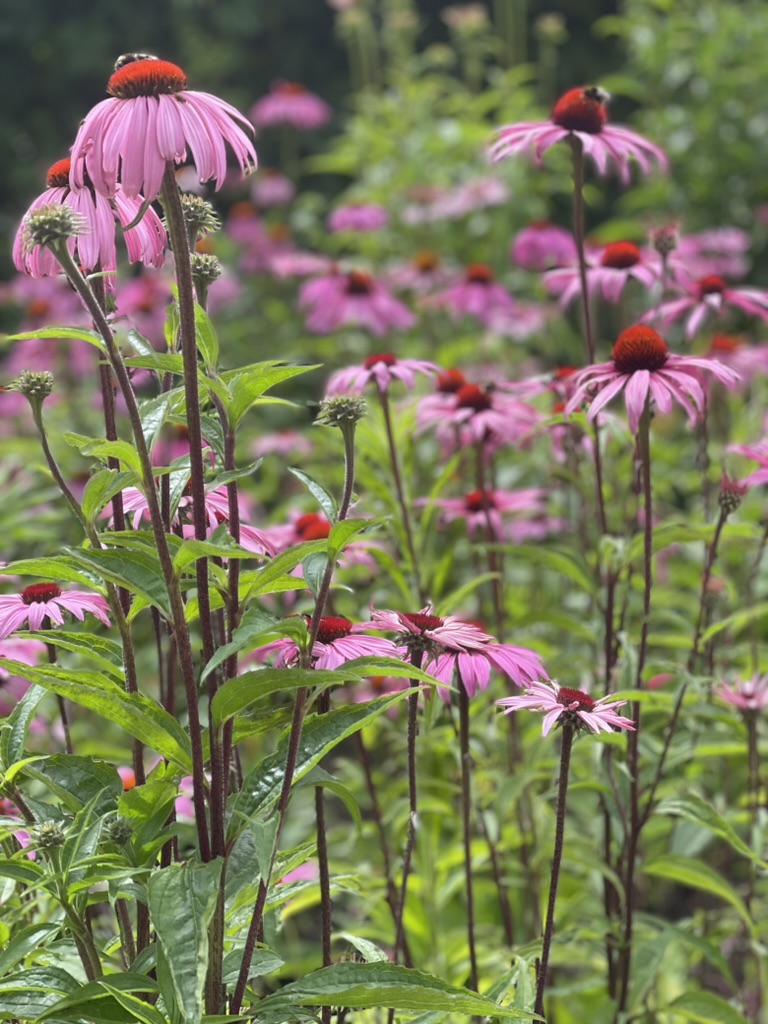
Echinacea, often known as Purple Coneflower, is a hardy herbaceous perennial native to the prairies of central North America. Growing in large clumps, it produces sturdy upright stems topped with distinctive daisy-like flowers, their rosy-purple petals surrounding a prominent orange-brown cone that gives the plant its common name.
Although naturally found across the grasslands of the United States and Canada, Echinacea has become a favourite in gardens around the world. Its long flowering season brings colour to borders from midsummer well into autumn, while bees, butterflies and other beneficial insects are drawn to its nectar-rich blooms. The name Echinacea comes from the Greek word echinos, meaning "hedgehog", a reference to the distinctive spiny seed head that remains long after the petals have fallen.
For centuries, Echinacea was one of the most important medicinal plants used by the Indigenous peoples of North America, who valued it for a wide range of everyday ailments. It later became one of the first North American herbs to gain widespread recognition in Europe and today remains one of the world's most popular medicinal plants. In winter, the sculptural seed heads continue to provide interest in the garden while feeding birds and naturally scattering seed for the following season.
Uses & Benefits
For generations, Echinacea has been one of the best-known herbs used to support the body's natural immune response. Today it remains a popular herb during the colder months and is widely used in teas, tinctures and other herbal preparations. Beyond its herbal reputation, Echinacea is also a valuable garden plant. Its long-lasting flowers brighten the garden through summer, attract countless pollinating insects and, once left to dry, provide attractive seed heads that feed birds well into winter.
Culinary Uses
Echinacea is not generally grown as a culinary herb, although the young petals can occasionally be used sparingly to add colour to salads or garnish desserts. Herbal teas are more commonly prepared using the flowers, leaves or roots, although their flavour is mild with a slightly earthy character. Although the flowers can occasionally be added to teas or used as an edible garnish, Echinacea is grown here primarily for its medicinal qualities rather than as a culinary herb.
Medicinal Uses
Traditionally, Echinacea has been used to support the immune system and is often taken at the first signs of seasonal coughs and colds. The flowers, leaves and roots have all been used in herbal medicine, although the roots are generally considered the most potent. Many herbalists prepare tinctures from fresh roots or make teas using the dried aerial parts. While scientific studies have produced mixed results, Echinacea continues to be one of the world's most widely used traditional herbal remedies for supporting general wellbeing during the winter months.
Growing & Harvesting
Growing
Echinacea is wonderfully easy to grow, thriving in full sun and well-drained soil. Once established it is remarkably drought tolerant and requires very little attention beyond occasional watering during prolonged dry spells. Plants slowly form larger clumps over time and can be divided every few years to maintain vigour or create new plants. Deadheading encourages further flowering, although leaving some flowers to mature provides attractive seed heads that add interest through autumn and winter while feeding birds. Here, Echinacea grows happily in the medicinal beds, flowering reliably each summer and bringing the garden alive with bees, butterflies and other beneficial insects. As autumn arrives, the seed heads remain standing, adding beautiful structure to the beds long after many other perennials have faded.
Harvesting
Although both the flowers and roots can be harvested for herbal use, I usually leave most of the flower heads on the plants. As they mature they form beautiful sculptural seed heads that provide interest throughout winter, naturally scatter seed into the surrounding beds and offer a valuable food source for birds. Any flowers I do harvest are picked on a dry morning after the dew has evaporated and dried carefully on racks in a warm, airy place away from direct sunlight. Once completely dry, they are stored in paper bags for a short time before being transferred to airtight plastic containers and kept in a cool, dark cupboard. The roots are generally harvested from mature plants after three or four years, once the foliage has died back in autumn, and dried and stored in the same careful way.
Cautions
Echinacea is generally regarded as a safe herb when used appropriately. However, people with allergies to plants in the daisy family (Asteraceae) should use caution, as allergic reactions can occasionally occur. Those with autoimmune conditions, or anyone taking prescribed medication, should seek advice from a qualified healthcare professional before using Echinacea medicinally. As with all herbal remedies, moderation is recommended and herbal treatments should not replace professional medical care where required.