About Elder
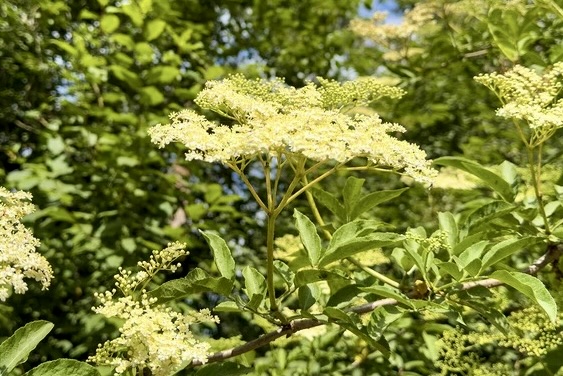
Elder (Sambucus nigra) is one of Europe's oldest and most treasured native shrubs, growing naturally along hedgerows, woodland edges and country lanes. In late spring and early summer it becomes covered in broad, creamy-white flower heads with a wonderfully sweet fragrance, followed by heavy clusters of deep purple-black berries as autumn approaches.
Few plants have inspired as much folklore as the Elder. For centuries it was believed to be protected by the mysterious Elder Mother, and country people would traditionally ask permission before cutting its branches. Elder was often planted beside cottages to protect the household from misfortune and was regarded as one of the most useful plants a family could grow.
Sometimes known as "the medicine chest of the country people," Elder has provided food, medicine and practical uses for well over two thousand years. Almost every part of the plant has been valued at some point, including the flowers, berries, leaves, bark and even the hollow stems, which were traditionally fashioned into whistles, pipes and simple children's toys. It is little wonder that an old country saying declared, "An elder tree is a whole medicine chest." Even today it remains one of the most rewarding shrubs in the garden, bringing clouds of fragrant blossom in early summer, rich berries for birds in autumn and a remarkable connection to centuries of herbal tradition.
Uses & Benefits
Both the flowers and berries have been valued in herbal medicine for generations. Elderflower is traditionally used to support the body during seasonal coughs and colds and is often enjoyed as a soothing herbal tea, while the antioxidant-rich berries have long been made into syrups, cordials and winter tonics. Beyond its herbal qualities, Elder is one of the finest wildlife plants you can grow. The flowers feed countless pollinating insects and the berries are eagerly sought by birds, making it an important addition to any nature-friendly garden.
Culinary Uses
Elderflower has a delicate floral flavour that lends itself beautifully to summer drinks, cordials, jellies, vinegars and desserts. The flowers can also be dipped in a light batter and gently fried to make traditional elderflower fritters, while they are equally delicious infused into creams, custards and cakes. Fresh elderflowers also make a wonderfully fragrant herbal tea and can be infused into syrups or vinegars, capturing the delicate flavour and scent of early summer. The ripe berries are commonly used to make syrups, jams, jellies, wines and chutneys. They should always be cooked before eating, as raw berries and other parts of the plant contain compounds that can cause stomach upset.
Medicinal Uses
Elderflower has long been used in traditional herbal medicine, particularly during the colder months, where it is often prepared as a warming tea to encourage perspiration and support the body's natural response to seasonal illnesses. The berries are rich in naturally occurring antioxidants, particularly anthocyanins, and are widely used in syrups and herbal preparations designed to support general wellbeing during winter. Elder continues to be one of the most widely respected traditional herbs for supporting the immune system.
Elder was once affectionately known as "the medicine chest of the country people", reflecting the remarkable number of traditional remedies that were prepared from its flowers and berries over the centuries.
Growing & Harvesting
Growing
Elder is an easy, hardy shrub that grows well in full sun or partial shade and is happy in almost any reasonably fertile, well-drained soil. Once established it grows quickly and responds well to pruning, making it easy to manage even in smaller gardens. Given enough space, Elder develops into a graceful, airy shrub that changes beautifully with the seasons. Clouds of creamy blossom are followed by heavy clusters of glossy black berries, making it as ornamental as it is useful throughout the year.
Harvesting
The flowers are best picked on a warm, dry morning just after they have fully opened, when their sweet fragrance is at its strongest. Handle the flower heads gently to preserve both their delicate flavour and their pollen, then use them fresh or dry them carefully on racks in a warm, airy place away from direct sunlight. The berries should only be picked once they are fully ripe and almost black in colour, usually in late summer or early autumn. Remove them from the stems before cooking or drying. Any dried flowers or berries should be stored in paper bags for a short time to ensure all remaining moisture has dispersed before being transferred to airtight plastic containers and stored in a cool, dark cupboard.
Cautions
Only the fully ripe cooked berries and the flowers should be consumed. Raw berries, leaves, bark and stems contain naturally occurring compounds that can cause nausea and stomach upset if eaten. As with all herbal remedies, anyone who is pregnant, breastfeeding, taking prescribed medication or managing an existing medical condition should seek advice from a qualified healthcare professional before using Elder medicinally. Herbal remedies should be used in moderation and should not replace professional medical care where required.