About Elecampane
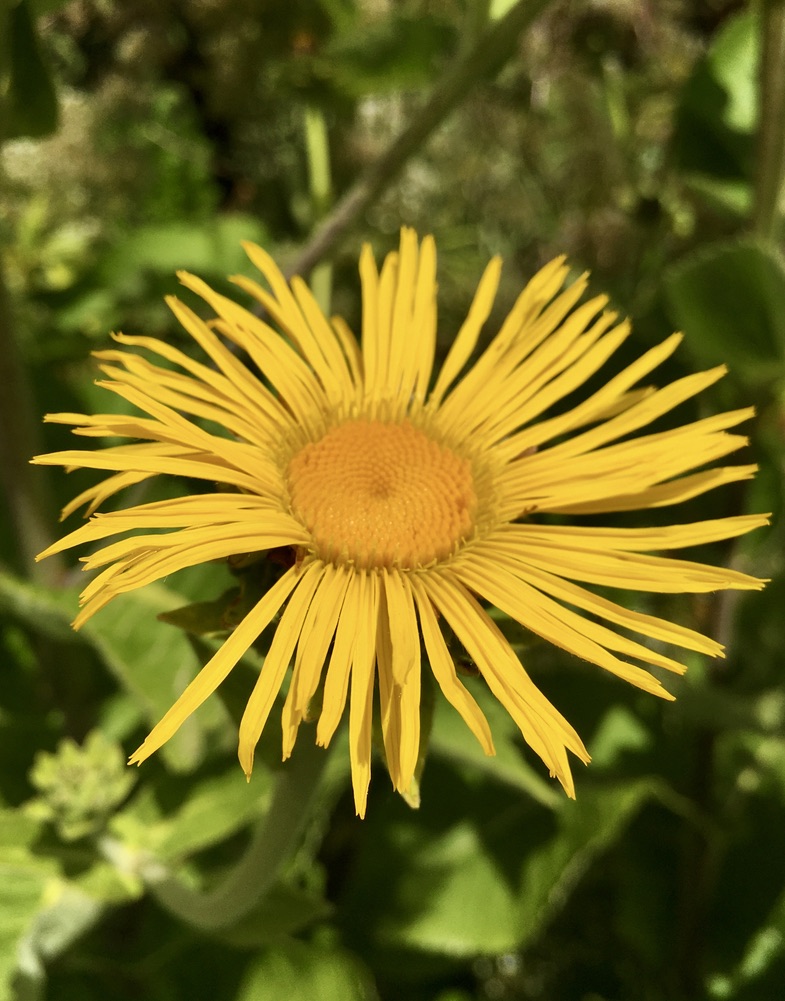
Elecampane (Inula helenium) is a striking herbaceous perennial native to Europe and western Asia. Growing up to two metres tall, Elecampane first forms a magnificent clump of enormous, softly textured leaves that can be over half a metre long. Their gentle, felted appearance creates a bold architectural presence long before the tall stems emerge, carrying bright golden-yellow flowers that resemble small sunflowers from mid to late summer.
According to Greek legend, Elecampane sprang from the tears of Helen of Troy. Whether fact or folklore, the plant has been valued for thousands of years and was cultivated by the ancient Greeks and Romans before becoming an important herb in medieval monastery gardens throughout Europe.
Today, Elecampane is grown for both its dramatic ornamental presence and its traditional herbal uses. Its cheerful golden flowers are a magnet for bees and other pollinating insects, while the bold foliage and impressive height bring structure and character to the medicinal herb beds throughout the summer months.
Uses & Benefits
For centuries, Elecampane has been valued as one of the classic herbs traditionally used to support respiratory health. The thick, aromatic roots have long been prepared as teas, syrups and tinctures and remain popular with many herbalists today. Beyond its medicinal value, Elecampane is a magnificent garden plant. Its large leaves provide bold texture throughout the growing season, while the bright flowers bring colour, movement and pollinating insects into the garden.
Culinary Uses
Elecampane is not commonly grown as a culinary herb today, although historically the aromatic roots were sometimes candied or used to flavour sweet dishes and liqueurs. They have a distinctive, slightly bitter taste with warm, earthy notes that are quite unlike most culinary herbs. Although its culinary use is now quite rare, Elecampane remains a fascinating herb to grow, valued far more for its striking presence in the garden and its long tradition in herbal medicine.
Medicinal Uses
The root of Elecampane has been used in traditional herbal medicine for hundreds of years, particularly to support the respiratory system. It has long been included in herbal preparations intended to soothe coughs and encourage the clearing of mucus, making it a valued herb during the colder months. The roots contain one of the highest natural concentrations of inulin found in any plant, a prebiotic fibre that supports beneficial gut bacteria. Interestingly, the compound takes its name from the botanical genus Inula, making Elecampane one of the plants from which it was first identified. While Elecampane continues to be appreciated by herbalists, it should be used thoughtfully and as part of a balanced approach to wellbeing.
Growing & Harvesting
Growing
Elecampane is a hardy perennial that thrives in full sun or partial shade in fertile, moisture-retentive but well-drained soil. Once established it is a reliable, long-lived plant that requires very little attention beyond watering during prolonged dry periods. Given plenty of space, Elecampane gradually develops into a magnificent clump of huge, soft leaves that create a bold architectural feature in their own right. As summer progresses, tall flowering stems rise above the foliage carrying cheerful golden blooms, bringing height, texture and brilliant splashes of colour to the medicinal beds.
Harvesting
The medicinal roots are usually harvested from mature plants in autumn once the foliage has died back, typically after two or three years of growth when the roots have become well developed. After lifting, they should be washed, sliced into smaller pieces and dried thoroughly on drying racks in a warm, airy place away from direct sunlight. Once completely dry, store the root pieces in paper bags for a short time to ensure any remaining moisture has dispersed before transferring them to airtight plastic containers. Kept in a cool, dark cupboard, they will retain their quality for many months. Although the roots are the part most commonly harvested, I prefer to leave the flowers to brighten the garden and provide a valuable source of nectar for bees and other beneficial insects throughout the summer. Their cheerful blooms are every bit as valuable growing in the garden as they are in the drying shed.
Cautions
Elecampane is generally considered safe when used appropriately. However, as a member of the daisy family (Asteraceae), it may cause allergic reactions in people who are sensitive to plants in this group. Pregnant or breastfeeding women, and anyone taking prescribed medication or managing an existing medical condition, should seek advice from a qualified healthcare professional before using Elecampane medicinally. As with all herbal remedies, it should be used in moderation and should not replace professional medical care where required.