About Feverfew
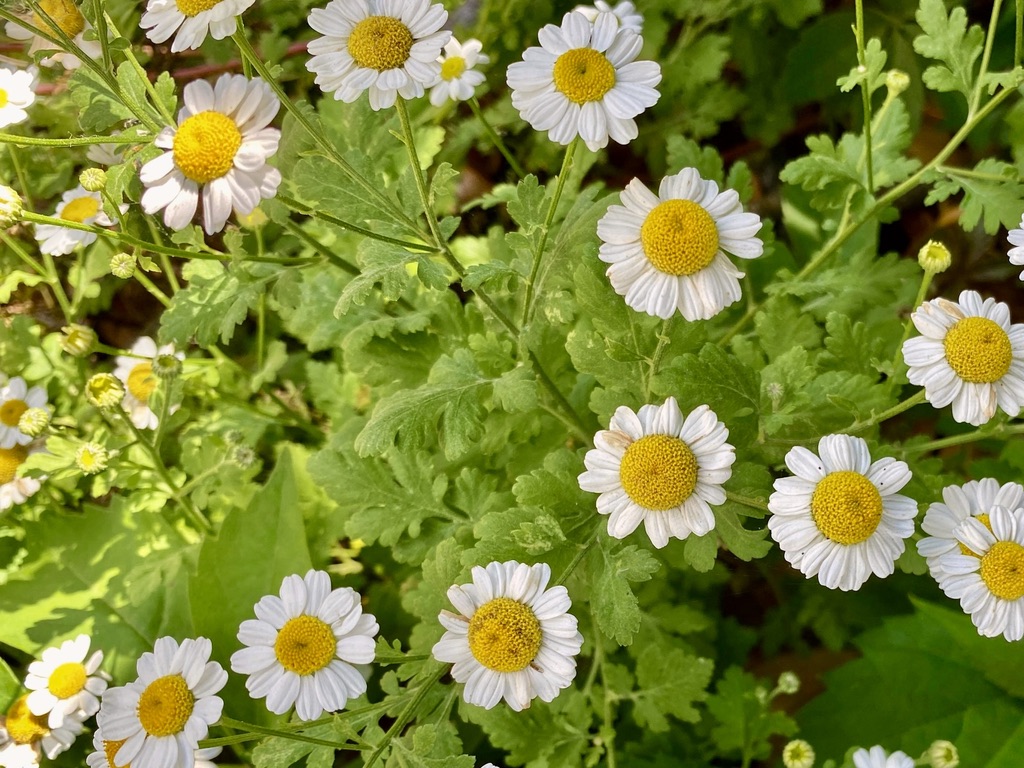
Feverfew (Tanacetum parthenium) is a hardy, aromatic perennial belonging to the daisy family. Native to south-eastern Europe and western Asia, it has become a familiar sight in cottage gardens throughout Britain and New Zealand, where its cheerful clusters of small white flowers brighten borders from early summer onwards.
The finely divided, apple-green foliage carries a distinctive aromatic scent when brushed, while the masses of daisy-like flowers are loved by bees and other beneficial insects. Feverfew has been cultivated since ancient times and was commonly grown in monastery gardens, where it earned a reputation as one of the traditional household herbs.
Uses & Benefits
Feverfew has long been valued as both an ornamental and medicinal herb. Its neat, bushy habit makes it an attractive addition to herb gardens, cottage borders and wildlife plantings, while its long flowering season provides a valuable source of nectar for pollinating insects.
Although best known today for its traditional association with headaches and migraines, Feverfew has been appreciated in herbal medicine for many centuries as a versatile household herb. Today I grow it as much for its cheerful display of flowers and the pollinators it attracts as for its long herbal history.
Culinary Uses
Unlike many herbs in the garden, Feverfew is not generally grown for cooking. The leaves have a distinctly bitter flavour and are rarely used in modern recipes. Historically, very small quantities of the young leaves were occasionally added to salads or eaten fresh, but this practice has largely fallen out of favour because of their strong taste. Today, Feverfew is best appreciated for its ornamental value and traditional herbal uses rather than as a culinary herb.
Medicinal Uses
Feverfew has one of the longest histories of use for headaches and migraines in traditional European herbal medicine. For generations, the leaves were used fresh or dried to help support those prone to recurring headaches, and it remains one of the best-known herbs associated with this purpose. Modern research has investigated compounds naturally present in the leaves, and Feverfew continues to be widely available as a herbal supplement. As with all medicinal herbs, however, it should be used thoughtfully and is not intended to replace professional medical advice.
Growing & Harvesting
Growing
Feverfew is an easy, reliable herb that thrives in full sun or light shade in well-drained soil. Once established it requires very little attention and often self-seeds gently around the garden, producing new plants each year without becoming difficult to manage. At The Herbal Garden it grows happily among other flowering herbs, adding months of bright white blooms that soften borders and attract plenty of pollinating insects. Removing spent flowers encourages a longer flowering season and helps keep plants looking tidy. If you don't deadhead every flower, Feverfew usually rewards you by gently self-seeding, giving you plenty of young plants to transplant around the garden or share with friends.
Harvesting
The leaves are usually harvested before the plant comes into full flower, when their aromatic oils are at their strongest. Pick healthy young leaves on a dry morning once any dew has evaporated. Flowering stems can also be gathered for drying or for use in fresh arrangements. Dry the stems on racks in a warm, airy place away from direct sunlight. Once fully dry, remove the leaves and flowers if required and place them in a paper bag for a short time before transferring them to an airtight container. Store in a cool, dark cupboard until needed.
Cautions
Feverfew should not be used during pregnancy and may not be suitable for people taking blood-thinning medication or those with allergies to plants in the daisy family. Fresh leaves may irritate the mouth if chewed. Always seek professional advice before using Feverfew medicinally, particularly if taking prescribed medication or managing an existing medical condition.