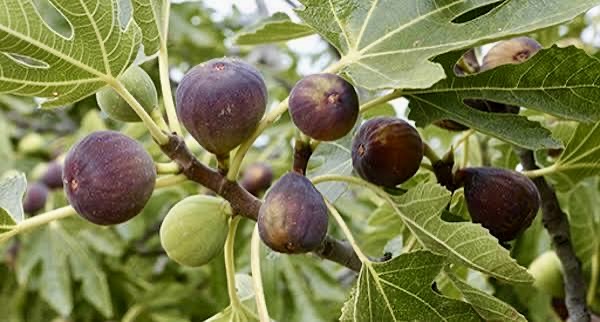
About Fig
Fig (Ficus carica) is a small deciduous tree native to the Middle East and Mediterranean region, where it has been cultivated for thousands of years. Its large, deeply lobed leaves and twisting branches give it a wonderfully architectural appearance, making it just as attractive in the garden as it is productive.
Figs have been grown since ancient times and appear throughout history, mythology and religious writings, symbolising abundance, peace and prosperity. They were commonly planted in monastery and physic gardens, where both the fruit and leaves were appreciated for their practical uses. Today, a mature fig tree provides welcome shade in summer as well as a generous harvest of delicious fruit.
Uses & Benefits
The fig is valued for far more than its fruit. Its handsome foliage creates a striking focal point in the garden, while the sweet fruits have nourished people for centuries. Traditionally, both the fruit and leaves have been used in herbal practice, and modern cooks have rediscovered the wonderful flavour that the leaves can impart to food.
A mature fig tree also provides welcome shade, shelter for birds and valuable habitat for beneficial insects, while its broad canopy brings a strong Mediterranean character to the landscape.
Culinary Uses
Fresh figs are one of late summer's real pleasures. Their naturally sweet flavour makes them perfect eaten straight from the tree or served with cheese, honey, yoghurt or salads. They are equally delicious baked into tarts, cakes and desserts or made into jams and preserves.
The leaves can also be used in the kitchen. They gently flavour cream, custards and syrups with subtle coconut and vanilla notes, and are wonderful for wrapping fish or cheese before baking, adding a delicate aroma without overwhelming the food.
Medicinal Uses
Figs have long been valued as a nourishing food in traditional herbal medicine. The ripe fruit was commonly eaten to support healthy digestion and has traditionally been regarded as a gentle natural laxative because of its fibre content.
The leaves have also been used in traditional herbal practice for a variety of purposes over many centuries and continue to be of interest today. While figs have an impressive herbal history, they are best appreciated as part of a healthy diet rather than as a replacement for professional medical care.
Growing & Harvesting
Growing
Fig trees thrive in a warm, sunny position with well-drained soil and reward patience with many years of abundant crops. Once established they are remarkably drought tolerant, making them well suited to Canterbury's dry summers.
At The Herbal Garden, our fig tree provides both structure and seasonal interest, its large leaves creating a bold contrast with the finer textures of many herbs. A little annual pruning helps maintain a manageable shape and encourages healthy fruit production.
Harvesting
Figs should be picked only when fully ripe, as they do not continue to ripen once removed from the tree. A ripe fig will feel slightly soft to the touch and often begins to droop naturally on the branch.
The leaves can be harvested sparingly throughout summer for culinary use while still fresh and healthy. Fresh fruit is best enjoyed soon after picking, although it can also be preserved as jam, chutney or dried for later use.
If the birds discover your figs before you do, a simple net or organza fruit bags can help protect the ripening fruit while still allowing it to mature naturally.
Cautions
The milky white sap found in the stems and leaves can irritate sensitive skin, so it is advisable to wear gloves when pruning or harvesting if you are prone to skin reactions. Only ripe fruit should be eaten, and as with all foods, enjoy figs as part of a balanced diet.