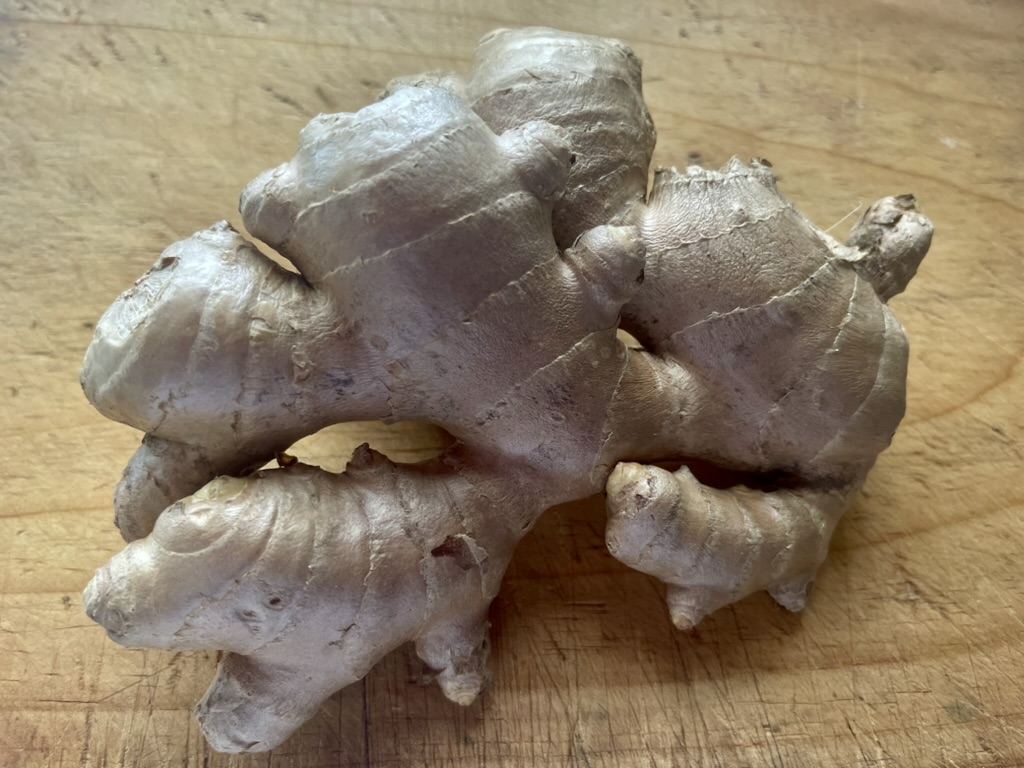
About Ginger
Ginger (Zingiber officinale) has been cultivated for thousands of years and is believed to have originated in Southeast Asia. It became one of the world's earliest and most valuable spice-trade commodities, travelling from the East to Europe along ancient trade routes. By the sixteenth century the Spanish had introduced ginger to the West Indies and the Americas, where it flourished so successfully that large quantities were soon being exported back to Europe. Today, ginger remains one of the world's most widely used spices and one of the best-known herbs in traditional herbal practice.
Unlike most herbs, ginger is grown for its underground rhizomes rather than its leaves. Long, narrow stems emerge each spring, creating lush green foliage and, in warm climates, unusual flower spikes. Although it is a tropical plant, ginger can be grown successfully in Canterbury when given a warm, sheltered position and a long growing season.
Uses & Benefits
Ginger is valued for its versatility. In the kitchen it adds warmth, freshness and gentle spice to both sweet and savoury dishes, while gardeners appreciate it as an attractive container plant with lush foliage. For generations it has also been one of the world's best-known traditional herbs, particularly during the colder months when its naturally warming qualities are especially appreciated.
Culinary Uses
Fresh ginger brings brightness and gentle heat to stir-fries, curries, soups, marinades and dressings. It is equally at home in cakes, biscuits, puddings and fruit dishes, while slices of fresh ginger make a wonderfully warming herbal tea with lemon and honey.
Young ginger is especially tender and mild, while mature rhizomes develop the familiar rich flavour used in cooking. Ginger also preserves well and can be dried, crystallised, pickled or infused into syrups and vinegars.
Medicinal Uses
For centuries, ginger has been valued in traditional herbal practice around the world. It has long been appreciated as a warming herb, particularly during the winter months, and is commonly enjoyed as a comforting herbal tea.
Today, ginger continues to be widely used as part of a balanced lifestyle and remains one of the world's most recognised traditional herbs. It should be viewed as a complement to, rather than a replacement for, professional medical care.
Growing & Harvesting
Growing
At The Herbal Garden we grow ginger in both large pots. It is possible to grow it in the ground in Canterbury but it needs a warm, very sheltered position with rich, free-draining soil where it can enjoy as much heat as possible throughout the growing season.
Fresh rhizomes are planted in spring once the soil has warmed. Regular watering and feeding encourage strong growth, and with a little patience ginger rewards you with a harvest of beautifully aromatic rhizomes by autumn.
Harvesting
Ginger can be harvested once the foliage begins to yellow in autumn. Young rhizomes may be lifted earlier if a milder flavour is preferred, while mature rhizomes develop a richer, more intense taste.
After lifting, brush away excess soil and allow the rhizomes to dry briefly before storing them in a cool, dry place. A few healthy pieces can be saved for replanting the following spring.
Cautions
Ginger is considered a safe culinary herb for most people when enjoyed as part of a balanced diet. Because it may have a mild blood-thinning effect, anyone taking anticoagulant medication or preparing for surgery should seek advice from a healthcare professional before using ginger in medicinal quantities. As with all herbs, ginger should complement a healthy lifestyle and is not a substitute for professional medical advice or treatment.