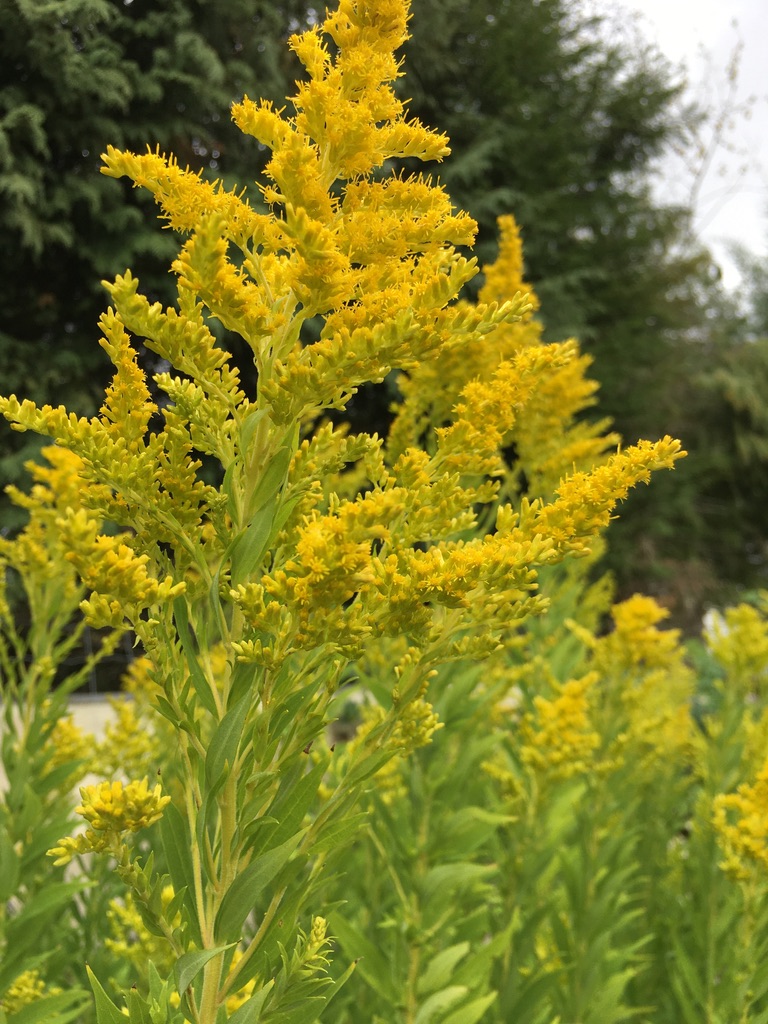
About Goldenrod
Goldenrod has been valued across Europe for centuries and was once regarded as one of the great country herbs of traditional herbal practice. Early herbalists prized it so highly for its healing reputation that it became known as one of the classic herbs for treating wounds. Today it is appreciated just as much for its graceful beauty as for its long place in herbal history.
At the Herbal Garden, Goldenrod flowers from late summer into autumn, bringing welcome colour when many other plants are beginning to fade. Its golden flower spikes are alive with bees and other beneficial insects, making it one of the most valuable late-season plants in the garden.
Uses & Benefits
Goldenrod is grown for both its ornamental beauty and its long history in traditional herbal practice. Its bright flowers bring colour to the garden when many other perennials are fading, while its nectar-rich blooms provide an important late-season food source for pollinating insects.
Culinary Uses
Although Goldenrod is grown mainly for its ornamental beauty and traditional herbal uses, the young leaves and flowers have occasionally been used to prepare herbal teas. The bright golden flowers can also be used sparingly as an attractive edible garnish, adding colour to salads and summer dishes.
Medicinal Uses
Traditionally, Goldenrod has been valued for supporting the urinary system and general wellbeing. Modern herbalists continue to appreciate these long-established uses, although it should always be used responsibly and alongside appropriate professional advice.
Growing & Harvesting
Growing
At the Herbal Garden, Goldenrod grows in a sunny, well-drained position where it forms graceful clumps that return reliably each year. Once established it requires very little attention and provides a welcome splash of colour just as many summer flowers are beginning to fade.
After flowering, the stems are cut back to encourage tidy new growth the following season, while leaving a few blooms for as long as possible provides valuable late nectar for bees and other pollinating insects.
Harvesting
Harvest the flowering stems just as the flowers begin to open, when both the blooms and upper leaves are at their best. Dry them in small bunches in a warm, airy place before removing the flowers and leaves for storage.
Cautions
Goldenrod is generally regarded as a safe herb when used appropriately. As a member of the daisy family, it may occasionally cause reactions in people sensitive to plants within the Asteraceae family, because shared proteins across these closely related plants can trigger a response in susceptible individuals. Because Goldenrod flowers at the same time as many wind-pollinated plants, it is often thought to cause hay fever. In fact, its pollen is carried by insects rather than the wind, making it an unlikely cause of seasonal allergies. As with all herbs, Goldenrod should complement a healthy lifestyle and is not a substitute for professional medical advice or treatment.