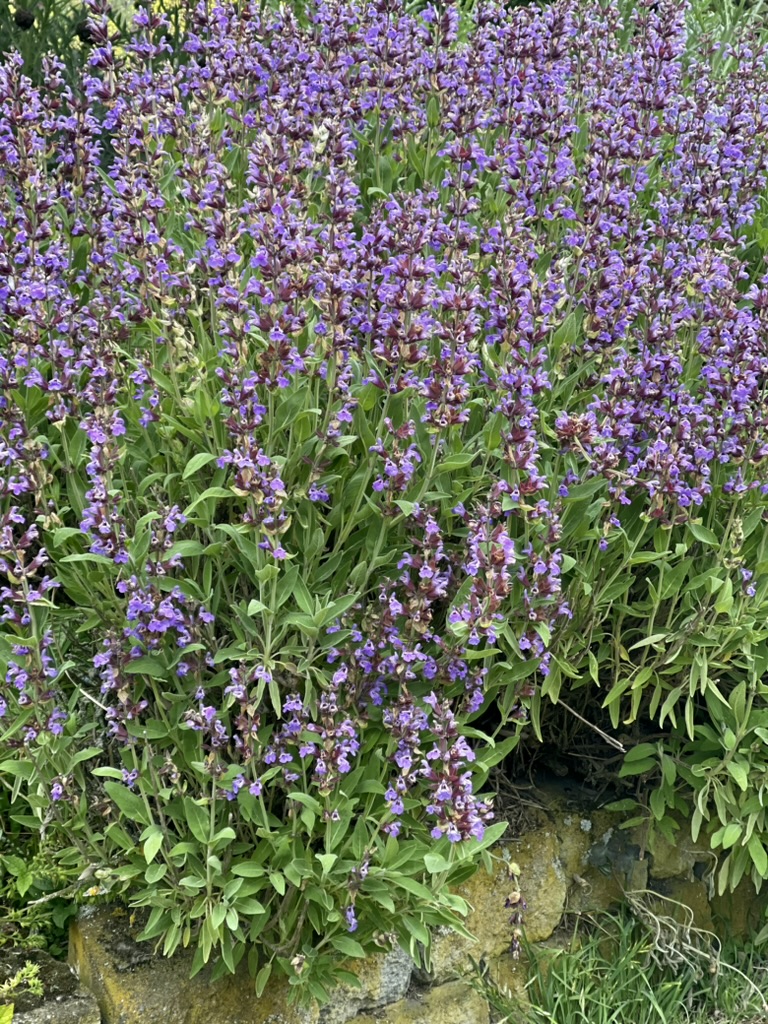
About Green Sage
Common or Green Sage is one of the oldest and most highly respected of all culinary and medicinal herbs. Native to the Mediterranean, it has been cultivated for thousands of years and has travelled with gardeners and cooks wherever they have settled. Its soft grey-green leaves, gently textured and unmistakably aromatic, make it one of the true classics of the kitchen garden.
Its botanical name, Salvia, comes from the Latin salvare, meaning "to save" or "to heal" — a reflection of the very high regard in which the herb was once held. The medieval saying "Why should a man die whilst sage grows in his garden?" gives some sense of that reputation. It was always intended as praise for a much-loved herb rather than something to be taken literally.
Green Sage grows in several parts of the garden, where it provides evergreen structure throughout the year. It is also one of the herbs I use most often in the kitchen, especially once the cooler months arrive.
Uses & Benefits
Green Sage is equally valued as a culinary herb, as a traditional medicinal herb and as an attractive evergreen garden plant. Its flowers are highly attractive to bees and other pollinators, while the aromatic foliage gives quiet structure and interest right through the year.
Culinary
This is one of my most frequently used culinary herbs. I use the fresh leaves in stuffings, casseroles, sausages and roasted vegetables, and with poultry and pork, where its warm, savoury depth is hard to better. I also dry plenty each year, so there is always sage in the cupboard throughout winter.
Medicinal
Green Sage is one of the classic traditional herbs, long associated with soothing the throat, supporting digestion and promoting general wellbeing. Sage tea has been valued for centuries, particularly during the colder months of the year. These are traditional herbal uses, shared here for interest rather than as modern medical claims.
Growing & Harvesting
Growing
Green Sage thrives in a sunny, well-drained position and copes well with Canterbury's dry summers once it is established. Regular light trimming encourages fresh leafy growth and helps keep the plants compact and productive rather than sprawling. Older plants gradually become woody and less generous, so we replace them every few years to keep a steady supply of good leaf.
Harvesting
I harvest the young leafy stems throughout the growing season. The leaves are removed from the stems and dried on racks until completely dry. They are then placed into paper bags, and the paper bags are stored inside airtight plastic containers — this protects them from moths, spiders, dust and moisture while still allowing the herbs to breathe naturally. The containers are kept in a cool, dark cupboard until needed.
Cautions
Green Sage has an excellent history as a culinary herb and is enjoyed freely in the kitchen. Traditional medicinal use should be moderate, and the concentrated essential oil is a different matter altogether and should only be used with appropriate professional guidance. Everything shared here is offered for interest and education, not as medical advice.