About Horseradish
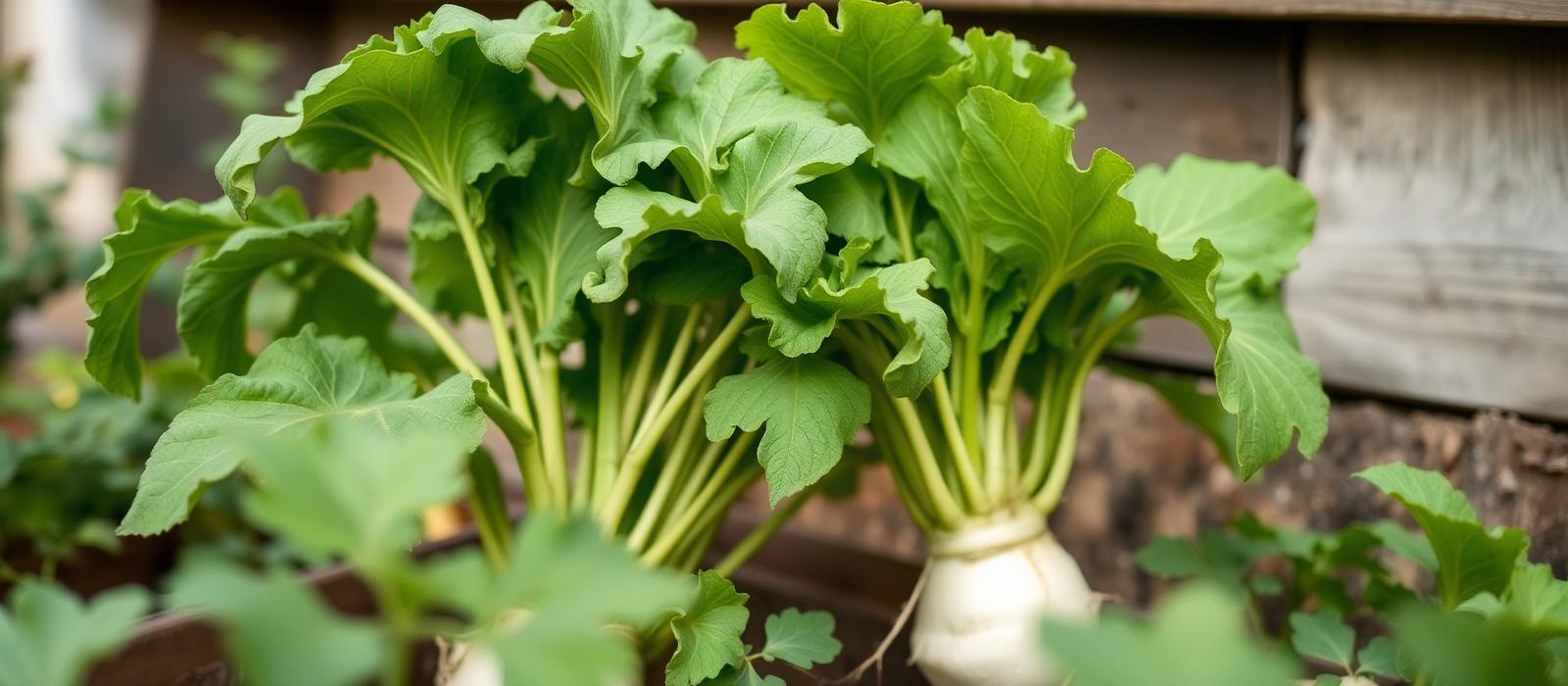
Horseradish is a hardy perennial of the cabbage family, grown for its long white roots and broad, crinkled green leaves. Despite its humble appearance, it is one of the oldest cultivated herbs in Europe, with a long history in both the kitchen and traditional herbal medicine, where it has been valued for centuries for its fiery flavour and warming qualities.
For generations horseradish has been a familiar presence in country gardens, its pungent root grated fresh at the table long before bottled sauces took its place. Its stubborn, reliable nature has made it a favourite for gardeners who enjoy growing traditional herbs, and a single plant will supply a household for many years with remarkably little attention.
Today, Horseradish remains a rewarding plant for gardeners who appreciate traditional herbs, producing a dependable harvest year after year with very little attention.
Uses & Benefits
Horseradish is appreciated both as a culinary ingredient and as a traditional herbal plant. Its pungent root adds bold flavour to food, while its naturally warming character has made it a valued herb in traditional practice for generations.
Culinary Uses
The freshly grated root is traditionally served with roast beef and smoked fish, and used to flavour sauces, dressings and vinegars. Its flavour is at its best when the root is freshly grated, as the fiery pungency that gives horseradish its character fades steadily once the root is cut, so a little prepared at a time is always the most rewarding.
Medicinal Uses
Horseradish has long been valued as a warming herb, traditionally used to support the respiratory system and encourage healthy circulation. The root contains naturally occurring mustard oils, which give it its distinctive heat and characteristic pungency. As with all herbs, its benefits are best appreciated in moderation and as part of a balanced approach to wellbeing.
Growing & Harvesting
Growing
Horseradish is extremely hardy and easy to grow in full sun or partial shade in fertile, well-drained soil. It spreads readily from pieces of root left in the ground, so it is often best grown where it has room to develop or in a contained area if its vigorous nature needs to be managed.
A dedicated corner or a deep raised bed suits it well, and once settled it will return year after year with very little care beyond an annual mulch to keep the soil rich and the roots growing strongly.
Harvesting
The roots are usually lifted from autumn through winter once the foliage has died back, when the flavour is at its fullest. Smaller side roots can be set aside and replanted to produce future crops, while the larger roots are washed and stored in a cool place or used fresh as required.
Freshly lifted root keeps well for several weeks in a cool, dark place, and a short length can be cut off and grated as needed, so the rest stays in good condition until the next harvest.
Cautions
Horseradish is generally safe when used as a food, but its strong flavour can irritate the mouth, stomach and eyes when the root is freshly grated, so a little goes a long way and moderation is always wise. Anyone who is pregnant or who has an existing digestive condition should seek professional medical advice before using horseradish medicinally, as its warming, pungent nature may not suit everyone.