About Hyssop
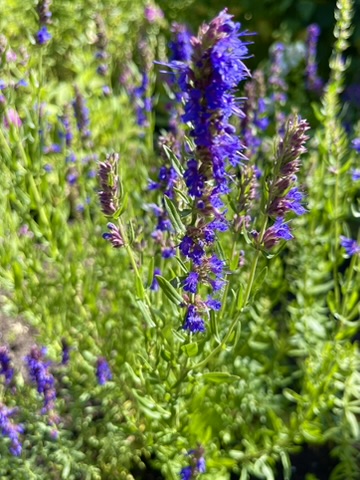
Hyssop is a compact, evergreen shrub of the mint family, with narrow aromatic leaves and upright spikes of rich blue flowers that bloom throughout summer. Its neat, bushy habit and long flowering season make it as much at home in the flower border as in the herb garden, where it brings structure, colour and fragrance in equal measure.
It has been cultivated since ancient times, and for centuries hyssop has been valued as both a medicinal herb and an ornamental plant. Its name echoes through old herbals and monastery gardens, where it was grown as a valued remedy, used as a fragrant strewing herb to freshen the floors and air, and long associated with cleansing and purification. Its nectar-rich flowers also made it a favourite with beekeepers, and it has remained a familiar presence in gardens ever since.
Its nectar-rich flowers are highly attractive to bees and other pollinating insects, making it a valuable addition to the herb garden as well as a beautiful one. On a warm summer day the plants hum with life from early morning until evening, a small but lively reminder of how much herbs can give back to the garden.
Uses & Benefits
Hyssop is appreciated for its aromatic foliage, its traditional herbal uses and its value to pollinators. Equally at home in the herb garden, the kitchen and the flower border, it is one of those quietly generous plants that earns its place many times over through the year.
Culinary Uses
The young leaves can be used sparingly to flavour salads, soups, bean dishes, stews and herb butters. Their flavour is pleasantly aromatic but quite strong, so hyssop is best used in moderation, where a little adds a distinctive warmth without overpowering the dish. The flowers are also edible and make an attractive garnish, scattering their deep blue over summer plates and salads.
Medicinal Uses
Hyssop has a long history in traditional herbal medicine, particularly for supporting the respiratory system. It has traditionally been prepared as teas and infusions, especially during the colder months when its warming, aromatic qualities have always been most welcome. As with all herbs, its benefits are best appreciated in moderation and as part of a balanced approach to wellbeing.
Growing & Harvesting
Growing
Hyssop thrives in full sun and well-drained soil, and is both drought tolerant and easy to grow once established. It benefits from light trimming after flowering to keep the plant compact and encourage fresh growth, and a gentle haircut each year will keep it neat and bushy for seasons to come.
Hyssop grows happily in the herb beds, flowering throughout summer and attracting bees from early morning until evening. Its tidy habit also makes it a fine choice for low, informal hedges along the edge of a path or bed.
Harvesting
The leafy stems are best harvested just before or as the flowers begin to open, when their aromatic oils are at their strongest. They can be used fresh or dried carefully on racks in a warm, airy place.
Once completely dry, strip the leaves from the stems, place them in a paper bag for a short time to ensure any remaining moisture has disappeared, then transfer them to an airtight container and store in a cool, dark cupboard, as we do at The Herbal Garden. Kept this way, they will hold their fragrance and flavour for many months.
Cautions
Hyssop is generally safe when used in normal culinary amounts, but the concentrated essential oil should only be used with appropriate knowledge and care. Medicinal use is not recommended during pregnancy, and anyone with epilepsy or a seizure disorder should seek professional medical advice before using hyssop medicinally.