About Lavender
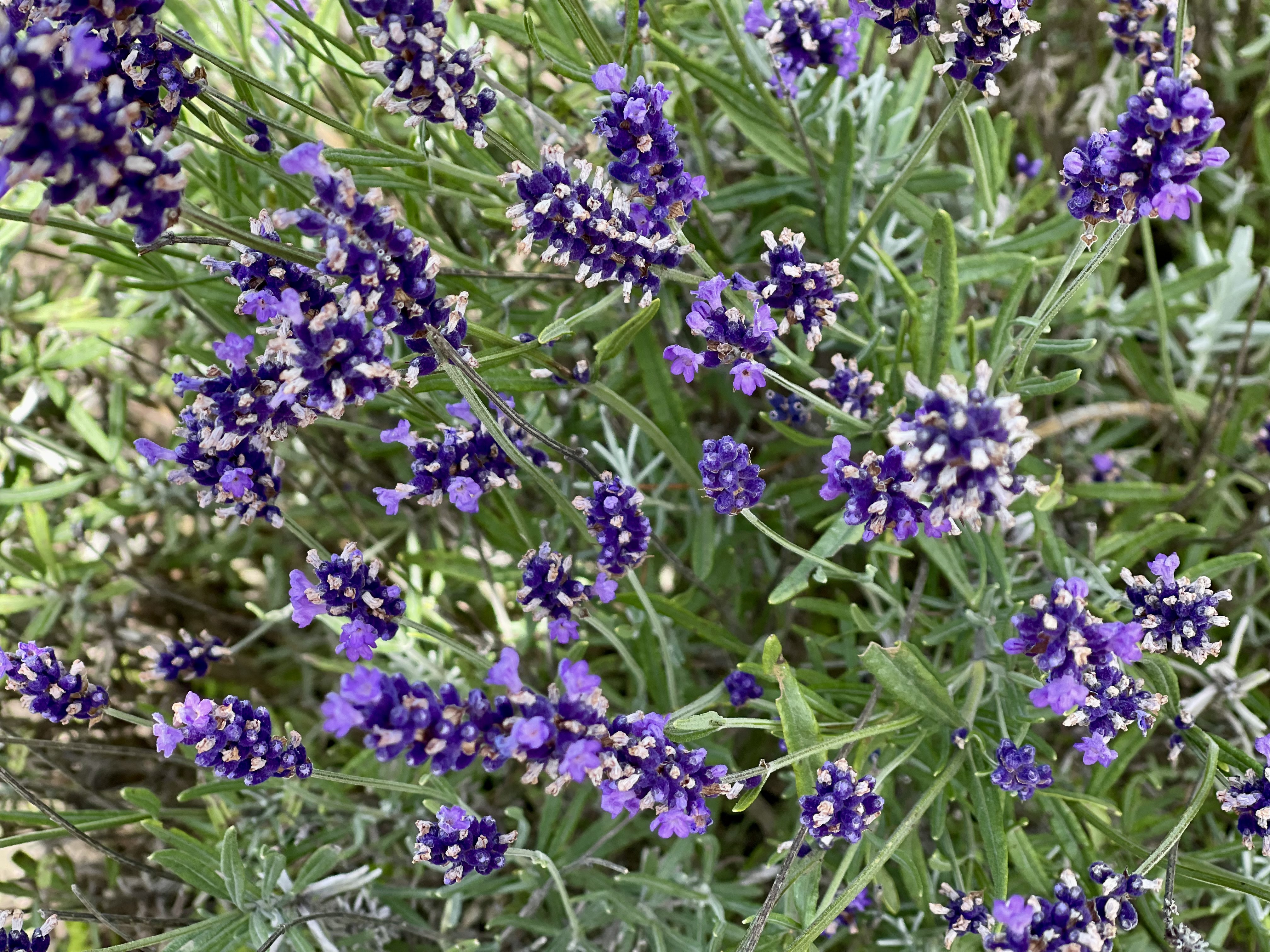
Lavender is an evergreen shrub native to the Mediterranean, admired for its fragrant silver-grey foliage and elegant spikes of violet-blue flowers. Few plants are so instantly recognised by scent alone, and a single row in full bloom can perfume an entire garden on a warm afternoon.
Several different lavenders are grown in gardens today, including the showy French and Spanish kinds, but it is English Lavender (Lavandula angustifolia) that is most widely valued, prized for its sweet fragrance, culinary uses and traditional herbal qualities.
Its name comes from the Latin lavare, meaning “to wash”, because the Romans scented their bathhouses, linens and homes with its flowers. Through the centuries, Lavender became one of Europe’s most cherished herbs, valued as much for its beautiful fragrance as for its place in the physic gardens and cottage gardens of monasteries and country homes.
Today its colour, fragrance and ability to attract bees continue to make it one of the best-loved herbs in gardens everywhere, bringing a touch of the warm Mediterranean to even the most modest planting.
Uses & Benefits
Culinary Uses
Lavender flowers should be used sparingly because of their powerful flavour. They can be added to shortbread, biscuits, cakes, syrups and sugar, or blended into the traditional French herb mixture Herbes de Provence. The flowers also make an elegant garnish for desserts and summer drinks.
Medicinal Uses
Lavender is one of the world's best-known calming herbs. It has traditionally been used to promote relaxation, ease nervous tension and support restful sleep. The fragrant flowers have long been added to herbal pillows, linen sachets and calming teas, while Lavender essential oil is widely used in aromatherapy. These are traditional herbal uses passed down through generations rather than proven medical treatments, and they are best understood as part of the plant's long folk history.
Growing & Harvesting
Growing
Lavender is a long-lived, drought-tolerant shrub that thrives in full sun and well-drained soil. It dislikes wet winter conditions and benefits from regular light pruning after flowering to maintain a compact shape.
Lavender grows happily in sunny borders with excellent drainage, where it flowers abundantly through summer and attracts countless bees and other beneficial insects.
Harvesting
Flowering stems are best gathered just as the first flowers begin to open, when both fragrance and essential oils are at their strongest. Tie small bunches and hang them upside down in a warm, airy place away from direct sunlight.
Once completely dry, remove the flowers from the stems and store them in a paper bag for a short time before transferring them to an airtight container and keeping them in a cool, dark cupboard.
Cautions
Lavender is generally regarded as a very safe herb when used in normal culinary amounts. Concentrated essential oil should always be used with care and according to directions, and anyone who is pregnant, breastfeeding or taking medication should seek professional advice before using Lavender medicinally.