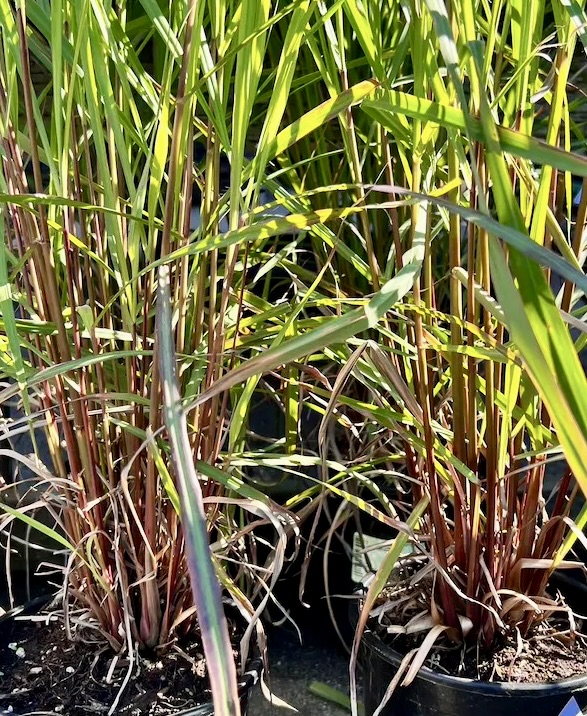
About Lemon Grass
Lemon Grass is a tender, aromatic perennial grass native to tropical South and Southeast Asia, where it has been cultivated for centuries for both cooking and traditional herbal use. Its graceful clumps of arching, blue-green leaves release a wonderfully fresh citrus fragrance when crushed, instantly evoking warm tropical gardens.
Lemon Grass has long been an important herb throughout Thailand, Vietnam, Malaysia and India, where it became valued not only as a culinary ingredient but also for its refreshing herbal teas and traditional household remedies.
Today it remains one of the world’s most recognisable aromatic herbs and is grown far beyond its tropical origins.
Uses & Benefits
Culinary Uses
The swollen white bases of the stems are widely used to flavour soups, curries, stir-fries and marinades, especially in Southeast Asian cooking. The leaves can also be infused to make a refreshing herbal tea with a bright citrus flavour.
Medicinal Uses
Lemon Grass is a traditional herb long used to support healthy digestion and enjoyed as a refreshing herbal tea. It has also been valued traditionally for its uplifting aroma and is widely used in herbal infusions and essential oils. These are traditional herbal uses passed down through generations rather than proven medical treatments, and they are best understood as part of the plant’s long folk history.
Growing & Harvesting
Growing
Lemon Grass is a tender perennial that thrives in full sun, fertile soil and consistent moisture during the growing season. It dislikes frost and is often grown in large containers in cooler climates so it can be protected over winter.
Lemon Grass is grown in a large pot, allowing it to enjoy the warmth of summer before being moved into the greenhouse for winter protection.
Harvesting
Individual stems can be harvested once the clump is well established by cutting them close to the base. The tender white lower stem is used fresh in cooking, while the leaves may be cut and dried for herbal teas.
Cautions
Lemon Grass is generally regarded as a safe culinary herb. Anyone wishing to use it medicinally during pregnancy, while breastfeeding or alongside prescribed medication should seek professional advice.