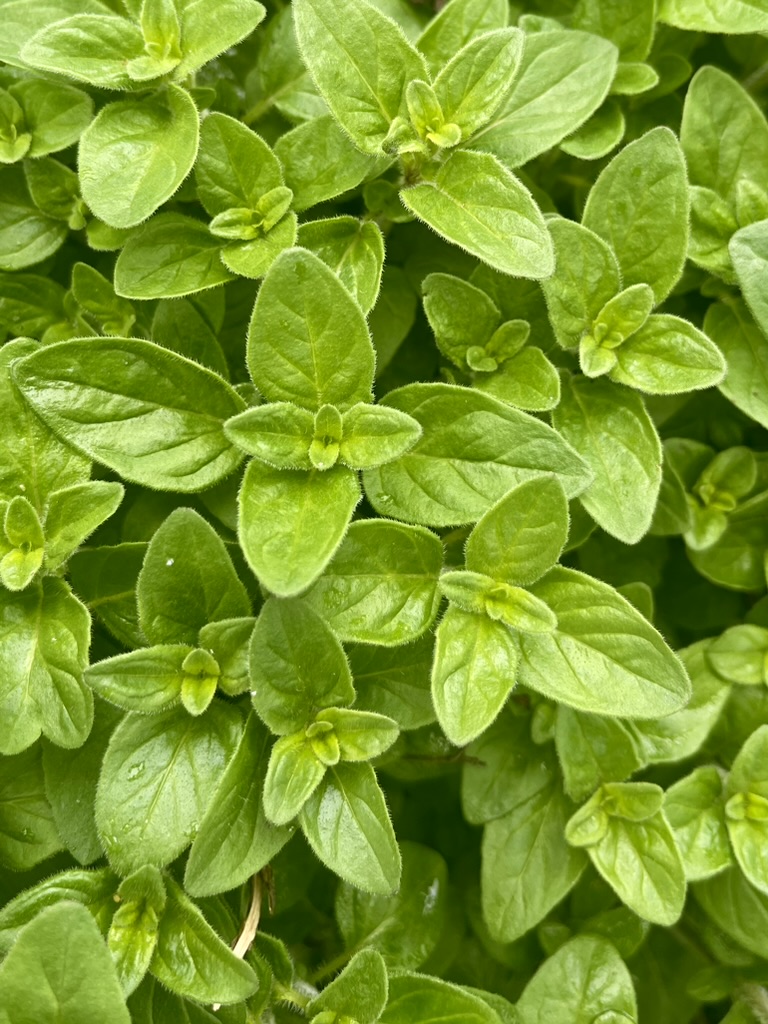
About Marjoram
Marjoram is one of the classic herbs of the Mediterranean, a soft, grey-green plant whose gentle sweetness has been cherished in kitchen gardens for centuries. Closely related to oregano but milder and more delicate, it carries a fragrance that is at once floral and warm, with none of the assertive pungency of its wilder cousin.
The ancient Greeks and Romans held marjoram in deep affection. To them it was a symbol of happiness and well-being, woven into wedding garlands and scattered at feasts as a sign of joy and welcome. The Greeks knew it as the herb of Aphrodite, believing that its sweet scent had the power to gladden the heart, while the Romans used it freely in both cooking and ceremony.
Its long association with warmth, hospitality and generous cooking explains why marjoram has remained a favourite herb for centuries. Gentle, aromatic and wonderfully versatile, it still deserves a place in every herb garden today.
Uses & Benefits
Culinary
Marjoram's sweet, delicate flavour is a friend to almost every dish it meets. It complements vegetables, tomatoes, mushrooms and beans beautifully, and brings a gentle savoury warmth to egg dishes, poultry, pork and lamb, where its gentle flavour complements stronger herbs without overpowering them. The leaves may be enjoyed fresh when their fragrance is at its best, or dried for use throughout the year.
Medicinal
Marjoram has long been valued as a comforting herb. Traditionally taken as a warming tea, it was used to support digestion, ease the mild miseries of a winter cold and encourage a sense of calm and relaxation. Today it is still enjoyed as a soothing herbal tea, valued for its gentle and comforting nature.
Growing & Harvesting
Growing
Marjoram prefers a warm, sunny position with free-draining soil, mirroring the dry, sunlit slopes of its Mediterranean home. In the Canterbury climate it grows happily, appreciating the long summer days and the good drainage that keeps the roots healthy.
Regular light picking encourages fresh, leafy growth and helps to keep the plant compact and productive, so a little harvest through the season is as good for the plant as it is for the kitchen.
Harvesting
For the best flavour, cut the leafy stems before flowering, or while they are still in fresh young growth. Strip the leaves from the stems and spread them on drying racks in a warm, airy place until they are completely dry.
Once completely dry, the leaves can be transferred to paper bags for a short time to ensure any remaining traces of moisture have disappeared before being stored in airtight containers in a cool, dark cupboard.
Cautions
Marjoram is considered a very safe culinary herb when used in normal food quantities.