About Marshmallow
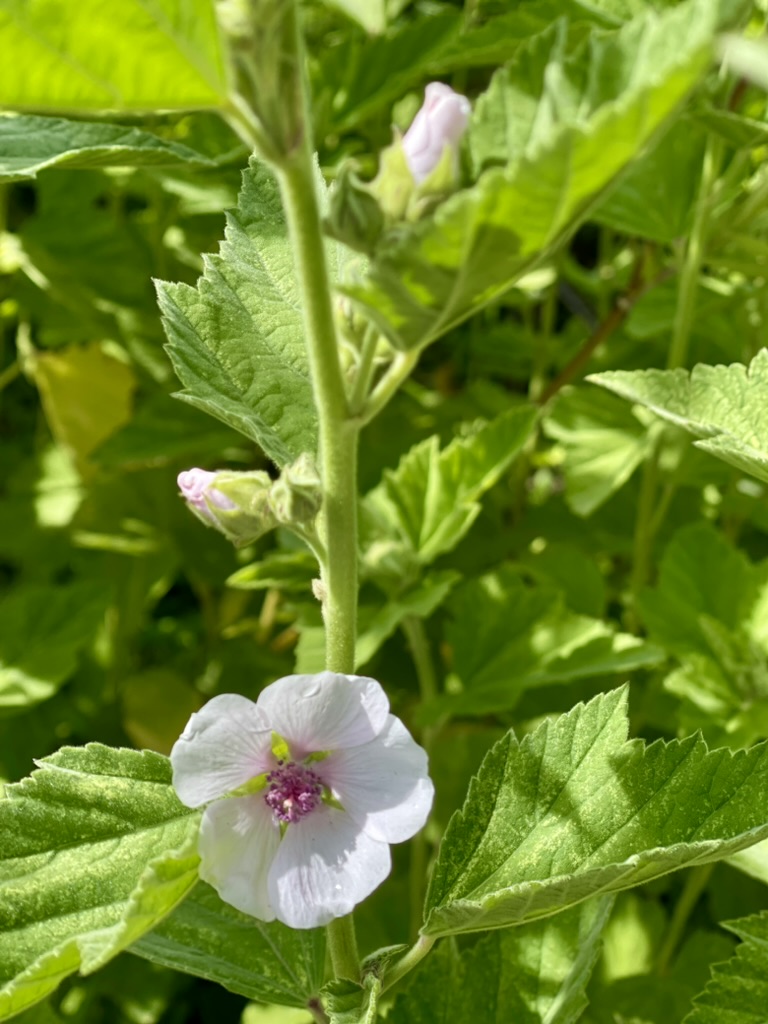
Marshmallow is a graceful cottage garden perennial native to Europe, western Asia and North Africa, with soft, velvety leaves and delicate pale pink flowers that bloom gently through the summer. In the wild it is a plant of damp meadows, marshes and the quiet margins of riverbanks, which is how it came by its common name.
Few herbs carry such an unexpected piece of history. The familiar marshmallow sweet began its life with this very plant, its soothing root sap mixed with honey to make a soft confection centuries before the modern gelatine-based sweet was ever imagined. Valued since ancient Egyptian, Greek and Roman times as both a nourishing food and a medicinal herb, Marshmallow has a gentle, comforting character that has endeared it to gardeners and herbalists alike for thousands of years.
In the herb garden it is as lovely as it is useful, its upright grey-green stems and soft foliage lending a quiet, cottage-garden charm, while the pale summer flowers draw bees and beneficial insects close.
Uses & Benefits
Culinary
The young leaves, flowers and tender shoots are all edible and can be added sparingly to salads, while the flowers make an attractive edible garnish. Traditionally, the peeled roots were also cooked as a vegetable when young and tender.
It is the root, though, that holds the plant's most famous culinary history. Long before the modern sweet, the soothing sap of the marshmallow root was whisked with honey to create the original soft confection that gave the world its name — a gentle reminder of how closely kitchen and herb garden once walked together.
Medicinal
Marshmallow is rich in soothing mucilage, a natural substance found throughout the plant, particularly in the roots, which forms a gentle protective coating when mixed with water. This is why it has traditionally been used to soothe irritated throats, calm dry coughs, comfort the digestive system and help relieve the discomfort of excess stomach acid. Preparations made from the leaves or roots have also been applied externally to soothe dry or irritated skin. These are time-honoured uses drawn from long herbal tradition, reflecting the plant's quietly calming and protective nature.
Growing & Harvesting
Growing
Marshmallow thrives in full sun with fertile, moisture-retentive soil, echoing the damp meadows of its wild home. It grows strongly in the Canterbury climate, where the warm summers and reliable moisture suit it well.
Once settled it forms impressive upright clumps reaching around 1.8 metres (6 feet) in height, making it an excellent choice for the back of a herbaceous border. The soft grey-green foliage and delicate pale pink flowers open through summer to the quiet delight of bees and beneficial insects alike.
Harvesting
The flowers are only picked occasionally, for use as an edible garnish in salads, and are not dried. The roots are the part harvested for preserving.
They are lifted from established plants in autumn once the foliage has died back, washed thoroughly, sliced into pieces and dried carefully before being stored in airtight containers.
Cautions
Marshmallow is considered a very safe traditional herb. As its mucilage may slow the absorption of some medicines, it is generally recommended to take herbal preparations at a different time from prescribed medication.