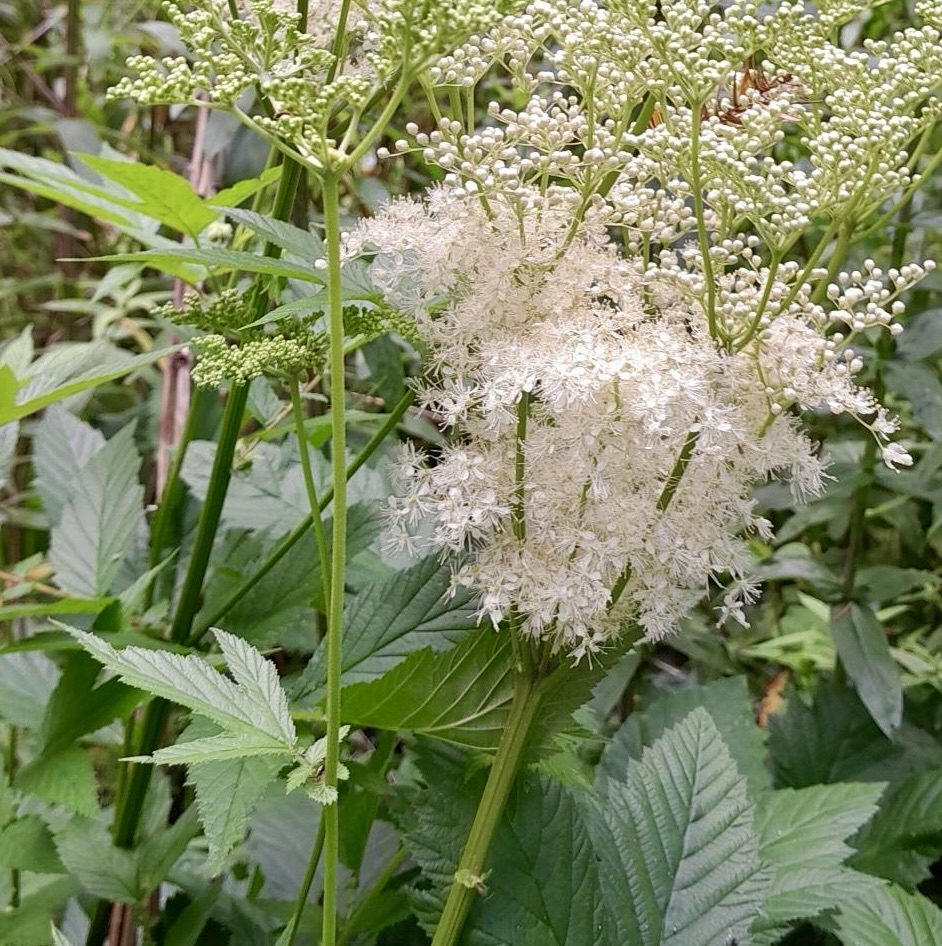
About Meadowsweet
Meadowsweet is one of Britain's most treasured native wildflowers, recognised each summer by its elegant frothy clusters of creamy-white flowers that fill the air with a sweet, almond-like fragrance. In the wild it is a plant of damp meadows, stream edges and marshy places, which is exactly how it came by its common name.
The flowers were once scattered across floors to sweeten rooms, their fragrance released underfoot as people walked, and they were also used to flavour mead, wines and other drinks. Valued since medieval times, Meadowsweet became one of the favourite herbs of country gardens and monastery physic gardens, prized as much for its gentle scent as for its soothing qualities.
Meadowsweet is perhaps most famous as one of the plants that inspired the development of aspirin, though the herb itself has been used in its own right for centuries, woven quietly into the everyday tradition of the herb garden.
Uses & Benefits
Culinary
The flowers have traditionally been used sparingly to flavour cordials, wines, vinegars, jams and desserts, lending their delicate almond-like aroma to all manner of sweet preserves and drinks.
Only small amounts are needed, as the flavour is quite distinctive, and a little goes a long way towards capturing the essence of a damp summer meadow in a jar or a glass.
Medicinal
Meadowsweet has long been regarded as one of the classic herbs for supporting digestion and soothing the stomach. Traditionally it has been taken as a tea to ease occasional indigestion and acidity, and it has also been valued for supporting the body's natural response to minor aches, discomforts and fevers.
These are time-honoured uses drawn from long herbal tradition, reflecting the plant's gently comforting and balancing character rather than any modern medical claim.
Growing & Harvesting
Growing
Meadowsweet prefers fertile, moisture-retentive soil in full sun or partial shade, echoing the damp meadows and stream banks of its wild home.
Although Meadowsweet naturally prefers damp conditions, it grows happily at The Herbal Garden with regular watering during dry spells. Its tall stems and airy flower heads bring height, movement and fragrance to the summer borders while attracting bees and other pollinating insects throughout the season.
Harvesting
The flowers are gathered on dry summer mornings as they begin to open fully, when their fragrance is at its finest.
They are dried carefully on racks in a warm, airy place before being transferred to paper bags for a short time to ensure any remaining moisture has disappeared, then stored in airtight containers in a cool, dark cupboard.
Cautions
Meadowsweet has traditionally been regarded as a safe herb for most people. However, because it naturally contains salicylates, it is generally avoided by people with a known sensitivity to aspirin and is not usually recommended during pregnancy unless advised by a suitably qualified healthcare professional.