About Mugwort
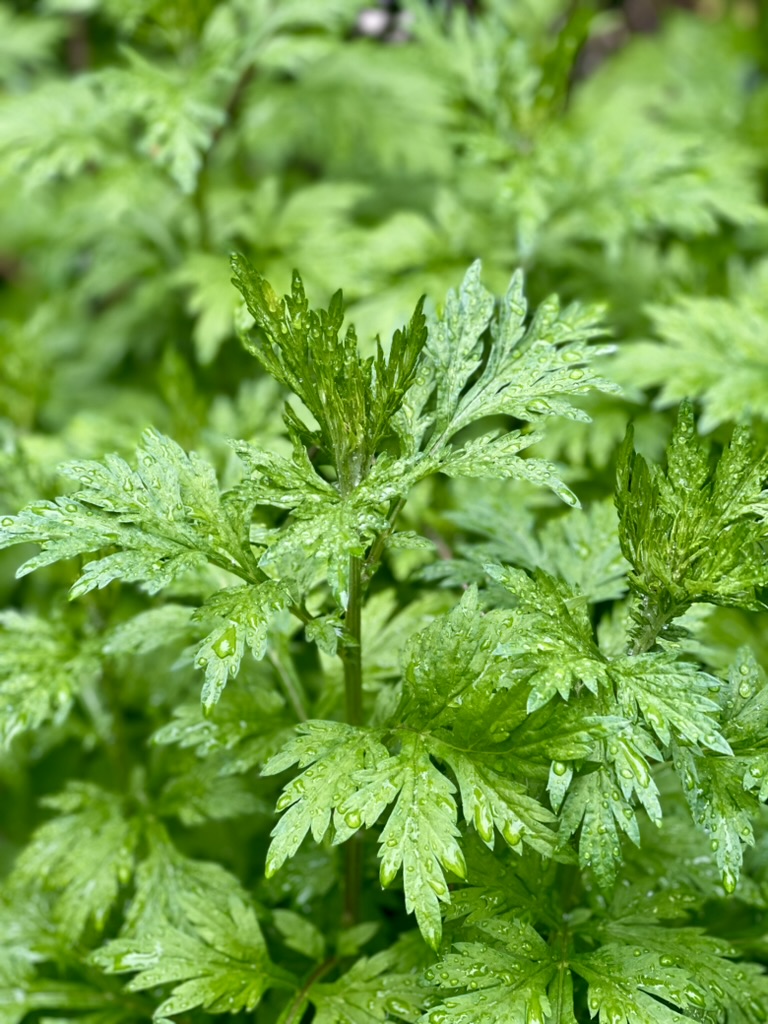
Mugwort is one of Europe's oldest and most intriguing herbs, instantly recognisable by its tall stems and deeply divided aromatic leaves with silvery undersides that catch the evening light. Brush past it on a warm afternoon and the whole plant releases a distinctive, herbaceous scent that has lured herbalists and storytellers for centuries.
Long before hops became widely used, mugwort was one of the traditional herbs used to flavour English ales, lending them a bitter, aromatic depth. It is widely believed that the common name "Mugwort" comes from this very practice, with the herb flavouring beer served in drinking mugs.
For centuries mugwort was regarded as a traveller's herb, traditionally tucked into shoes to ease weary feet on long journeys. According to traditional European belief, it was also held to be a protective plant and was often planted near garden gates or doorways to guard the home. Woven into midsummer garlands and hung in homes to ward off ill fortune, it later became closely associated with wise women and traditional healers, adding to its reputation as one of Europe's most mysterious herbs. Such beliefs may belong to another age, but they speak to how deeply this plant was woven into everyday life.
Although less familiar today, mugwort remains an important historical herb and a striking presence in the herb garden, where its tall, silvery stems lend height and a quiet, old-world character to the border.
Uses & Benefits
Culinary
Mugwort has a strong, pleasantly bitter flavour and has traditionally been used sparingly to flavour rich meats such as goose, duck and pork, where its herbal depth helps cut through the richness. Young spring shoots have occasionally been used in some European and Asian cuisines, but because of its robust flavour it is generally used in small amounts, added more as a seasoning than a main ingredient.
Medicinal
Mugwort has long been valued as a traditional digestive herb, particularly after rich meals, where a warming cup was taken to settle the stomach. It has also traditionally been used as a relaxing evening tea, and has long been regarded as one of the classic herbs for supporting women's wellbeing, particularly in relation to the menstrual cycle, alongside its long history as a digestive herb and evening infusion in traditional European herbal practice. These are time-honoured uses drawn from long herbal tradition rather than any modern medical claim.
Growing & Harvesting
Growing
Mugwort is a hardy perennial that thrives in full sun and well-drained soil. Here it grows vigorously in the Canterbury climate, producing tall, architectural stems that add real height and texture to the herb garden. Because of its spreading habit, it benefits from occasional control to prevent it becoming too enthusiastic, so we keep an eye on it and lift any wandering roots before they settle in where they're not wanted.
Harvesting
Leafy stems are harvested before flowering, while the foliage is fresh and aromatic. The stems are dried whole on racks in a warm, airy place. Once completely dry, the leaves are carefully stripped from the stems before being transferred to paper bags for a short time, then stored in airtight containers in a cool, dark cupboard.
Cautions
Mugwort is a traditional herb that should be avoided during pregnancy. As a member of the daisy family, it may also cause allergic reactions in people sensitive to plants in the Asteraceae family, so it's wise to handle and taste it with caution if you know you react to its close relatives.