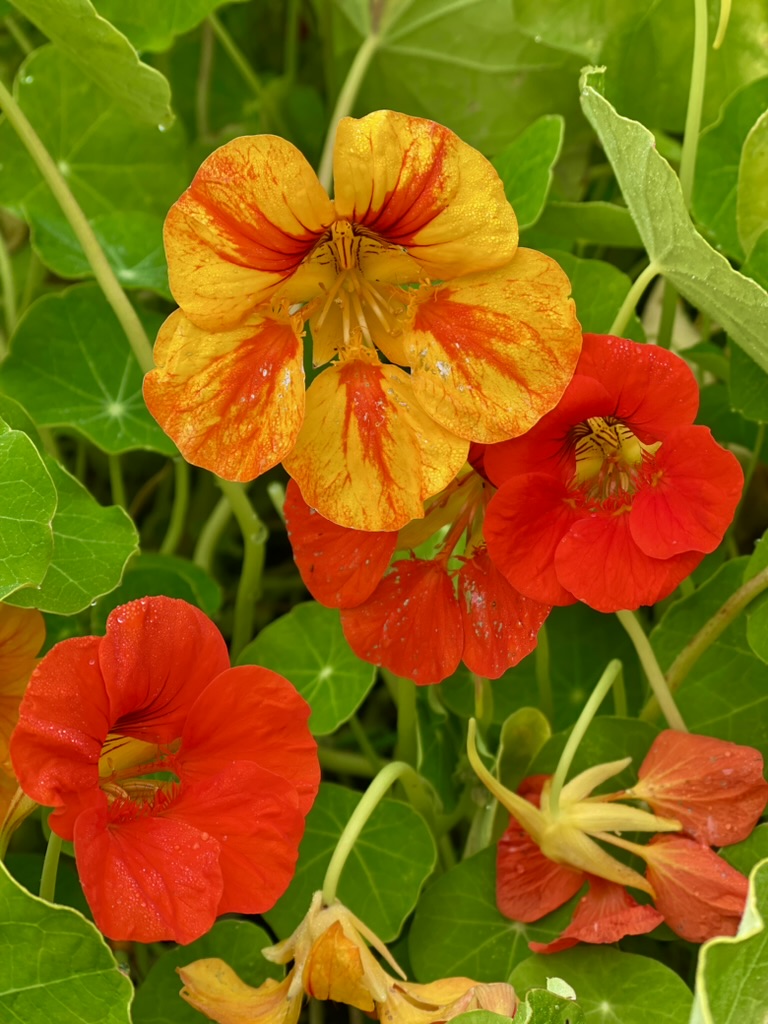
About Nasturtium
Although native to South America, nasturtiums have become treasured cottage garden flowers around the world, loved for their easy-going nature and the sheer cheer of their bloom. Their rounded, lily pad-like leaves and bright flowers in shades of orange, scarlet and cream have made them equally at home in the flower garden, the vegetable garden and the kitchen.
The genus name Tropaeolum comes from the Latin word for a trophy, as the leaves were thought to resemble shields and the flowers the helmets displayed on a trophy after battle. It is a fittingly dramatic name for such a generous and good-natured plant.
Every part of the plant is edible, from the peppery leaves to the jewel-coloured flowers and the crisp green seed pods, and all carry the same warm, mustardy bite that has made nasturtium a much-loved kitchen herb for generations of gardeners.
Uses & Benefits
Culinary
The leaves, flowers and seed pods of nasturtium are all edible. The colourful flowers brighten salads and make a beautiful garnish for summer plates, while the leaves add a pleasant peppery flavour similar to watercress to sandwiches, butters and salads. The green seed pods have long been pickled as "poor man's capers," a thrifty and flavoursome tradition that turns a plentiful garden plant into a tangy kitchen storecupboard essential.
Medicinal
Nasturtium is a traditional herb valued for supporting the respiratory system and for its naturally pungent qualities. It has long been used during the winter months, when its warming, peppery character was traditionally turned to as a simple home herb for the colder season. These are uses drawn from long herbal tradition rather than any modern medical claim.
Growing & Harvesting
Growing
Nasturtiums are grown alongside my asparagus. The asparagus spears emerge first in spring, and once harvesting has finished the nasturtiums quickly spread beneath the plants, creating a colourful living mulch. Their dense foliage acts as an attractive ground cover, helping to suppress weeds while adding flowers and colour through summer. They thrive in full sun, flower well in relatively poor soil, and happily self-seed around the garden each year.
Harvesting
I regularly gather the flowers to make one of my favourite herbal vinegars, where they lend both a beautiful colour and a gentle peppery flavour. Young leaves are also picked fresh for salads, while green seed pods can be harvested for pickling before they mature. Nasturtium is generally enjoyed fresh rather than dried, as its flavour and colour are both at their best when freshly picked.
Cautions
Nasturtium is generally regarded as a very safe edible herb, enjoyed by gardeners and cooks for generations. As with most strongly flavoured herbs, though, it is best enjoyed in moderation, allowing its peppery character to complement a meal rather than dominate it.