About Olive Plant
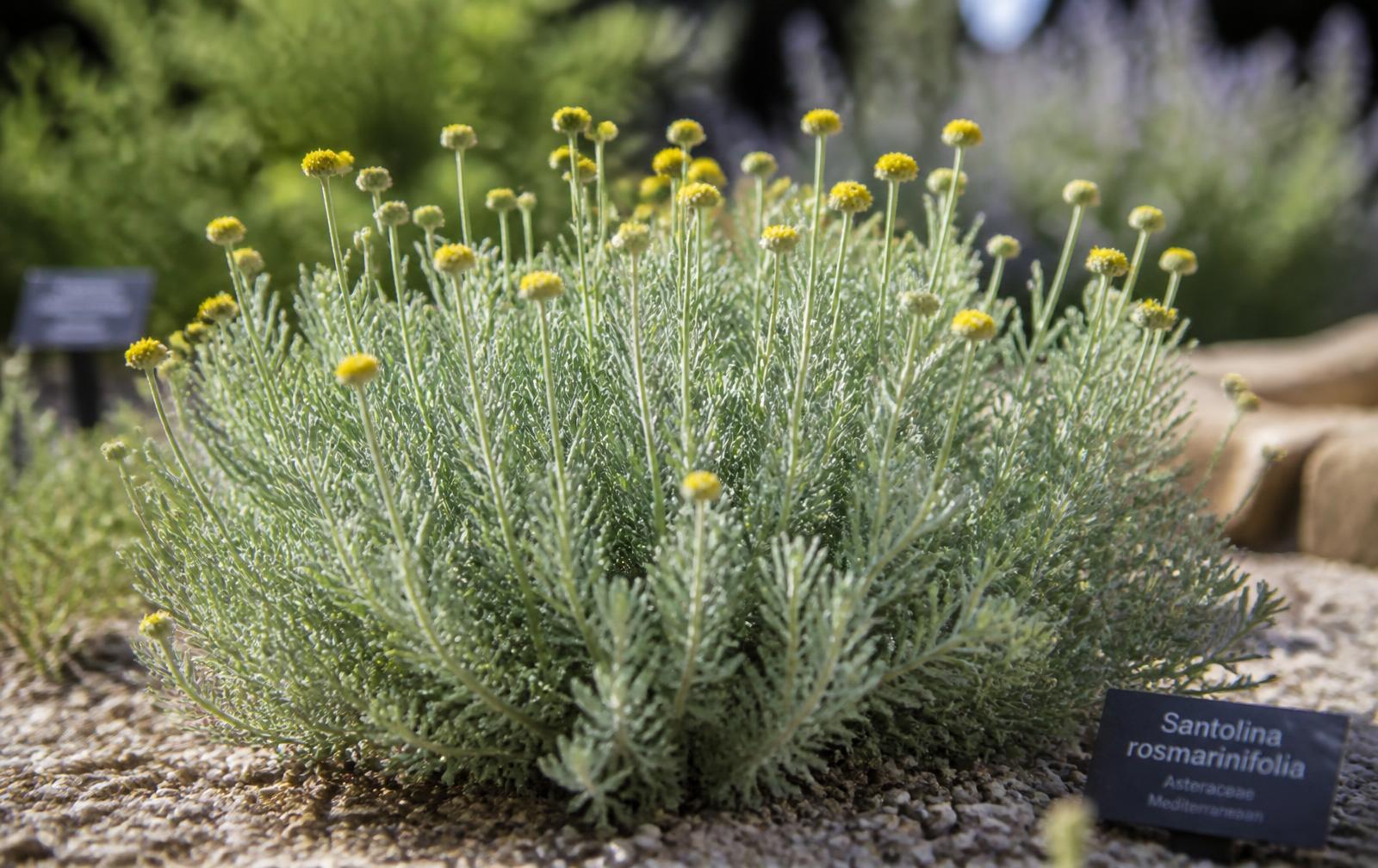
The olive plant is a compact, evergreen Mediterranean shrub grown chiefly for its finely divided, aromatic foliage. Each slender, feathery leaf is a soft silvery-green, so like the narrow leaves of a true olive tree that it has earned the common name "olive plant" — though the resemblance is only superficial. In fact, it is not related to the true olive (Olea europaea) at all, but belongs to the daisy family (Asteraceae), alongside other aromatic Mediterranean plants such as Santolina, wormwood and tansy rather than of the olive grove.
What the olive plant lacks in stature it more than makes up for in character. Through summer it carries a cheerful scatter of small, bright yellow button flowers on long stems above the foliage, which the bees adore. Brush past it and the leaves release a clean, resinous fragrance that lingers on the fingers — a quiet reminder of the sun-baked hillsides it comes from.
In the herb garden it earns its place many times over. The neat, dense habit makes it a natural for low hedging, dry borders and traditional knot gardens, where its silver foliage sets off the greens and purples of its companions. Drought-tolerant, evergreen and unfailingly tidy, it brings a touch of Mediterranean calm to the garden without ever asking for much in return.
Uses & Benefits
Culinary Uses
The olive plant is not a culinary herb in the ordinary sense, and its strongly aromatic leaves are not used in cooking. In the past, however, its fragrant foliage was gathered and hung in bunches to scent linen cupboards and deter moths, a gentle, practical use that kept its resinous fragrance in the home. The dried stems were sometimes added to pot-pourri for a lasting, clean-green note that recalled a sun-warmed Mediterranean border.
Medicinal Uses
It is only fair to say that the olive plant has never built up the same body of well-documented traditional medicinal use as many of its cousins. Santolina species were used in southern European folk practice as a gentle vermifuge and to discourage insects, and the leaves were occasionally infused as a mild bitter tonic, but these uses are recorded only in passing and are not widely relied upon today. It is best to regard the olive plant as a plant of fragrance and ornament rather than a working medicinal herb — valued for what it brings to the garden, and not overclaimed as something it is not.
Growing & Harvesting
Growing
Olive Plant grows happily in a sunny, well-drained position where its neat, evergreen habit can be appreciated throughout the year. Mine is planted along the edge of the flower garden, where its soft silver foliage provides a lovely contrast to neighbouring plants and roses. Like many Mediterranean herbs, it thrives in poor, free-draining soil and requires very little watering once established. A light trim after flowering keeps it compact and encourages fresh, dense growth.
Harvesting
Olive Plant is grown primarily for its attractive foliage and ornamental value rather than for harvesting. I occasionally snip a few stems to enjoy their fresh fragrance indoors or to include in small decorative arrangements. Any trimming is usually carried out after flowering to keep the plant neat and compact.
Cautions
The olive plant is grown principally for ornament and fragrance, and is not a herb we recommend for internal use. Some people find the strongly aromatic foliage can irritate sensitive skin, so it is wise to wear gloves when taking cuttings or handling the plant at length, particularly if you are prone to reactions within the daisy (Asteraceae) family. If you have an ongoing skin condition or allergies, seek advice before handling it regularly. This information is intended for educational purposes and is not a substitute for medical advice.