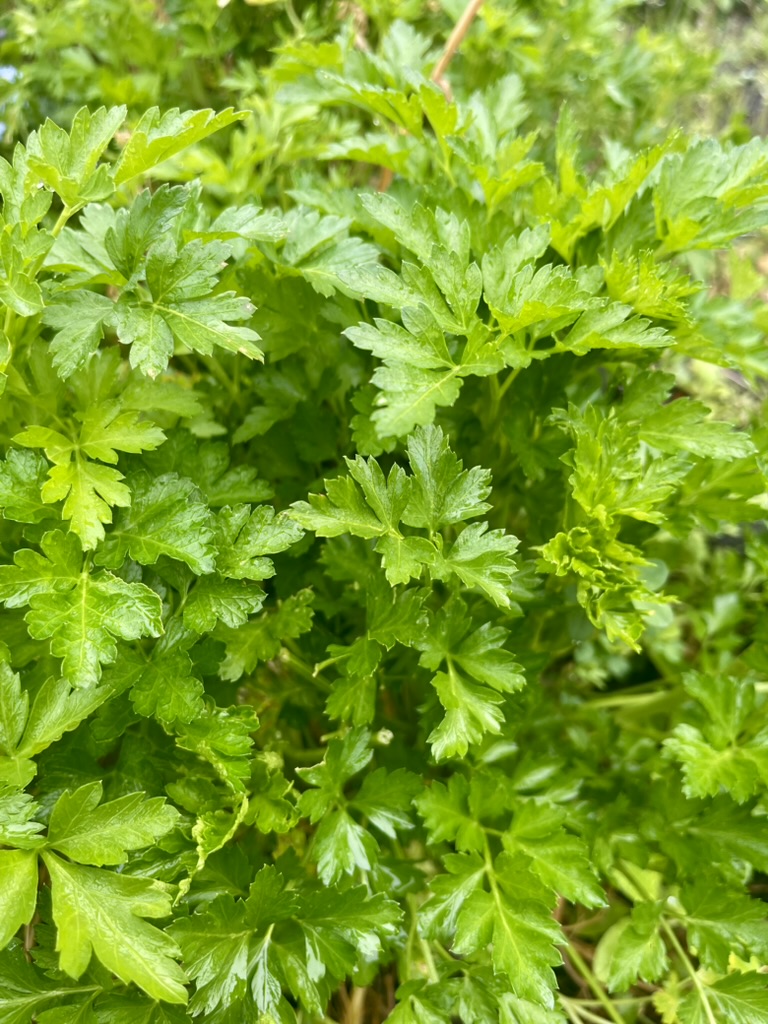
About Parsley
Parsley is one of the world's best-known culinary herbs, bringing its fresh green flavour to kitchen gardens and cooking across many cultures. Native to the Mediterranean, it has been cultivated for more than 2,000 years and was familiar to both the ancient Greeks and Romans long before it became an everyday kitchen herb.
The ancient Greeks associated parsley with remembrance and honour, while the Romans embraced it as both a garnish and a useful kitchen herb. Over the centuries it found its way into cottage gardens across Europe, where its generous growth, fresh flavour and remarkable versatility have made it one of the world's most enduring herbs.
Whether curled or flat-leaved, parsley remains one of those indispensable herbs that earns its place in every kitchen garden, ready to be picked whenever a dish needs a little freshness and colour.
Uses & Benefits
Culinary Uses
Parsley is one of the most versatile kitchen herbs there is, brightening and balancing a huge range of savoury dishes. A generous handful stirred through a salad, sauce, soup or stew lifts the whole plate, while a fresh parsley butter melted over vegetables or a crusty loaf brings the garden straight to the table. Blended into pestos and sauces, it lends a clean, green depth, and as a finishing herb scattered over a dish just before serving, it adds a final touch of freshness that lifts everything around it. Both flat-leaf and curly parsley are useful, although flat-leaf is generally preferred for cooking because of its stronger flavour and easier preparation.
Medicinal Uses
Parsley has long been valued as a cleansing herb and was traditionally used to support digestion and the urinary system. A tea made from the leaves or seeds was once sipped to ease a sluggish digestion and to encourage the body's natural rhythms, a use that reflects the herb's fresh, clearing character. As always, we view such uses as part of the herb's rich folk tradition rather than a modern medical claim.
Growing & Harvesting
Growing
Parsley is a reliable biennial usually grown as an annual in the kitchen garden. It prefers a fertile, moisture-retentive soil and regular watering, and produces its best in full sun or light shade. Parsley can be slow to germinate, so a little patience at sowing time is well rewarded with a steady supply of fresh leaves through the season. Allowing a few plants to flower in their second year is well worth the wait, as the airy umbels are a magnet for many beneficial insects, bringing hoverflies, lacewings and other helpful visitors into the garden.
Harvesting
Harvest individual outer stems regularly throughout the season, cutting them close to the base while leaving the centre of the plant to continue producing fresh growth. Parsley is gathered as needed throughout the growing season and is used almost entirely fresh in the kitchen, when both its flavour and vibrant green colour are at their very best. Although parsley can be dried, it loses much of its fresh character. Any surplus is better chopped and frozen, making it easy to enjoy the taste of home-grown parsley throughout the winter months.
Cautions
Parsley is considered very safe as a culinary herb, and its leaves are widely enjoyed in cooking without concern. Medicinal quantities, however, have traditionally been avoided during pregnancy, so it is best to seek advice from a qualified healthcare professional before using parsley in this way during this time. Anyone with an ongoing medical condition or taking prescribed medication should also consult a professional before using herbs medicinally. This information is intended for educational purposes and is not a substitute for medical advice.