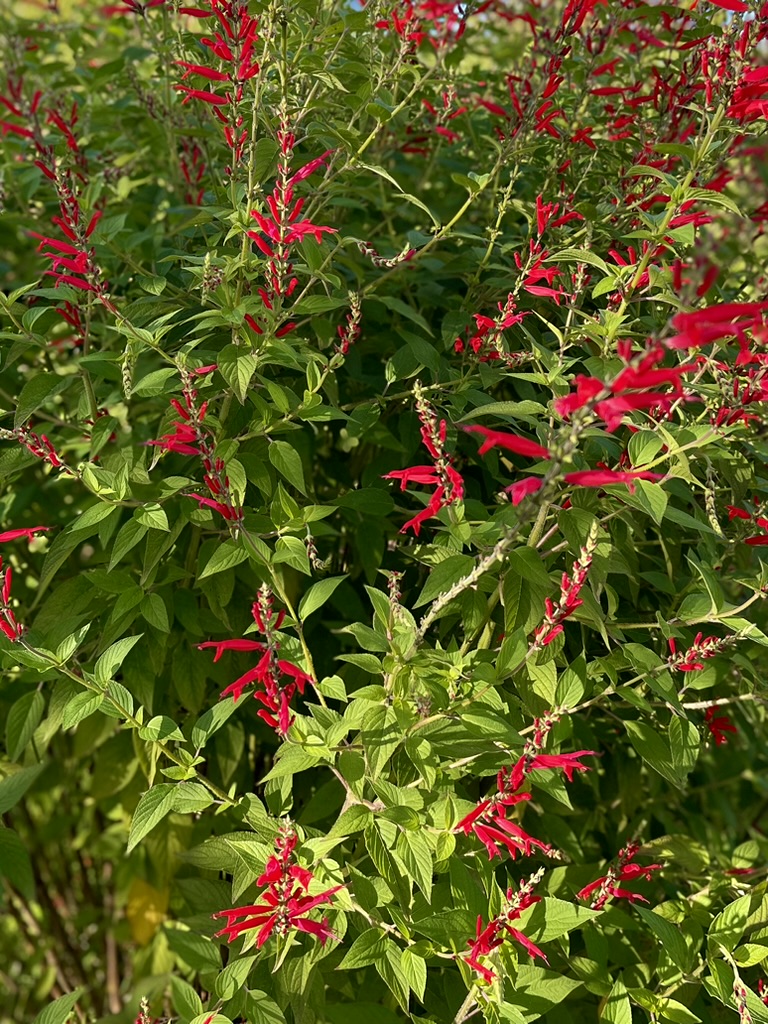
About Pineapple Sage
Pineapple Sage is a tender perennial native to the mountains of Mexico and Guatemala, and is grown as much for its brilliant scarlet flowers as for its wonderfully fragrant leaves. A member of the sage family, it brings a soft, generous character to the garden and a scent quite unlike any of its cousins.
Brushing past the foliage releases a sweet pineapple aroma, making it one of the most delightful sensory herbs in the garden. The first warm encounter always invites a second, and visitors rarely pass it by without stopping to feel a leaf and breathe it in.
Its late autumn flowers are a valuable source of nectar for bees and other pollinating insects at a time of year when many other flowers have long finished, offering a final, generous flourish of colour and life before winter settles in.
Uses & Benefits
Culinary Uses
Pineapple Sage is loved for its fresh, fruity flavour. The leaves are lovely infused in herbal teas, either on their own or blended with herbs such as Lemon Verbena or Anise Hyssop. One of my favourite herbal teas combines all three, creating a wonderfully fresh and fragrant summer infusion. The leaves can also be added sparingly to fruit salads, desserts, syrups and cold drinks, where their gentle pineapple note brings a little surprise and delight. The vibrant red flowers make beautiful edible garnishes for salads, cakes and desserts. When the flowers are in bloom, I often pick one while wandering through the garden and enjoy the tiny drop of sweet nectar hidden inside the blossom—a simple pleasure that never seems to lose its magic.
Medicinal Uses
Pineapple Sage has traditionally been enjoyed as a gentle, uplifting herbal tea, and has been used in Mexican folk herbalism to promote a sense of wellbeing and to offer comfort during seasonal coughs and colds. As always, we view such uses as part of the herb's rich folk tradition rather than a modern medical claim.
Growing & Harvesting
Growing
Pineapple Sage prefers a warm, sunny, sheltered position with well-drained soil. It thrives through the warmer months, producing lush, leafy growth before flowering in late summer and autumn. In colder areas it benefits from winter protection, as it is tender and can be cut back by frost. Regular trimming during the growing season encourages bushy, healthy plants and keeps the foliage soft and aromatic.
Harvesting
Most leaves are harvested fresh throughout summer for herbal teas and the kitchen, while any surplus is stripped from the stems and dried in a single layer on drying racks. Once completely dry, the leaves are placed into paper bags, and the bags are then stored inside airtight plastic containers. This is the storage method I use at The Herbal Garden, allowing the herbs to breathe naturally while providing extra protection from moths, spiders, dust and moisture. They are then kept in a cool, dark cupboard until needed. The brilliant scarlet flowers are picked as they open for edible garnishes, decorating desserts and summer drinks, although many are left on the plant to provide a valuable late-season feast for bees and other pollinating insects.
Cautions
Pineapple Sage is considered a safe culinary herb for normal food use. As with all herbs, medicinal use should be approached with appropriate professional advice if you are pregnant, breastfeeding or taking medication. This information is intended for educational purposes and is not a substitute for medical advice.