About Purple Sage
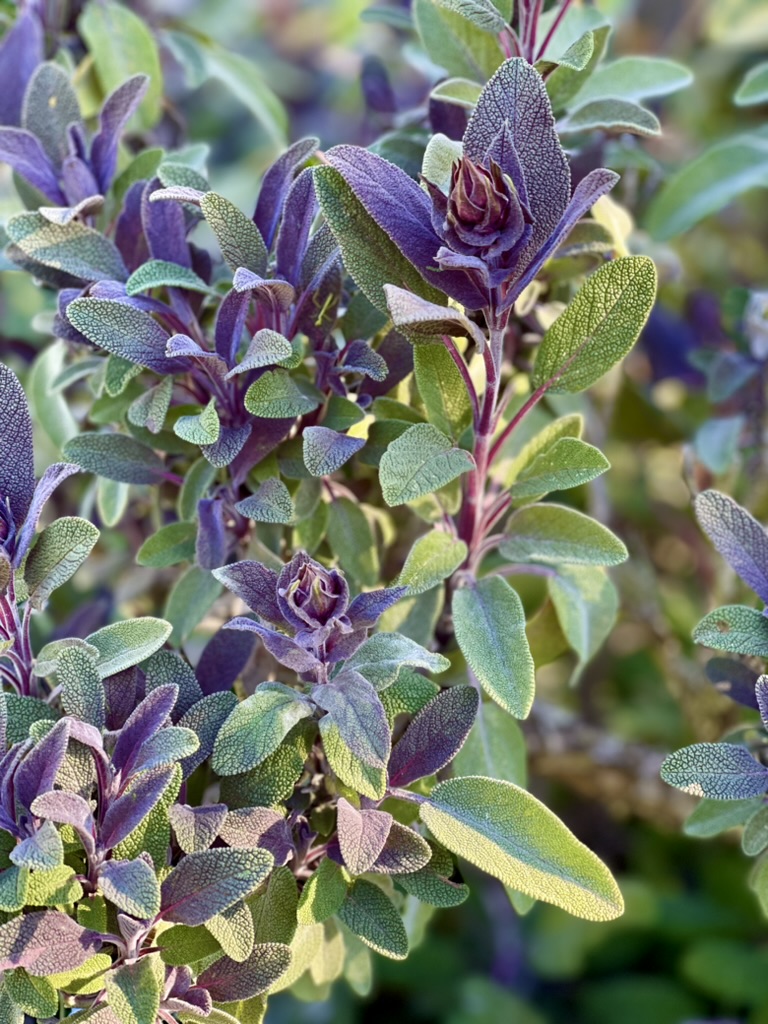
Purple Sage is a beautiful cultivated form of Common Sage, grown for its striking purple-grey foliage which gradually softens to green as the leaves age. It is every bit as useful as Green Sage, yet it has long been treasured for its ornamental qualities as well, which makes it equally at home in herb gardens, flower borders and kitchen gardens.
The rich young foliage provides wonderful colour throughout the growing season. Growing at one end of the comfrey bed, it creates a beautiful contrast with the Green Sage planted at the other end. It is one of those herbs that earns its place as much for its beauty as for its flavour.
Uses & Benefits
Purple Sage combines ornamental beauty with all the traditional culinary and herbal qualities of Common Sage. It attracts bees when in flower, while its colourful evergreen foliage provides interest throughout much of the year.
Culinary
Purple Sage can be used exactly as Green Sage. I use the fresh leaves in the same way for savoury cooking, and I dry them for winter use as well, although I often leave plenty on the plant simply because the colourful foliage is so attractive in the garden.
Medicinal
Purple Sage shares the same traditional herbal uses as Common Sage, having long been associated with supporting digestion, soothing the throat and promoting general wellbeing. These are traditional herbal uses, shared here for interest rather than as modern medical claims.
Growing & Harvesting
Growing
Purple Sage enjoys a sunny, well-drained position and grows happily in Canterbury's dry conditions once it is established. Regular light trimming encourages fresh colourful growth and helps maintain a compact shape. Older plants become woody in time and benefit from replacement every few years.
Harvesting
I harvest Purple Sage more lightly than Green Sage, because I enjoy its colourful foliage as an ornamental feature in the garden. When I do harvest, the leaves are removed from the stems and dried on racks until completely dry. They are then placed into paper bags, and the paper bags are stored inside airtight plastic containers — this protects them from moths, spiders, dust and moisture while still allowing the herbs to breathe naturally. They are kept in a cool, dark cupboard until needed.
Cautions
Purple Sage is enjoyed freely as a culinary herb. Traditional medicinal use should be moderate, and the concentrated essential oil is a different matter altogether and should only be used with appropriate professional guidance. Everything shared here is offered for interest and education, not as medical advice.