About Pyrethrum
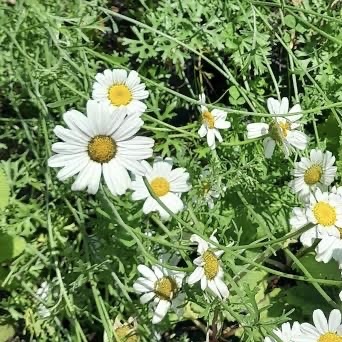
Pyrethrum is a beautiful flowering perennial native to the Dalmatian coast of Croatia, and is grown for its cheerful white daisy flowers with golden centres. It has a quiet, old-fashioned charm that sits comfortably in the border, where its fine grey-green foliage and wiry stems carry the blooms through the warmth of summer.
Although admired as an ornamental plant, it has earned worldwide recognition because the flowers contain naturally occurring compounds called pyrethrins, which have been used for generations as a natural insecticide. It is a pleasing irony that a plant so lovely should also be so useful.
Its beauty often surprises visitors, who expect an insect-repelling plant to be rather ordinary. Instead, they find a daisy as pretty as any in the garden, quietly carrying its remarkable gift within its petals.
Uses & Benefits
Culinary Uses
Pyrethrum is not regarded as a culinary herb and is not used in cooking. It is grown for its ornamental value and traditional practical uses rather than for the kitchen, and so finds its place in the garden as a thing of beauty and a helpful companion rather than an ingredient.
Medicinal Uses
Pyrethrum has not traditionally been valued as an important medicinal herb. Instead, its historical significance comes from the natural pyrethrins found in its flowers, which have long been used to control insects. As always, we view such uses as part of the plant's long practical tradition rather than a modern medical claim.
Growing & Harvesting
Growing
Pyrethrum thrives in full sun with well-drained soil. Once established it is drought tolerant and flowers generously through summer, its cheerful daisies standing bright above the fine grey-green foliage. Removing spent flowers encourages further blooms and keeps the plant looking its best, while dividing established clumps every few years helps maintain vigorous, healthy plants.
Harvesting
Pyrethrum is grown primarily for its cheerful flowers and the interest it brings to the garden, rather than for harvesting. The blooms are left on the plants to brighten the borders throughout summer and to be enjoyed by visiting pollinators. Once flowering has finished, spent blooms are removed as part of the normal seasonal tidy-up, encouraging healthy plants and fresh growth for the following year.
Cautions
Although pyrethrins are naturally derived, they are still biologically active compounds and should be handled with care. Pyrethrum is grown for ornamental and traditional practical purposes rather than culinary use, and should not be consumed. This information is intended for educational purposes only.