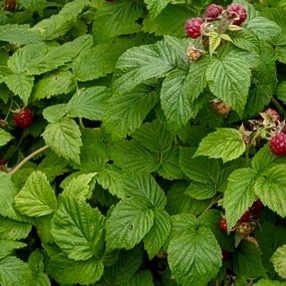
About Raspberry
Although grown chiefly for its delicious summer fruit, raspberry has earned an equally respected place in the herb garden through the traditional use of its leaves. Native to Europe and parts of Asia, it has been gathered from hedgerows and cultivated in cottage gardens for centuries. Medieval herbalists valued raspberry as both a nourishing food and a useful household herb, while the fruits have long been associated with the abundance of the summer harvest.
Today Raspberry remains one of those rare plants that brings together beauty, flavour and traditional herbal value in a single plant.
Uses & Benefits
Culinary
The sweet berries are enjoyed fresh from the garden, added to desserts, preserves and baking, or frozen to enjoy throughout the year. They also make excellent syrups, cordials and fruit vinegars. The young leaves are sometimes used to make a mild herbal tea, either on their own or blended with other herbs.
Medicinal
Raspberry leaf has a long history in traditional Western herbal medicine. It has most commonly been used as a nourishing herbal tea, particularly by women, and was traditionally regarded as a gentle tonic. It has also been valued as an astringent herb and enjoyed as an everyday herbal infusion.
Growing & Harvesting
Growing
Raspberries thrive in Canterbury's climate and reward very little effort with generous crops of fruit each summer. They grow happily in a sunny position with fertile, well-drained soil and benefit from annual pruning to remove the old fruiting canes, allowing the new canes plenty of space and light. A good layer of compost each winter helps keep the plants healthy and productive.
Harvesting
The berries are picked regularly as they ripen through summer and are enjoyed fresh, preserved or frozen for later use. I also harvest some of the young healthy leaves for herbal tea. The leaves are dried carefully on racks until completely dry, then placed into paper bags. The paper bags are stored inside airtight plastic containers to protect them from moths, spiders, dust and moisture while still allowing the herbs to breathe naturally. They are then kept in a cool, dark cupboard until needed.
Cautions
Raspberry is considered a very safe herb when used as a food. Raspberry leaf has a long tradition of use as a herbal tea, but anyone who is pregnant or has an existing medical condition should seek appropriate professional advice before using it medicinally.