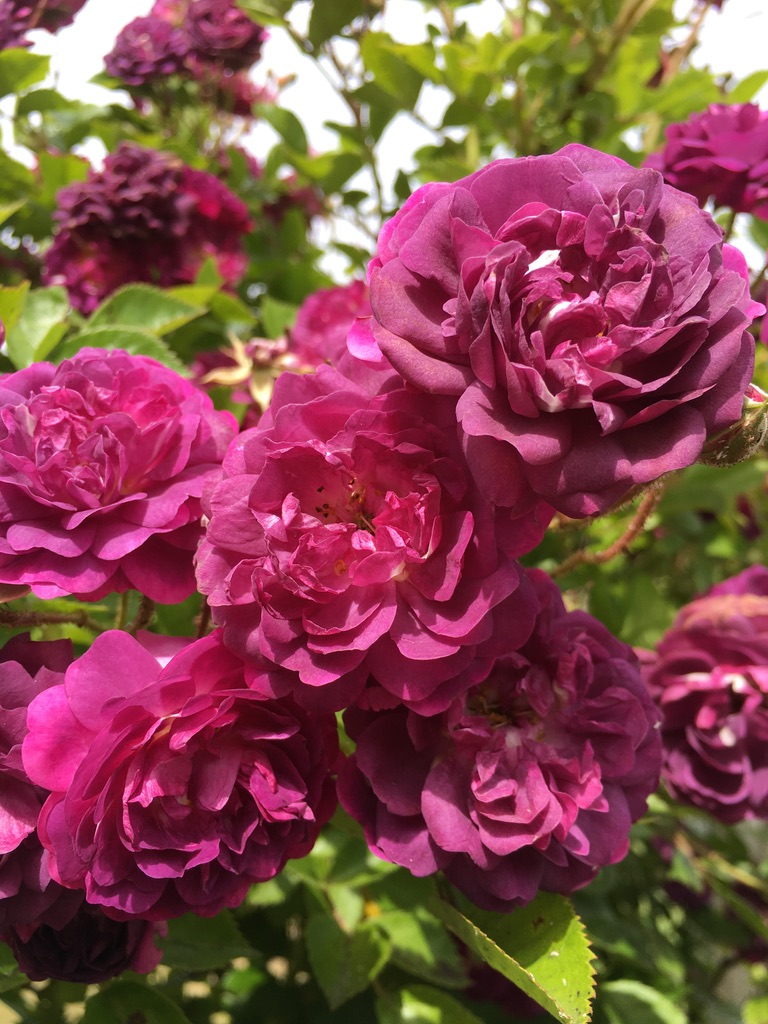
About Rose
Few flowers have captured the human imagination quite like the rose. Thought to have originated in northern Persia before spreading through Greece and the rest of Europe, roses have been admired for thousands of years for their beauty, fragrance and remarkable versatility. Their petals have been scattered at feasts, flavoured wines, woven into garlands and inspired poets, artists and herbalists alike.
One of the rose's most fascinating traditions survives in architecture today. In ancient times, a rose was sometimes suspended above a dining table to show that conversations held beneath it were to remain private. This tradition gave rise to the expression sub rosa — "under the rose" — meaning spoken in confidence. Later, decorative plaster roses became a familiar feature in the centres of ceilings, quietly carrying that same symbolism into people's homes.
I grow heritage roses for their exceptional fragrance as well as their beauty. Their richly scented petals are harvested each summer for teas, herbal blends and other seasonal creations, making them just as valuable in the herbal cupboard as they are in the flower garden.
Uses & Benefits
Culinary
Fresh rose petals bring delicate fragrance and colour to salads, desserts and cakes. They can be infused into syrups, sugars, jellies and vinegars, while dried petals are wonderful in herbal tea blends and pot-pourri. Only highly fragrant, unsprayed roses should be used for culinary purposes.
Medicinal
Rose petals have traditionally been valued as a gentle, soothing herb. They have long been infused into teas, oils and skin preparations, while rose hips are naturally rich in vitamin C and were traditionally prepared as nourishing syrups and teas. Rose has always been regarded as one of herbal medicine's gentlest plants, valued as much for comfort and wellbeing as for its practical uses.
Growing & Harvesting
Growing
The roses grow throughout the flower garden, where they provide colour, fragrance and an abundant harvest of petals through summer. They thrive in full sun with fertile, well-drained soil and respond well to regular feeding, mulching and careful pruning each winter. Choosing fragrant varieties means they are just as rewarding for harvesting as they are for their beautiful display.
Harvesting
I harvest the petals on dry mornings when the flowers are freshly opened and at their most fragrant. The petals are spread out carefully on drying racks until completely dry, then transferred into paper bags. The paper bags are stored inside airtight plastic containers to protect them from moths, spiders, dust and moisture while still allowing the petals to breathe naturally. They are then kept in a cool, dark cupboard until needed for teas, herbal blends and other seasonal creations.
Cautions
Only use petals from roses that have not been treated with pesticides or other garden chemicals. Before using rose petals in food or herbal preparations, always ensure they have been correctly identified as edible varieties and prepared hygienically.