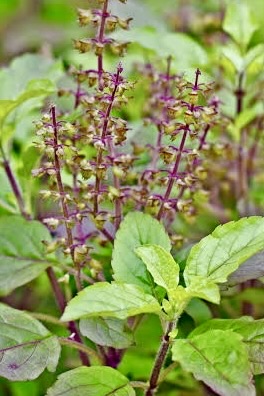
About Sacred Basil
Sacred Basil (Ocimum tenuiflorum), more commonly known as Tulsi, has been treasured in India for thousands of years and is often referred to as the "Queen of Herbs." Unlike the sweet basils grown mainly for cooking, Sacred Basil has long been valued for its role in traditional Ayurvedic medicine and is regarded as a symbol of purity, wellbeing and spiritual devotion. Many Hindu families traditionally grow Tulsi close to their homes, where it is cared for as both a medicinal and sacred plant.
Thousands of years later, Sacred Basil is still treasured around the world. It is widely enjoyed as a fragrant herbal tea and increasingly grown in gardens by those interested in herbal wellness. Its aromatic leaves have a warm, slightly spicy flavour with hints of clove and pepper, making it quite different from the familiar culinary basils.
Although tender like other basils, Sacred Basil forms an attractive, bushy plant with spikes of delicate purple flowers that are highly attractive to bees and other pollinating insects.
Uses & Benefits
For thousands of years, Sacred Basil has been treasured in traditional Ayurvedic herbal practice and is regarded as one of India's most important medicinal herbs. Traditionally, it has been valued for supporting overall wellbeing and helping the body adapt to everyday stresses. Today it is most commonly enjoyed as a soothing herbal tea and appreciated for both its pleasant flavour and its long history of traditional use.
Culinary Uses
Unlike sweet basil, Sacred Basil is rarely used in Italian-style cooking. Instead, the fresh or dried leaves are most often brewed as a fragrant herbal tea or blended with other herbs. The leaves can also be added sparingly to salads or infused into honey, although its distinctive spicy flavour is generally enjoyed best as a herbal infusion.
Medicinal Uses
In traditional Ayurvedic medicine, Sacred Basil has long been used to support respiratory health, digestion and general wellbeing. In modern herbalism, Sacred Basil is often described as an adaptogenic herb and has traditionally been used to help the body adapt to everyday physical and emotional stresses. While research into Sacred Basil continues, it is best appreciated as a herb with a long history of traditional use rather than as a substitute for medical treatment.
Growing & Harvesting
Growing
Sacred Basil prefers a warm, sunny, sheltered position in fertile, well-drained soil. Like other basils, it is sensitive to frost and should only be planted outdoors once the weather has warmed. Regular harvesting encourages bushier growth and delays flowering, although I like to leave a few flower spikes towards the end of the season, providing valuable food for bees while adding beauty to the garden.
Harvesting
Harvest the leaves regularly throughout summer by pinching the growing tips. Leaves intended for tea are best picked before the plant comes fully into flower, when their aroma is at its strongest. Dry the leaves on drying racks in a warm, airy place away from direct sunlight. Once completely dry, place them in a paper bag for a short time to ensure any remaining traces of moisture have disappeared before transferring them to an airtight plastic container and storing them in a cool, dark cupboard.
Cautions
Sacred Basil is generally considered safe when enjoyed as a herbal tea or culinary herb. Because it is also used medicinally, anyone who is pregnant, breastfeeding, taking prescribed medication or managing a medical condition should seek professional advice before using it regularly in larger amounts.