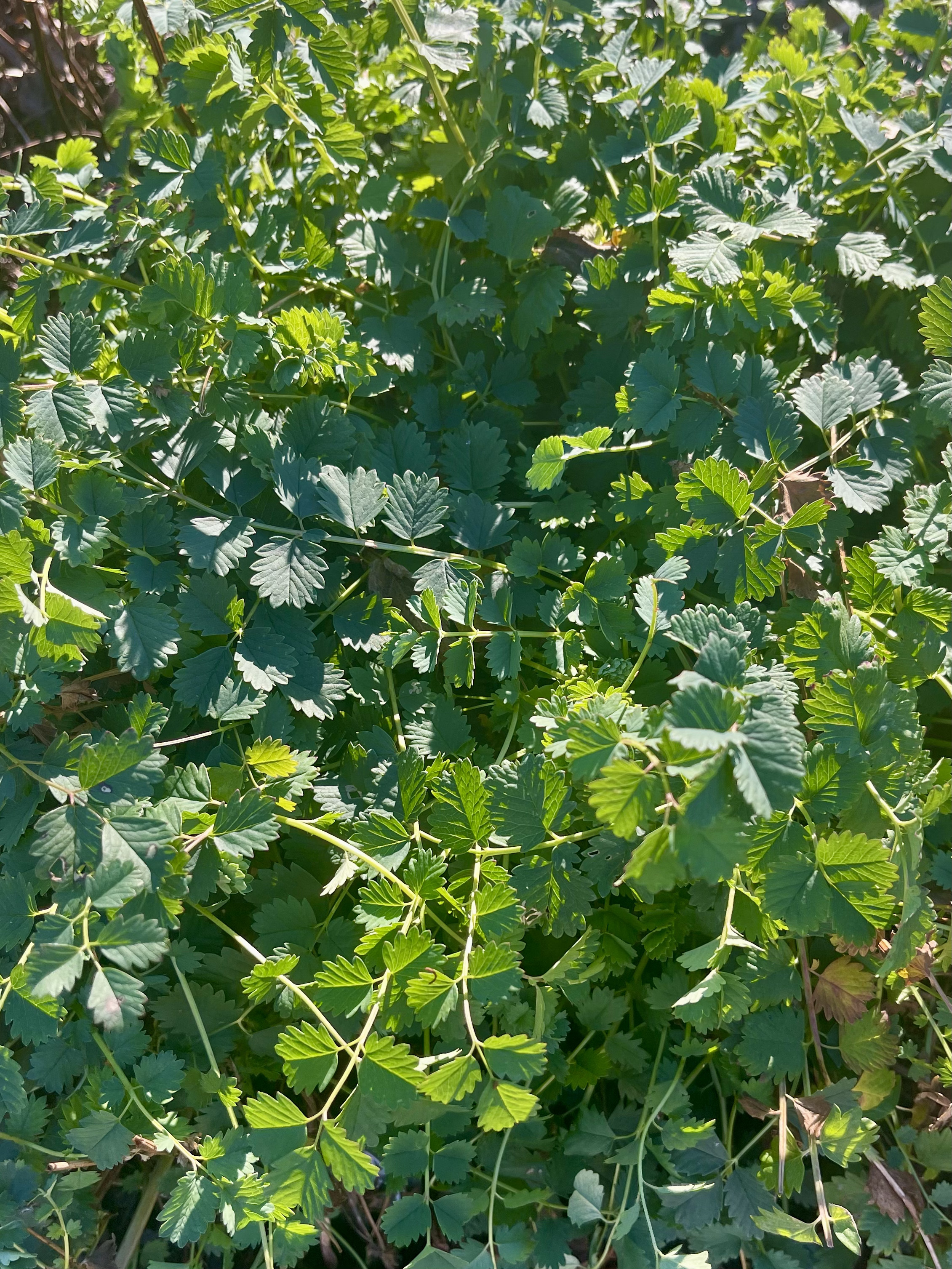
About Salad Burnet
Salad Burnet is a hardy perennial native to Europe, western Asia and parts of North Africa, where it grows naturally on chalky banks and dry grassland. It has been grown in kitchen gardens since medieval times, prized for leaves that carry a clean, cucumber-like freshness quite unlike anything else in the herb bed.
For centuries it earned a place in cottage and monastery gardens, where its refreshing flavour brought a crisp freshness to salads, sandwiches and cool drinks. Even today, one leaf between the fingers releases the unmistakable scent of freshly cut cucumber.
It is a pretty plant in its own right. The finely toothed, fern-like foliage forms tidy rosettes that stay green through much of the year, and in late spring and summer distinctive rounded flower heads rise on slender stems above the leaves.
Uses & Benefits
Salad Burnet is grown mainly as a fresh culinary herb, but it also makes an attractive edging plant. Its neat rosettes stay green through much of the year, holding the shape of a border when little else does, and the rounded flower heads draw in beneficial insects once they open in late spring and summer.
Culinary
The young leaves are best picked fresh and used straight away, scattered through salads, tucked into sandwiches or stirred into herb butters and soft cheeses. They are lovely dropped into cold drinks, and steeped in herb vinegars their refreshing cucumber flavour comes through beautifully. Always pick while the leaves are young and tender, as older growth turns coarse and loses much of its charm.
Medicinal
Salad Burnet has a long history in traditional European herbal medicine, where it was valued as an astringent herb. It was traditionally used to help support digestion and to tend minor wounds. Its botanical name, Sanguisorba, comes from the Latin sanguis (blood) and sorbere (to absorb), reflecting its historic reputation as a herb used to help stem bleeding. These are traditional herbal uses, shared for interest rather than as modern medical claims.
Growing & Harvesting
Growing
Salad Burnet is one of the first herbs to come into strong growth each spring and continues producing fresh leaves well into winter. It shrugs off Canterbury frosts with ease — I have seen it perfectly happy after temperatures of –3°C. During the hottest part of summer it naturally begins to send up flower stems, so I usually remove most of them to encourage fresh leafy growth, although I always leave a few for the insects.
Harvesting
I harvest the young leaves throughout spring, autumn and winter, when they are at their freshest and have the best flavour. As the weather becomes hotter the plants naturally put their energy into flowering, so I harvest less at that time. Salad Burnet is one herb I always use fresh — the delicate cucumber flavour simply doesn't survive drying.
Cautions
Salad Burnet is widely enjoyed as a culinary herb and has an excellent history of safe traditional use. As with any herb, enjoy it in the sensible amounts you would use in cooking. Everything shared here is offered for interest and education rather than as medical advice.