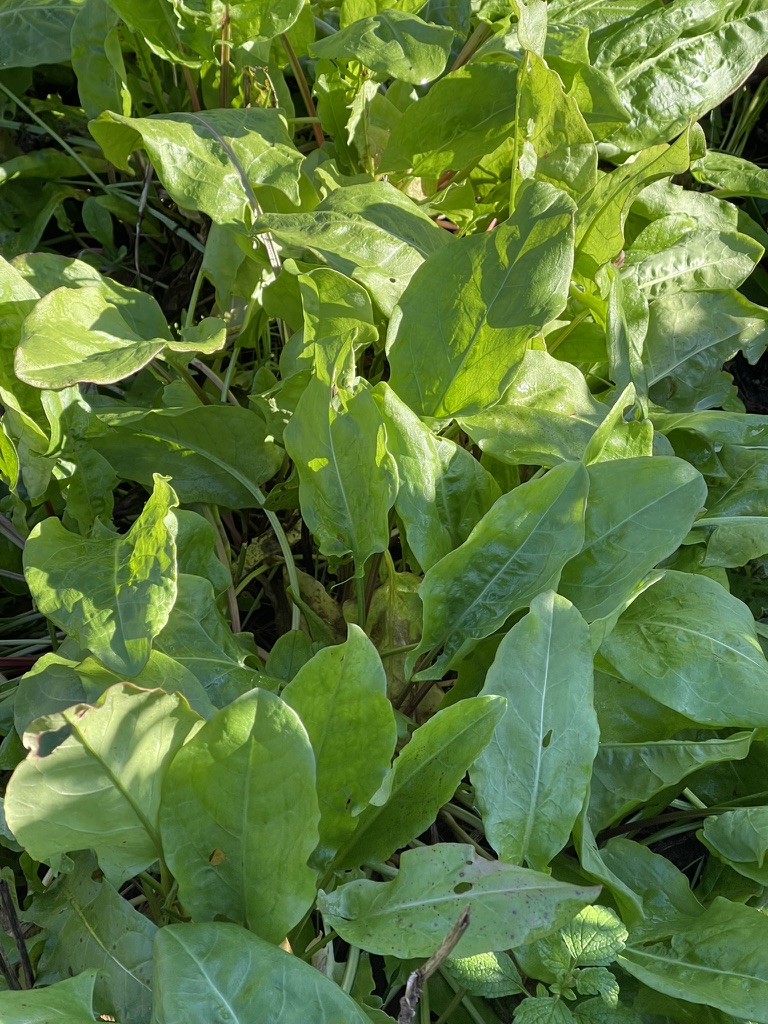
About Sorrel
Sorrel is a hardy perennial native to Europe and much of temperate Asia, where it grows wild in meadows, along hedgerows and on damp grassland. Its tall, arrow-shaped leaves carry a sharp, lemony flavour that comes from the natural acids in the leaf, and it has been gathered and grown for the table for many hundreds of years.
It was a staple of European kitchen gardens long before lemons were easily come by, valued for the brightness it brought to soups, sauces and spring dishes. French cooking in particular kept it close, and the classic sorrel soup and creamy sorrel sauce for fish are still made much as they always were.
At The Herbal Garden, Sorrel remains green throughout winter, although growth slows during the coldest months. As spring arrives it quickly bursts into fresh new leaf and becomes one of the first herbs ready for the kitchen. Once the weather warms, however, it is quick to send up flower stems, so I usually remove most of them to keep the leaves coming for as long as possible.
Uses & Benefits
Sorrel is grown above all as a culinary herb, prized for the fresh sharpness it brings to cooking. It is also a generous, dependable plant in the garden, filling a corner of the kitchen bed with green when little else is ready and offering leaves for picking over a remarkably long season.
Culinary
The young leaves are the ones to reach for, shredded raw through green salads or scattered over new potatoes and soft-boiled eggs. Cooked, Sorrel collapses in moments into a soft purée that makes the traditional sorrel soup and a lovely sauce for salmon and other fish. One of my favourite ways to use Sorrel is in a creamy risotto, where its fresh lemon flavour shines beautifully without needing any citrus at all. A handful of chopped leaves can also lift soups, sauces and egg dishes, but a little goes a long way.
Medicinal
Sorrel has a long place in traditional European herbal practice, where the fresh leaves were regarded as cooling and cleansing and were taken in spring as one of the first green tonics of the year. It was also valued simply as a welcome source of fresh greenery after winter. These are traditional uses, shared here for interest and enjoyment rather than as modern medical claims.
Growing & Harvesting
Growing
Sorrel is wonderfully easy-going. It grows well in sun or light shade and does best in soil that holds a little moisture, as dry conditions push it into flowering sooner. It is thoroughly hardy and comes through Canterbury winters without complaint, returning early each spring. Tall flower stems appear as the days lengthen and warm, and I remove most of them so the plants keep producing tender leaves, leaving one or two to run on. Every few years the clumps are lifted and divided, which keeps them vigorous and gives new plants for elsewhere in the garden.
Harvesting
I pick the young leaves from the outside of the clump, taking them a few at a time so the centre keeps growing, and the plants carry on obliging from early spring right through into the cooler months. The leaves are always at their best picked fresh, and because Sorrel remains available for much of the year in the garden, I simply harvest what I need rather than preserving it. Fresh leaves always have the brightest flavour.
Cautions
Sorrel has been enjoyed at the table for centuries and is perfectly good eating in the sensible amounts you would use in cooking. Its sharp flavour comes from naturally occurring oxalic acid, which is also found in rhubarb and spinach, so it is best enjoyed in moderation rather than in very large quantities — and anyone advised by their doctor to limit oxalates may prefer to leave it aside. Everything shared here is offered for interest and education rather than as medical advice.