About Summer Savory
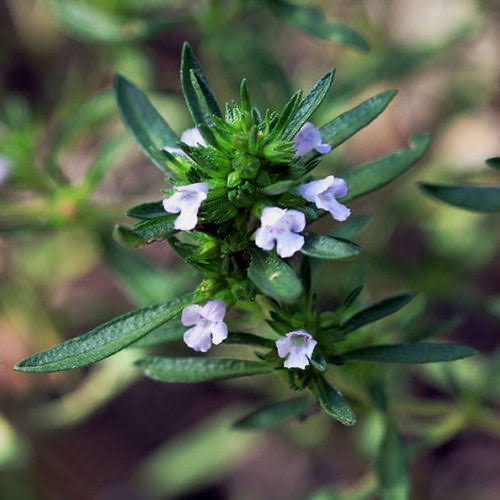
Summer Savory is a slender annual herb from the Mediterranean, grown in European kitchen gardens for centuries. It makes a light, open little bush with fine narrow leaves and slim upright stems, topped through summer with tiny pale flowers that bees visit steadily from morning until evening.
It is a close relation of Winter Savory, but where that plant is woody and firm, Summer Savory has a softer habit and a gentler nature altogether. Its leaves are finer and its flavour sweeter and more delicate — warm and peppery with a hint of thyme, yet never overpowering.
We sow Summer Savory fresh each spring, as it is an annual rather than a perennial herb. It grows quickly into a productive little bush and provides a steady supply of fresh leaves throughout the warmer months. Once the first frosts arrive its season comes to an end, ready to be sown again the following spring.
Uses & Benefits
Summer Savory earns its place as one of the most useful of the annual kitchen herbs. It is generous, quick to grow and picked right through the warm months, and it has a long and gentle history in traditional European household use.
Culinary
Summer Savory is above all a cook's herb. Its sweet peppery flavour is the classic partner to beans of every kind — broad beans, runner beans, green beans and dried beans alike — and a sprig added to the pot lifts them beautifully. It is just as good with lentils, peas, new potatoes, roast vegetables and slow-cooked dishes, and it belongs in stuffings, sausages, herb butters and homemade seasoning mixes. Because the flavour is delicate rather than robust, we add it towards the end of cooking so it keeps its freshness, and we use it fresh whenever the plants are in leaf.
Medicinal
Traditionally, Summer Savory was one of the everyday herbs of the household store cupboard. It was best known as a digestive herb, which is part of why it was cooked with beans and pulses, and a simple tea made from the leaves was a common country remedy after a heavy meal. Old herbals also record it being used as a warming gargle for a sore throat. These are traditional and historical uses, shared here for interest and education rather than as medical advice.
Growing & Harvesting
Growing
As an annual, Summer Savory needs sowing fresh each year. We sow the seed in spring once the soil has warmed and all danger of frost has passed, scattering it thinly on the surface and barely covering it, as it likes a little light to germinate. Give it a sunny spot and free-draining soil that is not too rich — overfeeding produces soft, floppy growth and a weaker flavour. Keep the young plants watered while they establish, then water only in dry spells. Pinching out the growing tips early makes for bushier plants and far more leaf to pick. It grows very happily in a pot by the kitchen door, which is where we like to keep one.
Harvesting
I harvest Summer Savory regularly throughout summer by snipping the young leafy stems whenever they are needed in the kitchen. Frequent picking encourages the plants to stay bushy and productive. Because it is an annual and is at its best when fresh, I simply enjoy it throughout the season rather than drying and storing it for winter.
Cautions
Summer Savory is a gentle herb and has been eaten safely in cooking for a very long time, so there is little to worry about when it is used as a flavouring. As with any herb, it is sensible to keep to normal culinary amounts rather than taking it in strong or concentrated forms, and anyone who is pregnant, breastfeeding or taking prescribed medicines is best to have a word with their doctor or a qualified herbal practitioner before using it medicinally. Everything shared here is offered for interest and education rather than as medical advice.