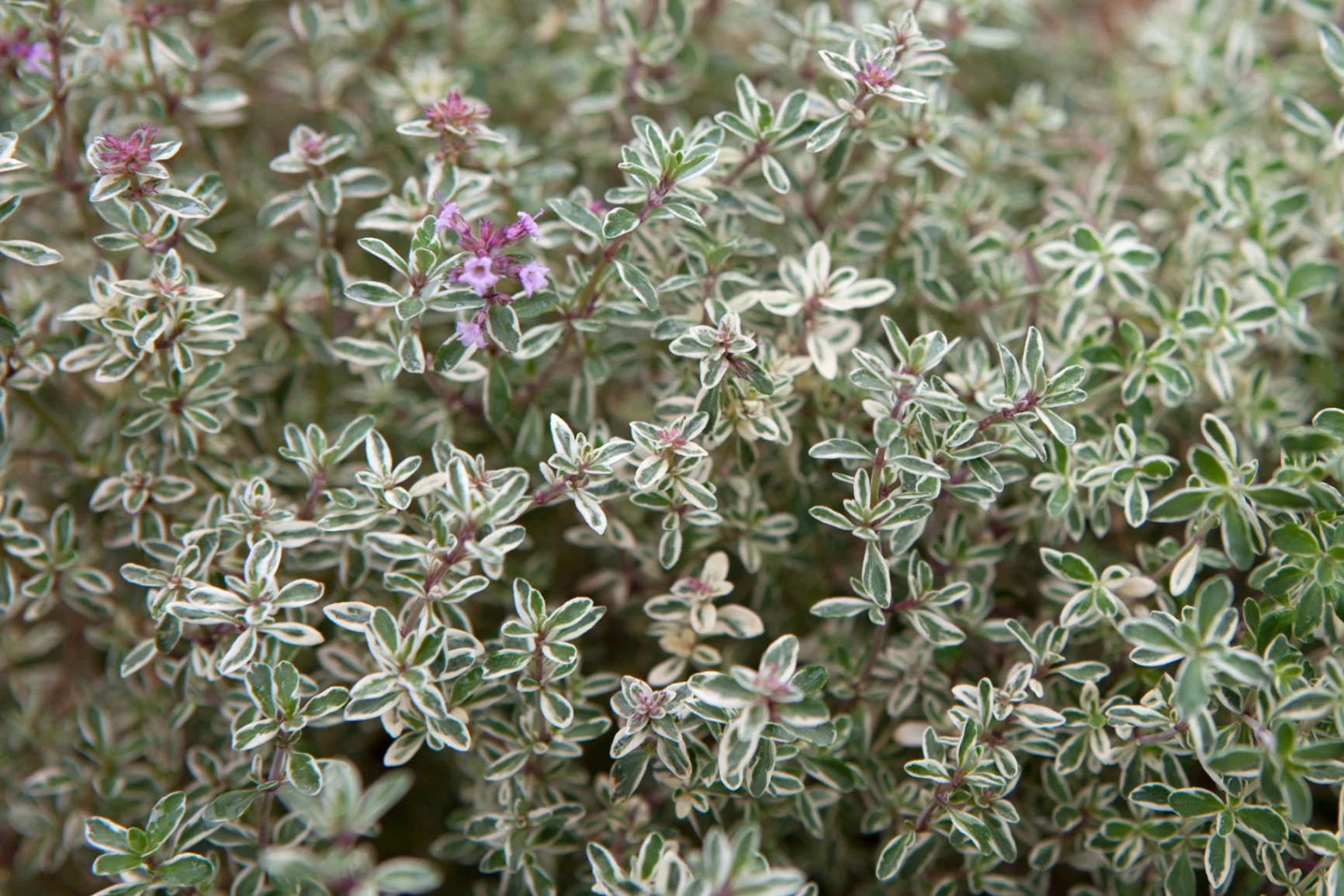
About Thyme
Thyme is one of the oldest and most treasured of all culinary and medicinal herbs, a low, wiry evergreen shrublet whose tiny grey-green leaves carry a warm, resinous fragrance quite out of proportion to their size. It has been valued since ancient times: the Egyptians used it among their embalming preparations, the Greeks burned it as an incense in their temples, and the Romans carried it across Europe, scenting rooms with it and adding it freely to their food.
The name itself is believed to come from the Greek thymos, meaning courage or spirit, and that association endured for centuries. In medieval Europe ladies often embroidered a sprig of thyme onto a scarf or handkerchief and presented it to a knight before he rode out, a small token intended to carry bravery with him. It is a lovely thought to hold in mind while brushing past a thyme plant on a warm afternoon and catching that unmistakable scent on the air.
There are a great many thymes, each with its own character and purpose. At The Herbal Garden we grow English Thyme, French Thyme, Lemon Thyme and Pizza Thyme, all of which earn their place in the garden and the kitchen. Common Thyme (Thymus vulgaris) remains the classic culinary and medicinal variety, but together these different thymes provide an abundance of flavour, fragrance and traditional herbal value throughout the year.
Uses & Benefits
Culinary Uses
Thyme is one of the great background herbs of the kitchen, giving depth and warmth without ever shouting. It stands up well to long, slow cooking, so whole sprigs can be dropped into casseroles, soups, stocks and roasting trays and lifted out at the end. It is a natural companion to roast chicken, lamb, tomatoes, mushrooms, onions and root vegetables, and it belongs in a classic bouquet garni alongside bay and parsley. A little chopped thyme stirred through butter, bread dough or a simple dressing is a very easy way to bring the garden to the table.
Medicinal Uses
Thyme has earned its reputation as one of the finest herbs for supporting the respiratory system. Rich in naturally occurring compounds such as thymol, it has long been valued for its antibacterial, antiseptic and expectorant properties, making it a traditional choice for coughs, colds and chest congestion. During the First World War, thyme was even used as an antiseptic to help cleanse wounds before modern antibiotics became widely available.
At The Herbal Garden, one of my favourite traditional remedies is to gather a generous handful of fresh thyme, steep it in very hot water and pour the fragrant infusion into a warm bath whenever someone has a chesty cough or congestion. The aromatic steam fills the room and has become a much-loved family remedy during the winter months.
Although thyme continues to be widely respected in modern herbal medicine, everything shared here is offered for interest and education rather than as medical advice.
Growing & Harvesting
Growing
Thyme thrives in the warm, sunny conditions of our Canterbury garden, where excellent drainage is the secret to healthy plants. We grow several different varieties, including English Thyme, French Thyme, Lemon Thyme and Pizza Thyme, each bringing its own character to the garden and the kitchen. Once established, thyme asks for very little attention beyond an occasional trim and plenty of sunshine.
Harvesting
I harvest thyme throughout the growing season, picking fresh sprigs whenever I need them for cooking. During summer I also gather plenty for drying, as thyme is one of the herbs that holds its flavour exceptionally well and becomes an important ingredient in my herbal salts and Mediterranean herb blend for winter cooking. At the end of autumn I give the plants a light trim to keep them compact and encourage fresh new growth when spring arrives.
Cautions
Thyme is a gentle, everyday herb and the amounts used in cooking are enjoyed by most people without a second thought. Its concentrated essential oil is a very different matter and is far too strong to be taken internally or applied undiluted to the skin, which is simply a reminder that culinary use and therapeutic use are two quite separate things. We would suggest keeping to ordinary kitchen quantities if you are pregnant or breastfeeding, and a few people find the fresh foliage irritates sensitive skin. As with all herbs, if you take regular medication or have any concerns, do have a word with your doctor or a qualified herbalist first. Everything shared here is offered for interest and education rather than as medical advice.