About Turmeric
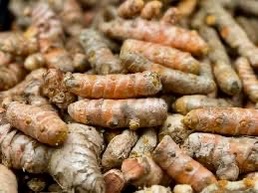
Turmeric is a tropical member of the ginger family, native to southern Asia, and one of the most treasured plants in the world. Above ground it is a handsome thing, sending up broad, glossy paddle-shaped leaves from a fleshy base, but the real treasure lies hidden beneath the soil in its brilliant golden-orange rhizomes. Cut one open and the colour is astonishing — a deep, saturated gold that stains fingers, chopping boards and anything else it touches.
That colour has made turmeric far more than a spice. Throughout history it has been used to dye food, fabrics and ceremonial cloth, and it holds a place in weddings, blessings and religious ritual across much of Asia. It has been grown and used in India for well over four thousand years and remains an important part of both everyday cooking and Ayurvedic herbal practice, which is a remarkable continuity for any plant.
Although Turmeric is a tropical plant, it grows surprisingly well in our Canterbury greenhouse. Like our Lemon Grass, it is grown in large pots where it enjoys the warmth and humidity needed to produce healthy rhizomes. I enjoy growing a little piece of the tropics, and its broad green leaves give the greenhouse a wonderfully lush feel through the summer months.
Uses & Benefits
Culinary Uses
Turmeric is one of the foundation spices of southern Asian cooking, giving curries, dals, rice dishes and pickles both their warm golden colour and a gentle, earthy, slightly peppery flavour. The fresh rhizome can be peeled and grated much like ginger, bringing a brighter, more aromatic note than the dried powder, and it is lovely stirred into soups, roasted vegetables and dressings. It is also the golden heart of a warm spiced milk, simmered with black pepper and a little honey, which has become a favourite winter drink far beyond the countries where turmeric grows.
Medicinal Uses
Few plants have been so long and so widely valued in traditional medicine. In Ayurvedic practice turmeric has been used for thousands of years, and it has a similarly established place in traditional Chinese medicine, where the rhizome has been used to support digestion, joint comfort and general wellbeing.
Much of that reputation is traditionally attributed to curcumin, the compound responsible for turmeric's golden colour. Traditionally, Turmeric has been valued for its anti-inflammatory and antioxidant properties and has long been used to support healthy joints, digestion and general wellbeing. It is often noted that a little black pepper alongside turmeric helps the body make better use of it, which is why the two so often appear together in both cooking and traditional preparations — a piece of old kitchen wisdom that modern research has taken a good deal of interest in.
Turmeric continues to be widely respected in herbal traditions around the world, but everything shared here is offered for interest and education rather than as medical advice.
Growing & Harvesting
Growing
At The Herbal Garden, Turmeric is grown in large pots inside the greenhouse where it enjoys the warmth it needs to thrive. During the growing season I keep the compost evenly moist and feed occasionally with a liquid fertiliser. As autumn arrives and the foliage naturally dies back, watering is reduced before the rhizomes are lifted.
Harvesting
The rhizomes are lifted at the end of the growing season, once the leaves have yellowed and died back and the plant has finished putting its energy underground. The pot is tipped out, the golden rhizomes gathered and the best pieces kept back for replanting the following spring. The freshly harvested rhizomes can be used immediately in the kitchen, while any surplus is frozen for later use.
Cautions
Turmeric is enjoyed as an everyday spice by millions of people and the amounts used in cooking suit most of us very well. Concentrated supplements are a different matter altogether, being far stronger than anything that reaches a curry pot, and they are best approached with proper advice — particularly if you take blood-thinning medication, have gallstones or are pregnant, as turmeric has traditionally been noted to affect bile flow and clotting. Do also be warned that the colour is wonderfully persistent: it will happily stain hands, worktops and clothing, so an apron is a sensible companion. As with all herbs, if you take regular medication or have any concerns, do have a word with your doctor or a qualified herbalist first. Everything shared here is offered for interest and education rather than as medical advice.